Cost Guides13 min read
Foundation Repair Cost in Lubbock, TX: Clay Soil, Signs & Methods (2026)
What foundation repair costs in Lubbock in 2026: prices by method and pier count, a worked example, the clay-soil cause, warning signs, what Texas insurance really covers, and how to compare quotes.
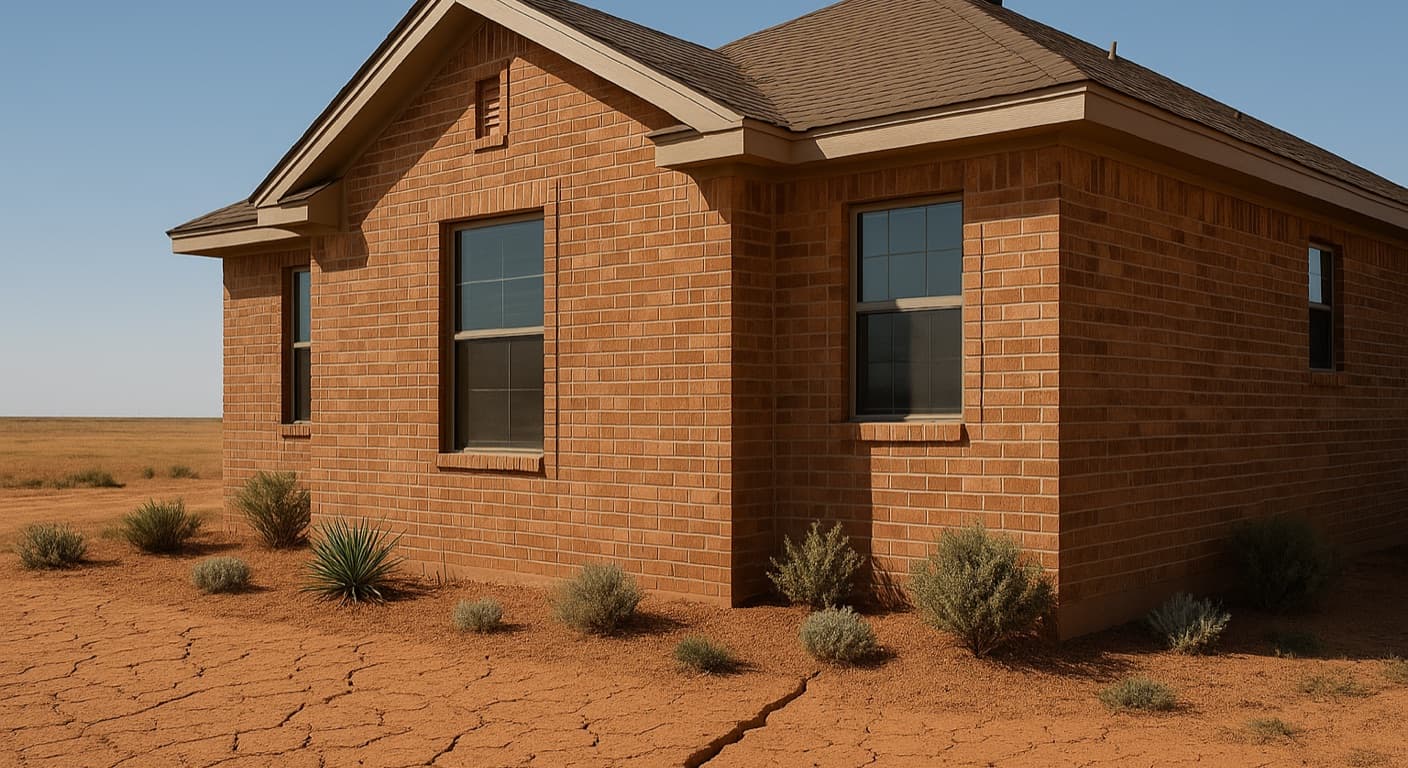
Most foundation repairs in Lubbock cost $3,000 to $10,000 in 2026. Minor slab leveling or crack repair can run $500 to $5,000, a moderate slab repair with 3 to 8 piers usually lands between $5,000 and $15,000, and a major repair with 10 or more piers reaches $15,000 to $30,000. The price comes down to how many piers your home needs, what kind, and what else has to be fixed with them, such as drainage, plumbing, and the cracked drywall inside. All of that traces back to the clay-rich soil Lubbock is built on.
On this page
- 01What Foundation Repair Costs in Lubbock (2026)
- 02Where the Money Goes on a Foundation Repair
- 03Why Lubbock Foundations Move: The Clay-Soil Cycle
- 04Warning Signs Your Lubbock Foundation Is Settling
- 05Foundation Repair Methods, Compared
- 06Pier and Beam vs Slab Foundations in Lubbock
- 07A Worked Example: A 1,800 Square Foot Lubbock Slab Home
- 08Does Homeowners Insurance Cover Foundation Repair in Texas?
- 09How to Protect Your Lubbock Foundation
- 10Licensing, Permits, and Timeline in Lubbock
- 11How to Choose a Foundation Repair Contractor in Lubbock
- 12A Note from Nextgen Blueprint
- 13Frequently asked questions
What Foundation Repair Costs in Lubbock (2026)
Local foundation specialists quote after an inspection rather than publishing prices, so the figures below are 2026 Lubbock-market ranges to budget with. They line up with national data: This Old House puts typical foundation repairs at $2,224 to $8,134 nationally, with an average of $5,179, and piering at $1,000 to $3,000 per pier. On Lubbock clay, many slab repairs need several piers, which is why the moderate slab range runs above the national average.
The number of piers and the pier type move the total more than anything else. Individual piers range from about $450 for pressed concrete pilings to $3,500 for steel push piers, covered in the methods section below. Pier count and depth are specific to your lot, so a written estimate after an on-site inspection is the only real number.
- Typical Lubbock range
- $3,000 to $10,000
- Moderate slab repair (3 to 8 piers)
- $5,000 to $15,000
- Per pier
- $450 to $3,500 by type
| Repair | Typical cost | Notes |
|---|---|---|
| Foundation crack repair | $500 to $2,500 | Epoxy or polyurethane injection once the cause is addressed |
| Slab leveling (mudjacking or foam) | $500 to $5,000 | Minor settling and exterior slabs; can be shorter-term on active clay |
| Pier-and-beam adjustment | $3,000 to $9,500 | Shimming, sistering, or replacing supports in the crawl space |
| Moderate slab repair (3 to 8 piers) | $5,000 to $15,000 | The most common Lubbock slab repair |
| Major slab repair (10+ piers) | $15,000 to $30,000 | Widespread settlement or large homes, usually engineered |
| Drainage and grading correction | $2,000 to $8,000 | Regrading, downspout extensions, French or surface drains |
| Structural engineer's evaluation | $400 to $900 | Elevation survey and sealed report for a typical slab home |
Where the Money Goes on a Foundation Repair
Two quotes for the same house can differ by thousands of dollars because they price different scopes. A complete slab repair quote usually includes these pieces, and a quote that leaves one out is not cheaper, just incomplete.
- Piers: the count, the type, and the depth each one reached. This is most of the bill on a slab job.
- Access: breaking out and patching concrete at patios, walks, or interior floors where a pier has to go, plus moving landscaping along the perimeter.
- Lifting and bracketing: the crew, the hydraulic equipment, and the steel brackets that tie each pier to the slab's perimeter beam.
- Drainage work: regrading, downspout extensions, or a surface drain where water is feeding the problem.
- Plumbing checks: a test of the under-slab drain lines before and after lifting, since the pipes move with the slab.
- Engineering: an evaluation and repair plan on larger jobs, and sometimes a final letter confirming the work.
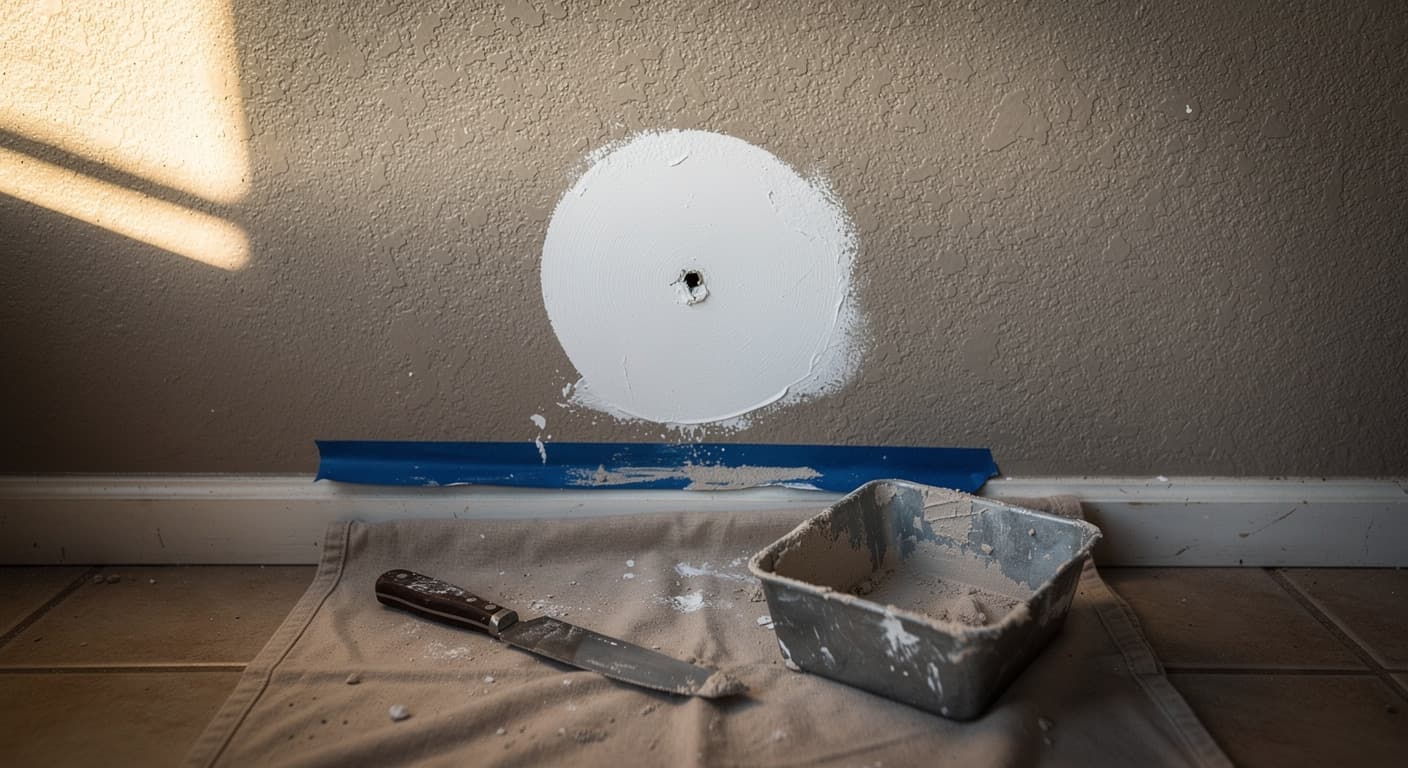
- Restoration: the drywall, doors, trim, and flooring the movement damaged, which many foundation-only companies leave to you.
Why Lubbock Foundations Move: The Clay-Soil Cycle
Lubbock sits on the Southern High Plains, where much of the ground is clay-rich soil over a hard caliche layer. The USDA's description of the Pullman series, common on these plains, puts its clay content at 35 to 50 percent, with cracks about a centimeter wide opening through the upper layers as it dries and caliche 30 to 60 inches down. The loamier Acuff series, whose type location is near Slaton in Lubbock County, carries 18 to 35 percent clay over caliche at a similar depth. Clay swells when it takes on water and shrinks when it dries, and the slab rides that cycle.
The weather here drives the cycle hard. Lubbock's normal rainfall is only 18.33 inches a year, according to the National Weather Service, and it tends to come in bursts. The summer of 2026 showed it: NWS recorded 0.24 inches in August against a 1.74 inch normal, with a high of 107 on August 24, then 3.33 inches in September, including 1.47 inches in a single day on September 24 and 25. Soil that shrinks away from a slab in August and swells back in September moves the foundation twice in six weeks.
Movement usually shows first at corners and edges, where soil dries fastest. The same forces crack driveways and sidewalks, which is why reinforcement and base prep matter, as our concrete driveway cost guide explains.
- Lubbock normal annual rainfall
- 18.33 inches
- Pullman series clay content
- 35 to 50 percent
- Depth to caliche
- About 30 to 60 inches
Warning Signs Your Lubbock Foundation Is Settling
Foundation movement shows up inside and outside the home before it becomes an emergency. One hairline crack is not a crisis. A pattern of these signs, or cracks that keep widening season to season, is the signal to get an inspection.
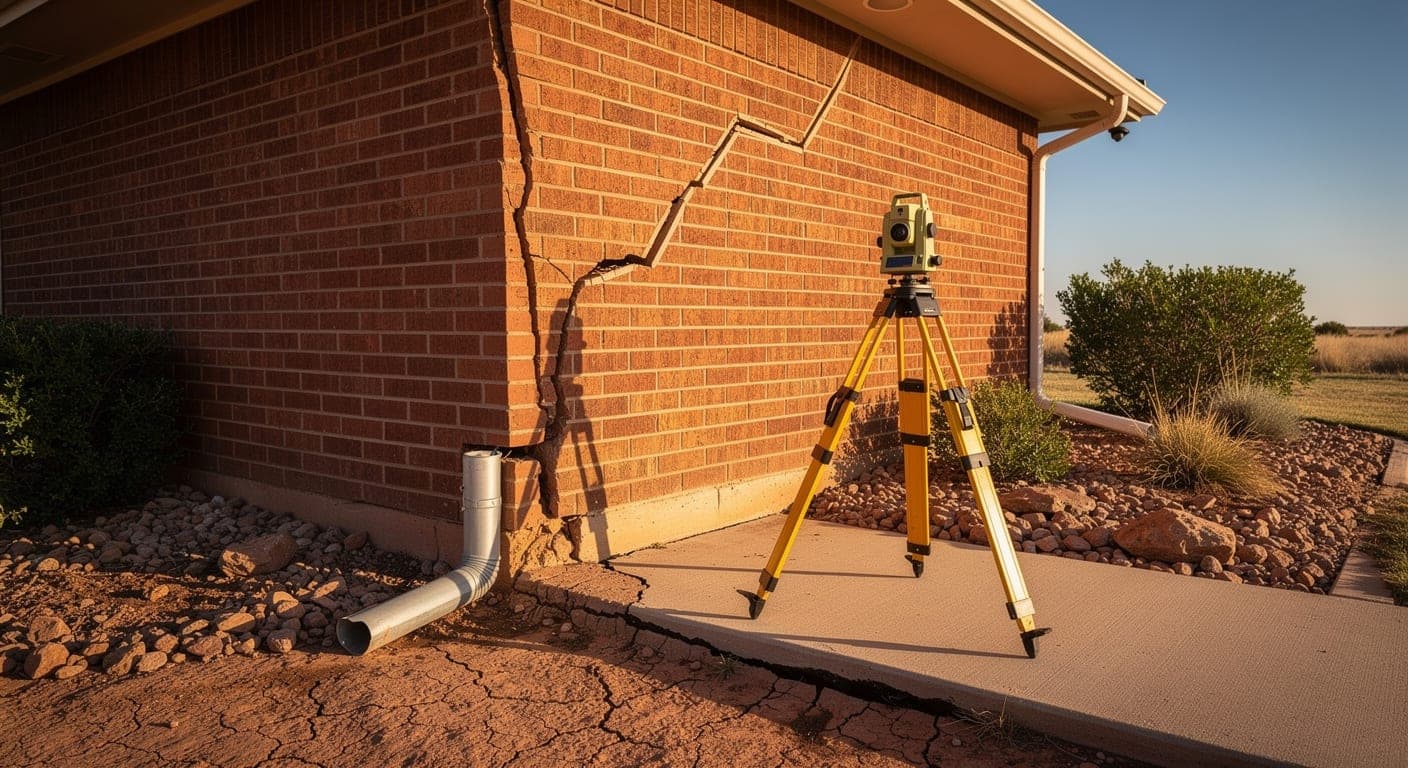
- Stair-step cracks in exterior brick or masonry, especially near corners.
- Diagonal cracks in interior drywall at the corners of doors and windows. This is usually the first thing homeowners notice.
- Doors and windows that stick, will not latch, or show a gap opening at the top of the frame.
- Floors that slope or feel uneven from one part of a room to another.
- Gaps opening between walls and the ceiling or floor, or trim and crown molding separating.
- Soil pulling away from the slab in dry weather, or water pooling against the foundation after rain.
Foundation Repair Methods, Compared
There is no single foundation repair. The right method depends on your foundation type, how far it has moved, and the soil under it. Piering costs more because it moves the home's weight onto a load-bearing layer below the most active soil instead of lifting the slab on top of it. Steel push piers are driven hydraulically using the weight of the house as resistance, and sections are added until the pier reaches a load-bearing layer, so depth varies from lot to lot. Helical piers are turned into the ground by torque until they reach competent soil and a target torque. Slab leveling is cheaper and faster, but on active clay it can be a shorter-term fix if the soil keeps moving.
| Method | How it works | Cost | Best for |
|---|---|---|---|
| Steel push piers | Driven hydraulically against the house's weight until they reach a load-bearing layer | $1,500 to $3,500 per pier | Heavier slab homes on deep clay |
| Helical piers | Steel shafts with screw plates turned in to a target torque | $2,000 to $3,000 per pier | Lighter loads and sandier soil |
| Pressed concrete pilings | Concrete cylinders pressed into the ground and stacked | $450 to $900 per pier | Budget repairs on moderate movement |
| Slab leveling (mudjacking or foam) | Lifts a settled slab with injected cement slurry or polyurethane foam | $500 to $5,000 | Minor settling and exterior slabs |
Pier and Beam vs Slab Foundations in Lubbock
Most Lubbock homes built since the 1970s sit on a concrete slab poured on the ground, and some newer ones use post-tensioned slabs with steel cables stressed through the concrete. Many older homes in Tech Terrace, Overton, and other pre-1970 neighborhoods sit on pier and beam, a wood floor frame over a crawl space. Vents along the base of the exterior walls usually mean pier and beam. Both move with the clay, but they are repaired differently.
Slab repair usually means piers at the settled sections, bracketed to the perimeter beam, which is where the $5,000 to $15,000 moderate range comes from. Pier-and-beam repair means shimming, sistering, or replacing failed supports from the crawl space, typically $3,000 to $9,500, and it is usually less invasive because the supports are reachable. On a post-tensioned slab, no one should drill or cut the concrete until the cables are located.
A Worked Example: A 1,800 Square Foot Lubbock Slab Home
Take a hypothetical 1,800 square foot, 1970s brick ranch on a slab in south Lubbock. After the dry August, new drywall cracks appear off two bedroom doors, a back door stops latching, and the back corner sits beside a downspout that empties against the slab.
An engineer's evaluation at $400 to $900 measures the floor and finds settlement along the back corner. The plan calls for 5 steel push piers. At $1,500 to $2,000 each, the piers come to $7,500 to $10,000. A downspout extension and some regrading at that corner are a small add-on, and a plumber tests the drain lines before and after the lift. Afterward, the drywall cracks are taped and refinished, typically $150 to $600 for crack and joint repair.
Added up, this job lands around $9,000 to $14,000, inside the moderate slab range. If the evaluation had found widespread settlement and called for a full drainage correction at $2,000 to $8,000 on top, the job would push toward the top of that range or past it. The engineer's fee is what turns a guess about pier count into a measured plan.
Does Homeowners Insurance Cover Foundation Repair in Texas?
For clay-driven movement, almost never. The standard ISO homeowners form the Texas Department of Insurance approved in 2002 excludes settling, shrinking, bulging, or expansion, including the cracking of foundations, walls, and floors it causes. TDI's own consumer guidance, updated in 2025, says all-risk policies usually do not pay to repair your home's foundation.
The exception is a covered water loss. TDI's 2002 order requires insurers to offer a Foundation Coverage-Texas Endorsement on new policies. It covers settling, cracking, and expansion of the foundation caused by seepage or leakage from a plumbing, heating, air conditioning, or fire sprinkler system. In the version TDI approved, that coverage was capped at 15 percent of the dwelling limit. It does not cover ordinary clay movement, and it has to be on the policy before the leak happens.
If you suspect a slab leak, document it and call your agent before work starts. This is general information, not insurance or legal advice, so read your own policy and endorsements.
How to Protect Your Lubbock Foundation
The least expensive foundation repair is the one you avoid by keeping the soil moisture around your home steady. The goal is to stop the clay from swinging between soaked and bone dry.
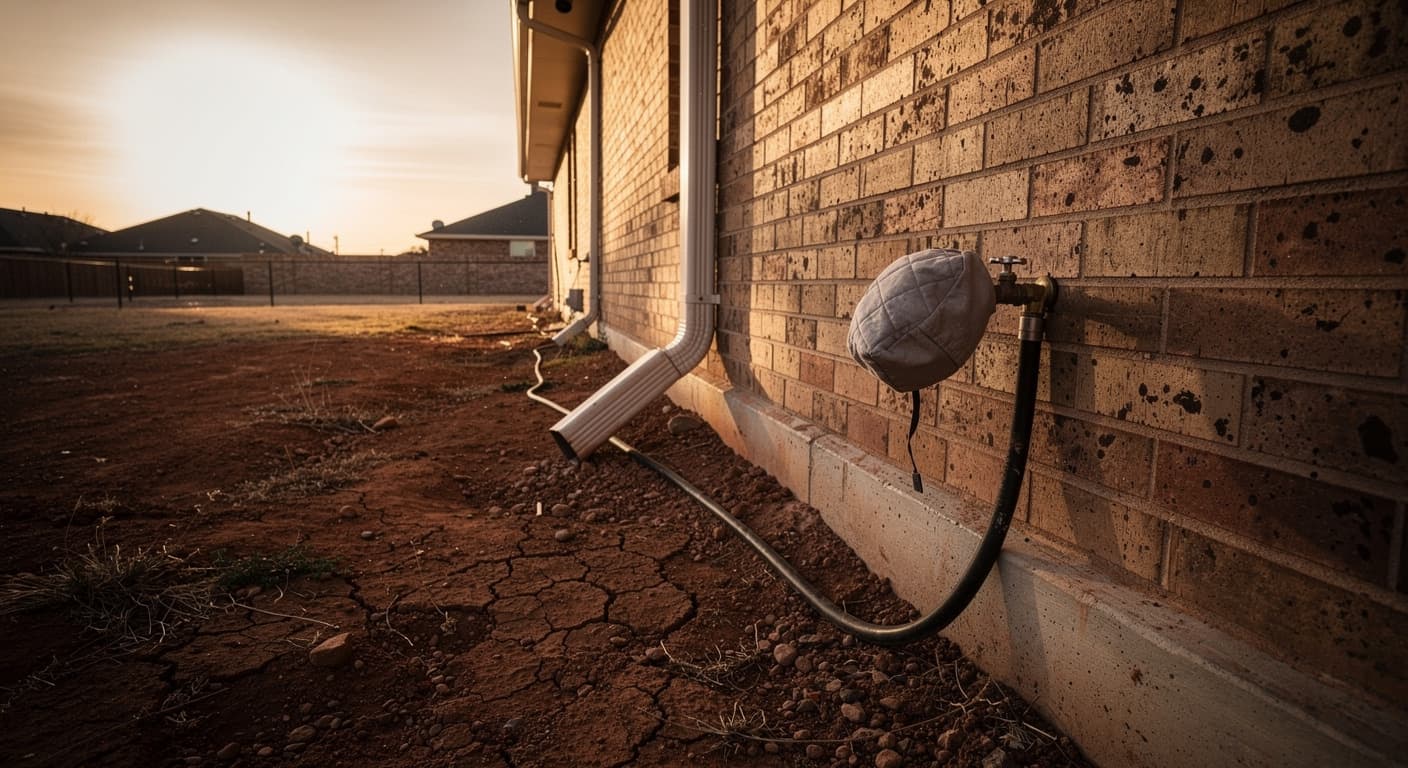
- Grade the soil so it slopes away from the foundation, and extend downspouts so roof water lands several feet from the slab.
- During long dry stretches, run a soaker hose in the soil near the slab on your City-assigned watering days, about 15 to 30 minutes at a time, as our home maintenance calendar explains.
- Keep large trees a sensible distance from the foundation, or use a root barrier, since roots pull large amounts of moisture from the soil.
- Fix plumbing leaks promptly. A slow leak under or beside the slab is a common hidden cause of localized settling.
- Watch flower beds against the slab. Heavy watering on one side and none on the other creates exactly the uneven moisture that moves foundations.
Licensing, Permits, and Timeline in Lubbock
Texas has no state license for foundation repair contractors. The Texas Department of Licensing and Regulation licenses electricians and air conditioning contractors, among others, but not foundation repair, and a 2013 bill that would have regulated foundation repair contractors failed in the Texas House. Anyone can call themselves a foundation company, so the paper trail matters: an itemized scope, pier depth records, and, on larger jobs, a plan from a licensed professional engineer. Engineers typically work from the Texas Section of the American Society of Civil Engineers' foundation evaluation and repair guidelines, now in Version 3, which the section itself calls guidelines rather than standards.
Ask the City of Lubbock's Building Safety department whether your repair needs a permit before work starts. Most pier jobs take 1 to 3 days of active work, slab leveling 1 to 2 days, and pier-and-beam adjustments 3 to 7 days. Wait a few weeks after a lift before final drywall and paint, so the house settles onto its new support first.
How to Choose a Foundation Repair Contractor in Lubbock
Foundation work is expensive and hard to undo, so the contractor matters as much as the method. When you compare quotes, look for these, and see our guide to choosing a reliable contractor for the basics that apply to any trade:
- A written scope that lists the number of piers, the pier type, and where each goes, not a single lump-sum number.
- A record of the depth and final pressure or torque for each pier, delivered when the job is done.
- An engineer's plan for larger jobs, so the repair is based on measured elevations rather than a sales estimate.
- A clear answer on whether the fix is permanent piering or a shorter-term lift, and what drainage work goes with it.
- Plumbing tests before and after the lift, and who pays if a line breaks.
- Written warranty terms, including whether they transfer to the next owner.
- No high-pressure, one-day-only discount tactics. A real foundation problem will still be there next week.
A Note from Nextgen Blueprint
This guide was researched and published by Nextgen Blueprint, a Lubbock design-build contractor. We offer a free foundation inspection, then handle foundation repair along with the drywall, doors, trim, and flooring the movement damaged, under one contract. Treat these numbers as 2026 Lubbock budgeting ranges, accurate as of October 2026, not a quote for your home, since pier count, pier type, and depth are specific to each lot. Get a written, itemized estimate before committing to foundation work, and an engineer's plan when the job is large.
Frequently asked questions
How much does foundation repair cost in Lubbock, TX?
How much does a foundation pier cost?
Why do Lubbock foundations crack?
What are the first signs of foundation problems?
Does homeowners insurance cover foundation repair in Texas?
Which is best for Lubbock clay: steel piers, helical piers, or concrete pilings?
Do foundation repair contractors need a license in Texas?
How long does foundation repair take?
Sources and further reading
- [1]Texas Department of Insurance: Commissioner Order 02-0741, New ISO Residential Property Policy Forms Approved
- [2]Texas Department of Insurance: Home insurance policies, all risk or named peril
- [3]USDA NRCS: Pullman Series Official Soil Description
- [4]USDA NRCS: Acuff Series Official Soil Description
- [5]National Weather Service Lubbock: Comparison of 30 Year Climate Normals
- [6]National Weather Service Lubbock: Monthly Climate Report
- [7]ASCE Texas Section: Texas Residential Foundations Guidelines
- [8]Texas Legislature Online: HB 613 (83rd Legislature) History, Regulation of Foundation Repair Contractors
- [9]Texas Department of Licensing and Regulation: Licensing Programs
- [10]Supportworks: Push Pier Systems
- [11]Supportworks: Helical Pile Systems
- [12]This Old House: How Much Does Foundation Repair Cost?
Written by
John Paul, Founder, Nextgen Blueprint
John Paul founded Nextgen Blueprint with his father-in-law, a Lubbock-area general contractor with 30+ years of experience. They build healthy, natural homes for Lubbock families, and approach every project with the kind of care and attention to detail most contractors save for their own home.
More from JohnRelated services
Filed under Cost Guides. What home projects actually cost in Lubbock, line by line.