Design & Materials10 min read
The Best Building Materials for Lubbock and West Texas Homes (2026 Guide)
Which roofing, siding, windows, insulation, foundations, concrete, fencing, flooring, and plumbing hold up to Lubbock's hail, wind, clay, dust, and hard water, compared side by side.
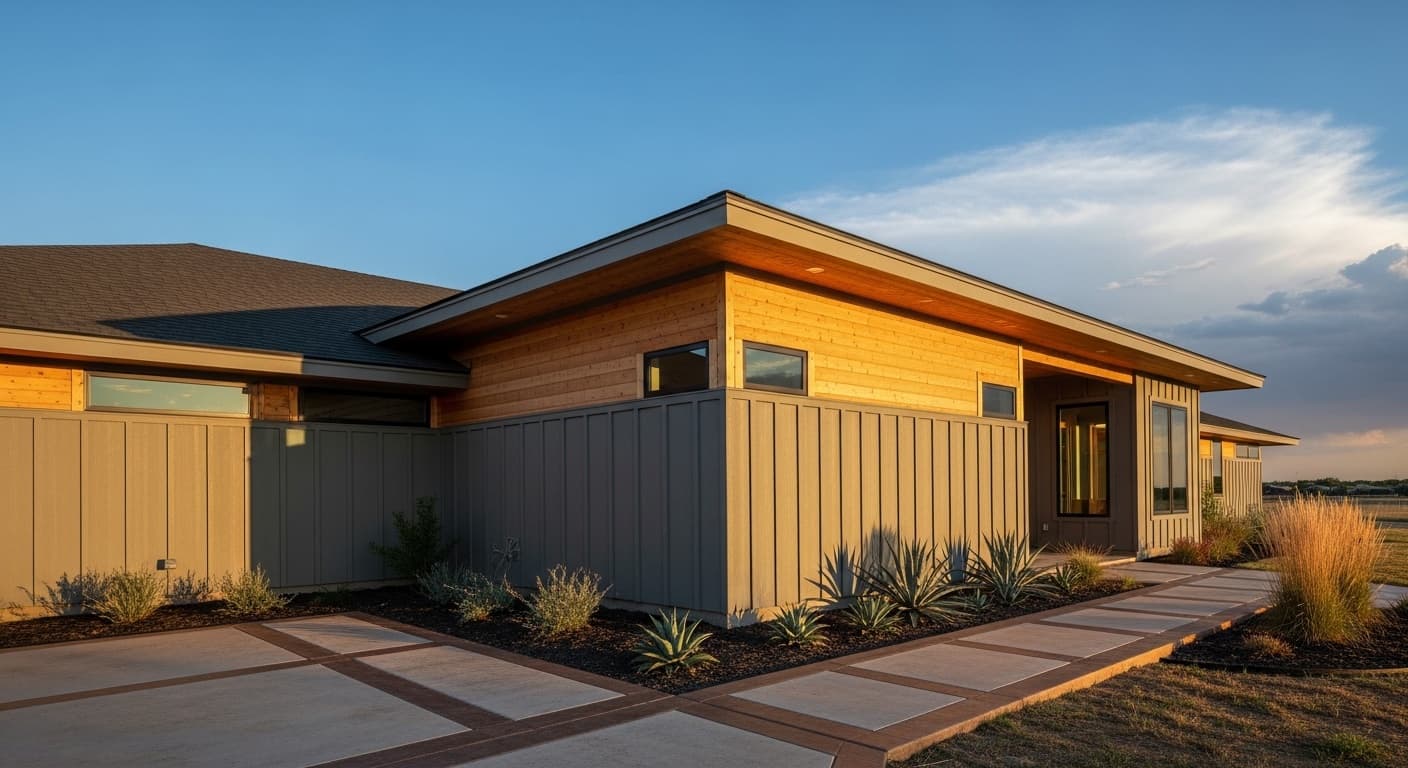
The building materials that last in Lubbock are the ones chosen for five local stresses: hail, wind, expansive clay, dust, and hard water. In practice that means a Class 4 impact-rated or metal roof, brick, stone, or fiber-cement walls, low-E windows, an engineered post-tension slab on a tested lot, reinforced concrete flatwork, steel fence posts, hard-surface floors, and PEX plumbing protected by a water softener. None of it is exotic; these choices simply fit the South Plains better than a generic national spec, and most cost little more than what they replace.
On this page
- 01The Short List: What Holds Up on the South Plains
- 02Roofing: Class 4 Impact-Rated Shingles or Metal
- 03Exterior Walls: Brick, Stone, Fiber Cement, and Stucco
- 04Windows: Low-E Glass, Sturdy Frames, and Hail
- 05Insulation and Air Sealing for Heat, Cold, and Dust
- 06The Lubbock Factor: Foundations on Expansive Clay
- 07Concrete Flatwork That Survives the Clay
- 08Fences and Landscaping for Wind and Drought
- 09Floors and Interior Finishes for Dust and Dry Air
- 10Plumbing Materials for Hard Water
- 11A Note from Nextgen Blueprint
- 12Frequently asked questions
The Short List: What Holds Up on the South Plains
The short version, with each call explained in the sections below.
| Part of the house | Best bet in Lubbock | Why | Think twice about |
|---|---|---|---|
| Roof | Class 4 impact-rated shingles or metal | Spring hail, hard UV | 3-tab shingles |
| Exterior walls | Brick, stone, or fiber cement | Hail, sun, blowing grit | Vinyl on exposed walls, synthetic stucco |
| Windows | Low-E glass, U-0.30 and SHGC 0.25 or lower | Long west-sun afternoons | Clear, uncoated glass |
| Attic and walls | R-49 attic, sealed ducts and top plates | Heat, cold snaps, dust leaks | Insulation with no air sealing |
| New foundation | Soil test and post-tension slab | Expansive clay | Skipping the soil report |
| Driveways and patios | 4 to 6 inch reinforced concrete on compacted caliche | Clay movement | Thin, unreinforced pours |
| Fences | Galvanized steel posts set in concrete | 60 to 100 mph wind | Wood posts at grade |
| Floors | Rigid-core LVP, porcelain over a membrane, engineered wood | Dust, dry air, moving slabs | Carpet in main rooms |
| Plumbing | PEX plus a sized water softener | Hard water | Old galvanized pipe |
Roofing: Class 4 Impact-Rated Shingles or Metal
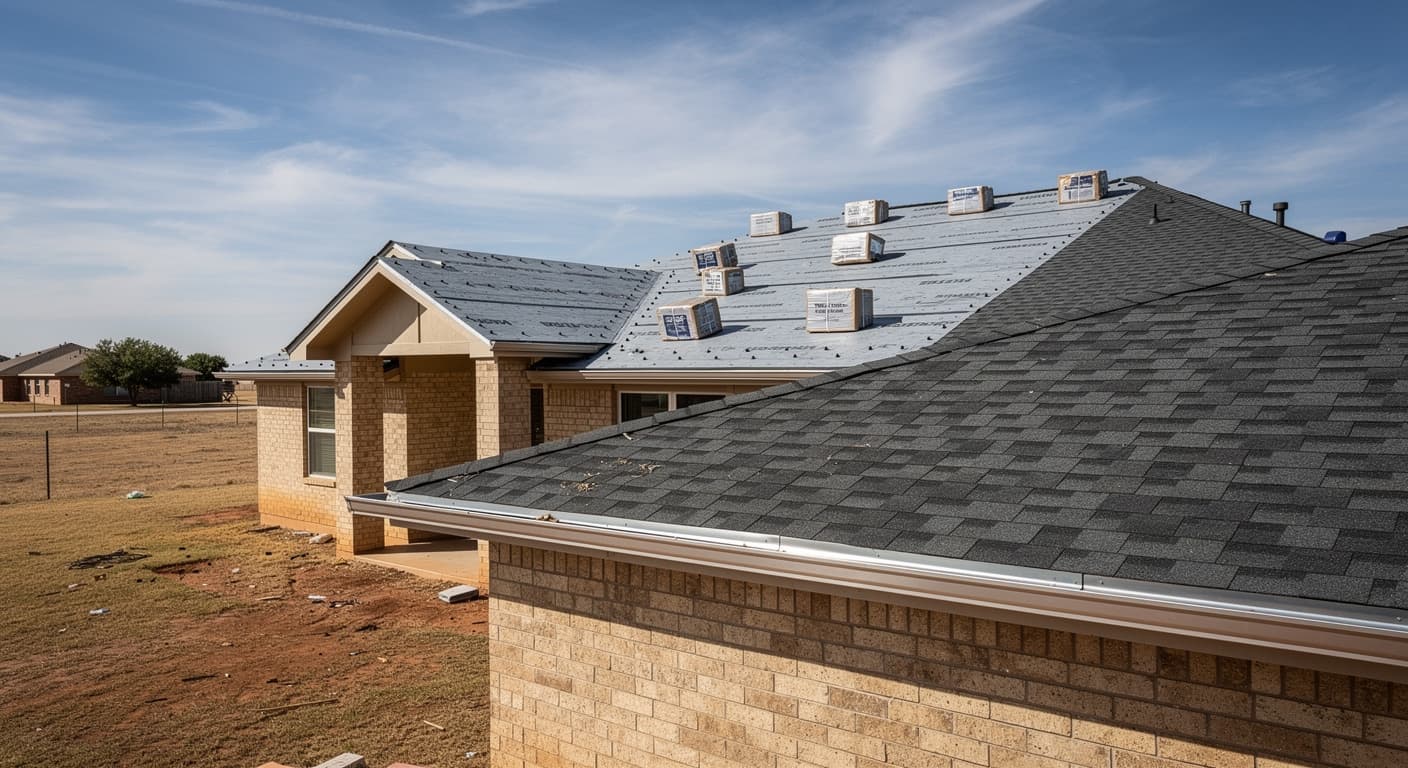
Hail is why Lubbock roofs rarely reach the lifespan printed on the bundle, so impact rating is the first spec to settle. The standard test is UL 2218, which drops steel balls on roofing; Class 4 is its top rating. But research from the Insurance Institute for Business & Home Safety shows not all impact-resistant shingles perform the same against realistic hail, and IBHS now rates tested shingles from Poor to Excellent. Its FORTIFIED roof standard requires a sealed roof deck and ring-shank nails, which IBHS says nearly double a roof's strength against wind, and its optional hail supplement adds a Good or Excellent shingle or Class 4 metal panels.
Metal is the other answer. Quality panels last 40 to 60 years and shrug off hail that would total shingles, though some policies exclude cosmetic dents, so ask your agent before you buy. Installed prices, discounts, and claims are in our roof replacement cost guide.
- Class 4 upgrade
- $1,500 to $3,000
- Typical Texas discount
- 15 to 30%
- Metal roof life
- 40 to 60 years
Exterior Walls: Brick, Stone, Fiber Cement, and Stucco
Brick is the Lubbock default for good reason: hail, sun, and blowing grit barely touch it. Its weakness is rigidity. When the clay under a slab moves, brick shows stair-step cracks, so the foundation matters as much as the veneer. Stone behaves the same way, and manufactured stone veneer recouped about 231 percent of its cost in Lubbock in the 2025 Cost vs Value data.
Fiber cement is the strongest siding choice here. In our experience it stands up to hail far better than vinyl, does not warp in the heat, and holds paint well, and it recouped about 113 percent in Lubbock versus 99 percent for vinyl. Vinyl costs less but can crack in hail, especially when cold, and fades on south and west walls. Three-coat stucco is hard but cracks when the slab moves, and synthetic stucco (EIFS) has foam behind a thin finish that hail can puncture. Wood accents need regular sealing, and even quality paint lasts only about 5 to 7 years on sun-baked walls.
Windows: Low-E Glass, Sturdy Frames, and Hail
Lubbock enforces the 2021 International Energy Conservation Code, which in climate zone 3 calls for windows with a U-factor of 0.30 or lower and a solar heat gain coefficient (SHGC) of 0.25 or lower. SHGC matters most here, because west-facing glass takes the brunt of long summer afternoons; check the NFRC label on any window you are quoted. Replacing windows also requires a City of Lubbock permit.
For frames, vinyl is the value choice, fiberglass holds its shape better through big temperature swings, and aluminum without a thermal break conducts heat. Hail usually shreds screens and dents aluminum wraps before it breaks glass. Laminated or impact-rated glass, designed mainly for hurricane debris, is a premium upgrade worth pricing only for the most exposed windows.
Insulation and Air Sealing for Heat, Cold, and Dust
The Department of Energy puts Lubbock County in climate zone 3B, hot and dry, but the same houses see single-digit cold snaps. For new work, the 2021 energy code calls for R-49 in the ceiling and R-20 in wood-frame walls, or R-13 plus R-5 continuous insulation. For an existing attic, ENERGY STAR's zone 3 guidance is R-49 in an uninsulated attic, or R-38 added over 3 to 4 inches already there.
Air sealing matters as much as R-value on the South Plains, because the gaps that leak cooled air also let fine dust in during a blowout. Seal the attic floor, top plates, and penetrations, and seal every duct run in the attic. A radiant barrier on the roof deck cuts attic heat gain. A tighter house needs planned fresh air, such as an energy recovery ventilator (ERV). Metal-frame homes add a condensation risk, which our barndominium cost guide explains along with the spray foam that controls it.
The Lubbock Factor: Foundations on Expansive Clay
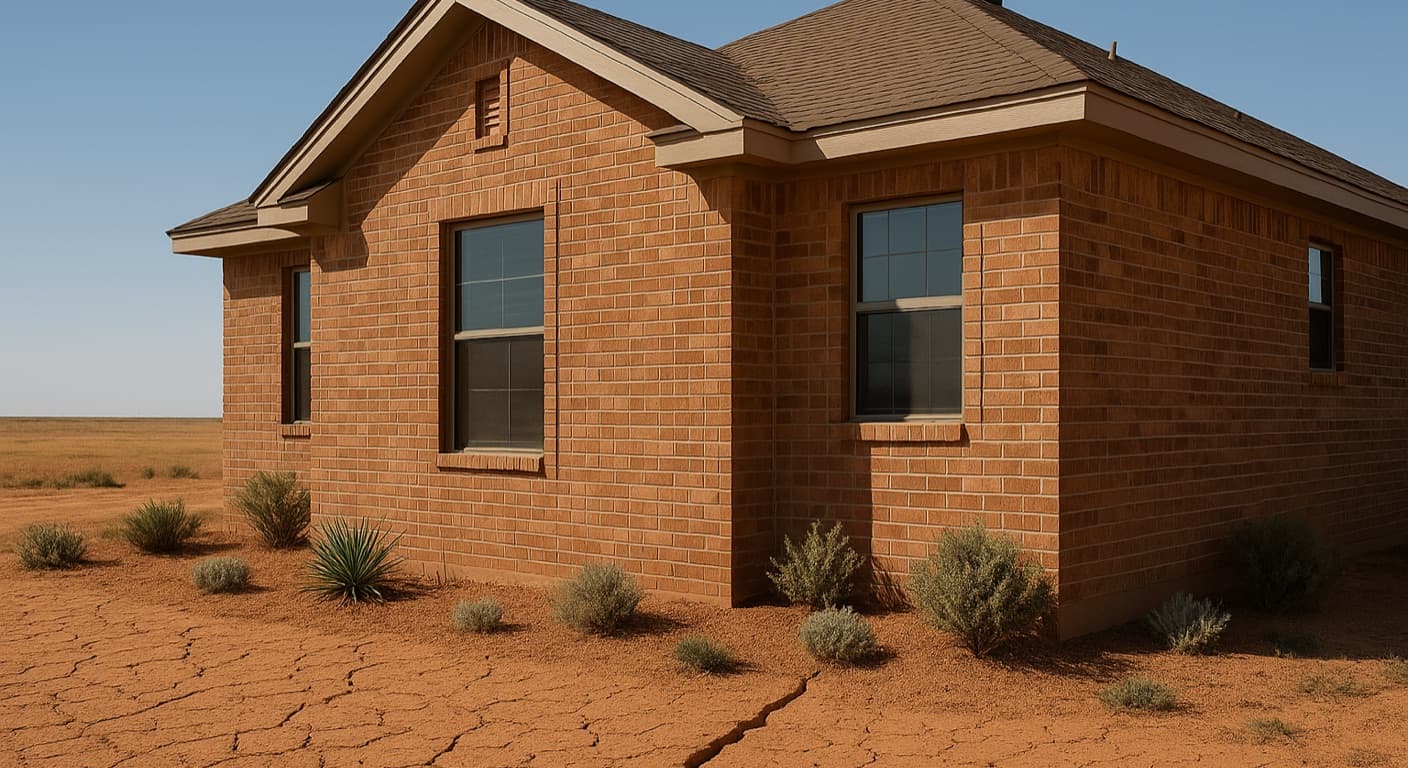
Most of Lubbock sits on soils formed in windblown clay and loam of the Blackwater Draw Formation. The USDA description of the Pullman series, one of the most common, notes a slowly permeable clay that cracks as it dries and a shrink-swell measure (COLE) above 0.06, which soil scientists class as high. Olton soils are similar, while Acuff soils, whose reference site is near Slaton, are loamier and carry less clay. Add about 19 inches of rain a year, much of it in sudden storms, and you get the swell-and-shrink cycle behind most local foundation repairs.
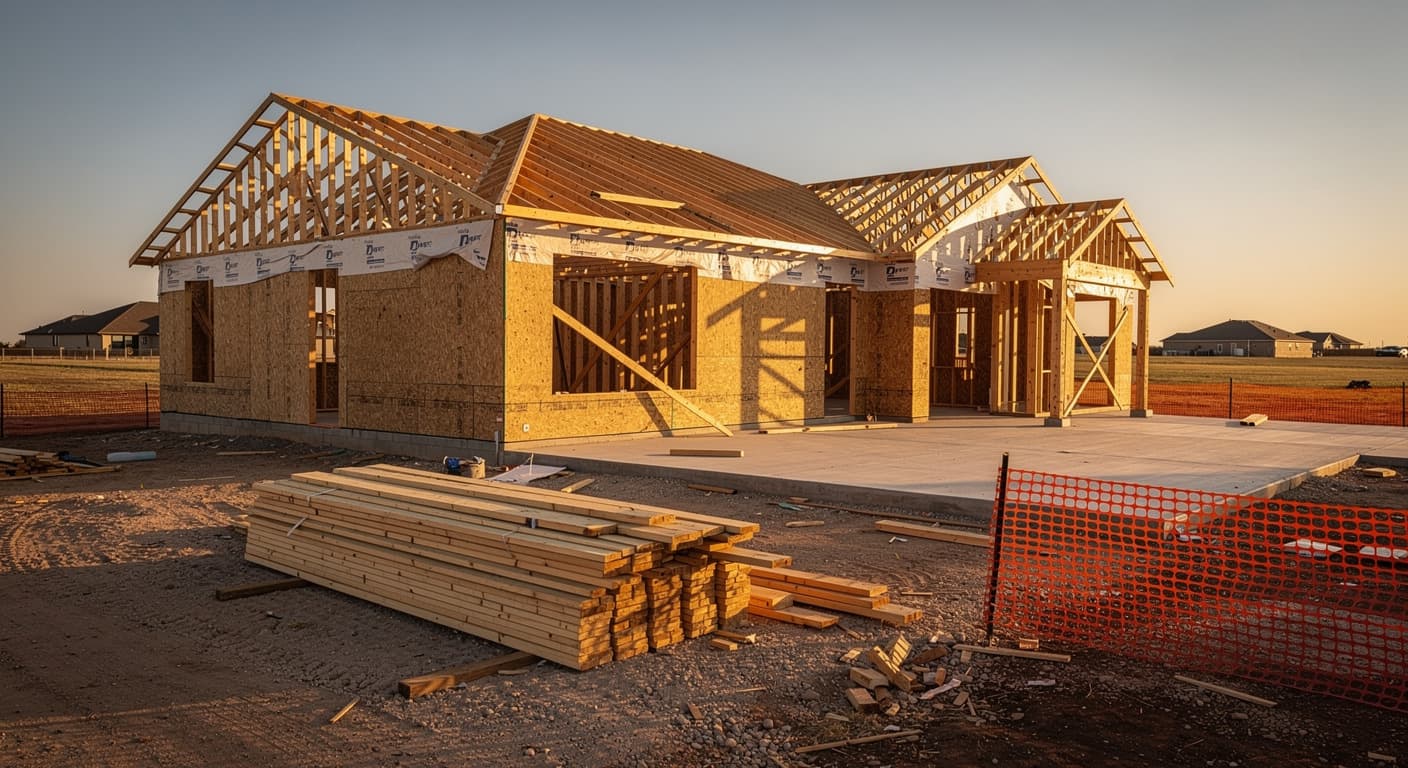
For new construction, start with a soil test before design, typically $1,500 to $3,000, then an engineered post-tension slab, which uses tensioned steel cables to hold the concrete together as the soil moves. For an existing home, the material that matters is soil moisture: grade away from the slab, extend downspouts, and run soaker hoses near the foundation in long dry spells. Our foundation repair cost guide covers what fixes cost, and our foundation inspections are free.
- Soil test before design
- $1,500 to $3,000
- Annual rainfall
- About 19 inches
- Pullman clay shrink-swell
- High (COLE above 0.06)
Concrete Flatwork That Survives the Clay
The rules match our concrete driveway cost guide: at least 4 inches thick, or 5 to 6 for trucks, trailers, or an RV; fiber reinforcement or rebar as the baseline; a compacted base of crushed caliche; and control joints about every 8 to 10 feet so the slab cracks where you planned. In summer heat, keep new concrete moist through its first week or it loses strength, and seal it every 2 to 5 years. For patios, pavers on a compacted base with polymeric sand flex with the soil and can be reset, and every patio should slope away from the house.
Fences and Landscaping for Wind and Drought
Spring wind events of 60 to 100 mph find the weak point in a fence, and it is usually a wood post rotted at the soil line. Galvanized steel posts set in concrete, with wood pickets or metal panels attached, hold up far better. Cedar outlasts pine pickets, and designs with small gaps let some wind through. In the yard, the USDA lists buffalograss among the native grasses on Lubbock's Pullman soils, and native plants, decomposed granite, and gravel beds handle drought without constant watering. Keep beds and mulch from holding water against the slab.
Floors and Interior Finishes for Dust and Dry Air
West Texas dust and dry winter air favor hard, sealed surfaces. Rigid-core luxury vinyl plank is the slab-friendly default at about $4 to $10 per square foot installed, but it moves with temperature, so it needs about a 1/4 inch expansion gap at the walls and blinds where afternoon sun lands.
Porcelain tile outlasts almost anything if it goes over an uncoupling membrane with movement joints, so a shifting slab does not crack it. For real wood, engineered hardwood is the safer choice on slabs, since solid boards gap when winter humidity drops below the 30 to 50 percent the National Wood Flooring Association recommends. Keep carpet to bedrooms. Our flooring installation cost guide has the full price breakdown.
On walls, washable eggshell or satin in a zero-VOC formula handles regular dusting. In kitchens and baths, quartz counters need no sealing, brushed fixture finishes hide hard-water spots better than polished chrome, and coated shower glass is worth the small upcharge.
Plumbing Materials for Hard Water
Lubbock's water is hard. The City's 2025 water quality report averaged about 169 mg/L of hardness, roughly 10 grains per gallon, and state entry-point testing from 2024 to 2026 ranges from about 110 to 265 mg/L, roughly 6.5 to 15.5 grains, depending on the groundwater and lake blend. Scale builds inside every pipe material. PEX is the usual choice for repipes and new work because it does not corrode and needs fewer fittings. Watch older homes with original galvanized steel pipe, which scales and corrodes from the inside until flow drops.
The bigger decision is protection. A correctly sized water softener, often a 40,000 to 48,000 grain unit for a family of four, keeps scale out of the water heater, fixtures, and dishwasher, and a small reverse osmosis unit at the kitchen sink handles drinking water. Flush a tank water heater every year, descale a tankless unit on the manufacturer's schedule, and read the warranty's water-quality terms before you buy. Our water softener cost guide covers sizing and prices.
A Note from Nextgen Blueprint
This guide was researched and published by Nextgen Blueprint, a Lubbock design-build general contractor that builds with these materials from slab to finish. Prices are 2026 Lubbock-market budgeting ranges from our cost guides, not a quote, and code, product, and insurance details were accurate as of September 2026. Planning new construction or a major remodel? We can price your plan with the materials that fit your lot.
Frequently asked questions
What is the best roof for hail in Lubbock?
What siding holds up best to hail in Lubbock?
What kind of foundation is best for Lubbock's clay soil?
How much attic insulation does a Lubbock home need?
Do I need impact windows in Lubbock?
What flooring works best with West Texas dust and dry air?
What pipes are best for Lubbock's hard water?
Sources and further reading
Written by
John Paul, Founder, Nextgen Blueprint
John Paul founded Nextgen Blueprint with his father-in-law, a Lubbock-area general contractor with 30+ years of experience. They build healthy, natural homes for Lubbock families, and approach every project with the kind of care and attention to detail most contractors save for their own home.
More from JohnRelated services
Filed under Design & Materials. Finishes, materials, and design choices that last out here.