Homeowner Guides10 min read
How to Choose a Reliable Contractor in Lubbock, TX (2026 Guide)
What Texas and the City of Lubbock actually require of contractors, how to verify insurance, what the contract must include, how to pay safely, and the red flags that follow every hailstorm.
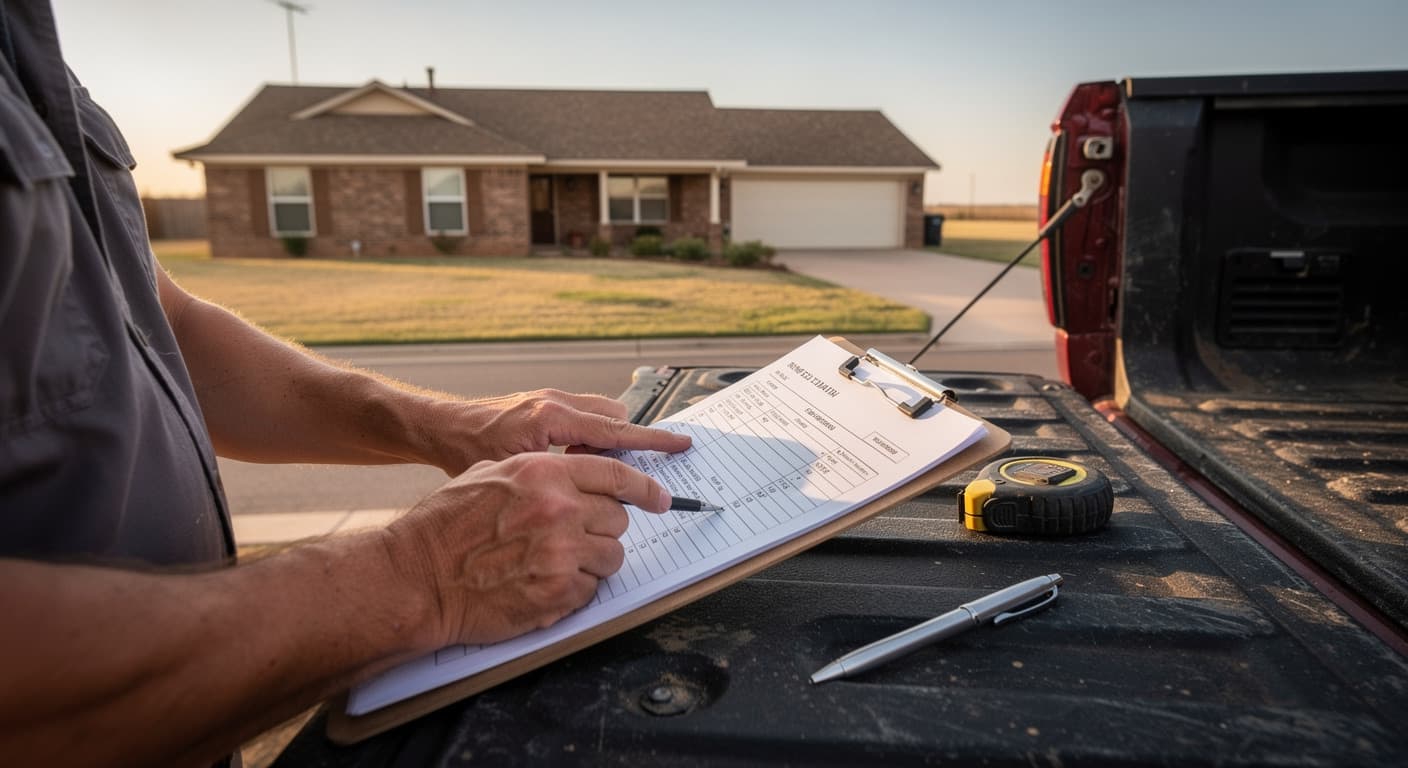
Choosing a reliable contractor in Lubbock comes down to five checks: confirm City of Lubbock registration and state licenses for the electrician, plumber, and HVAC contractor, verify insurance with the agent, compare written itemized bids, sign a contract that ties payments to finished milestones, and collect a lien release every time you pay. Texas has no statewide license for general contractors or remodelers, so most of the vetting falls on you. Texas law also protects homeowners more than most realize, from a required disclosure statement on residential contracts to a 10 percent retainage rule.
On this page
- 01What Texas and the City of Lubbock Actually Require
- 02How to Vet a Lubbock Contractor, Step by Step
- 03Insurance, Workers' Comp, and Bonds
- 04What an Itemized Bid Should Show
- 05What a Texas Residential Contract Should Include
- 06How to Pay: Milestones, Retainage, and Lien Releases
- 07Permits and Inspections in Lubbock
- 08The Lubbock Factor: Storm Chasers and Other Red Flags
- 09If a Job Goes Wrong: What Texas Law Gives You
- 10A Note from Nextgen Blueprint
- 11Frequently asked questions
What Texas and the City of Lubbock Actually Require
Texas does not license general contractors, home builders, or remodelers. Licensing happens at the trades and at the city. Inside city limits, the City of Lubbock requires building and general contractors to register with Building Safety, backed by $100,000 in general liability insurance or a $20,000 compliance bond, and it will not issue permits to an unregistered contractor. The trades answer to state agencies:
| Who is doing the work | Who regulates it | How to check |
|---|---|---|
| General contractor or remodeler | No state license; City of Lubbock registration | Confirm with Building Safety, 806-775-2087 |
| Roofer | No state license; city registration and a $75 reroof permit | Confirm registration and the permit |
| Electrician | Texas Department of Licensing and Regulation (TDLR) | TDLR license search |
| HVAC contractor | TDLR, Class A or Class B license | TDLR license search |
| Plumber | Texas State Board of Plumbing Examiners (TSBPE) | TSBPE license search |
| Irrigation installer | TCEQ, or a licensed plumber | TCEQ license search |
How to Vet a Lubbock Contractor, Step by Step
Do this before anyone bids. It takes an evening and filters out most problems before they reach your driveway.
- Confirm City of Lubbock registration. No registration means no permits.
- Get the names of the licensed electrician, plumber, and HVAC contractor, and look up each license.
- Check for a physical Lubbock-area address and, for an LLC or corporation, an active status on the Texas Comptroller's free franchise tax search.
- Read reviews and complaint history for patterns, including how the company responded.
- Call two or three references from the last year with projects like yours.
- Confirm the certificate of insurance with the agent, not the contractor.
- For a home built before 1978, confirm the firm is EPA Lead-Safe Certified before work disturbs painted surfaces.
Insurance, Workers' Comp, and Bonds
The city's $100,000 liability minimum is a floor. For a remodel or new build, $1 million per occurrence is a common limit, and you can ask to be named as the certificate holder. Workers' compensation is optional for most private Texas employers, according to the Texas Department of Insurance, so ask, and if the contractor is a nonsubscriber, ask how an injured worker's medical bills get paid.
On a large project, TDI suggests asking for a surety bond. A performance bond pays if the contractor does not do the contracted work; a payment bond pays subcontractors and suppliers the contractor fails to pay. Bonds cover only what is in the contract and take a couple of weeks to obtain.
What an Itemized Bid Should Show
Get at least three written bids for the same scope. TDI advises bids on company letterhead with a phone number and address, and never signing a document with blank spaces. A low total often means something is missing, so compare what each bid includes before you compare prices. For a sanity check first, our free instant estimate returns a ballpark range in under a minute. A bid worth comparing shows:
- Line items for demolition, materials, labor, and haul-off, not a lump sum.
- Dollar allowances for anything not yet selected, like tile, fixtures, or cabinets.
- Permit fees, and a statement that the contractor pulls the permits.
- How hidden conditions, like rot behind tile or a slab leak, are handled and priced.
- A start date, a realistic duration, and a list of exclusions.
What a Texas Residential Contract Should Include
Before you sign a residential construction contract, Texas Property Code Section 53.255 requires the contractor to give you a disclosure titled "Know Your Rights and Responsibilities Under the Law." It tells you to get the scope, schedule, cost, and payment terms in writing, and it warns that an oral promise left out of the contract may not be enforceable. A solid contract includes:
- A scope detailed enough for another contractor to price, with plans and allowances attached.
- Start and completion dates, and a payment schedule tied to completed milestones rather than calendar dates.
- The list of subcontractors and suppliers that Section 53.256 requires before work starts, unless you sign a waiver, which there is rarely a reason to do.
- A change-order process: written, priced, and signed before extra work starts.
- Written warranty terms, plus who pulls permits, who cleans up, and how disputes get resolved.
How to Pay: Milestones, Retainage, and Lien Releases
There is no standard deposit for a remodel, so tie it to something real, like special-order cabinets, and never let it be most of the job. TDI warns against large or full down payments and says to hold the final payment until the work is done. Pay against milestones you can see, such as rough-in inspections passed or cabinets set, and expect a disbursement statement listing the subcontractors each payment covers, as Section 53.258 requires.
Texas adds three more protections. Section 53.101 has you reserve 10 percent of the contract price until 30 days after completion; skip it, and a subcontractor who follows the notice process can claim a lien on your home up to that amount. Collect a conditional lien release with each payment and an unconditional one when the check clears, on the statutory forms in Section 53.284, or the release is unenforceable. And Section 53.259 makes a signed bills-paid affidavit a condition of final payment. Your payments are also trust funds under Chapter 162, held in a dedicated construction account on homestead contracts over $5,000.
- Statutory retainage
- 10% until 30 days after completion
- Lien release forms
- 4 statutory versions
- Homestead jobs over $5,000
- Construction account required
Permits and Inspections in Lubbock
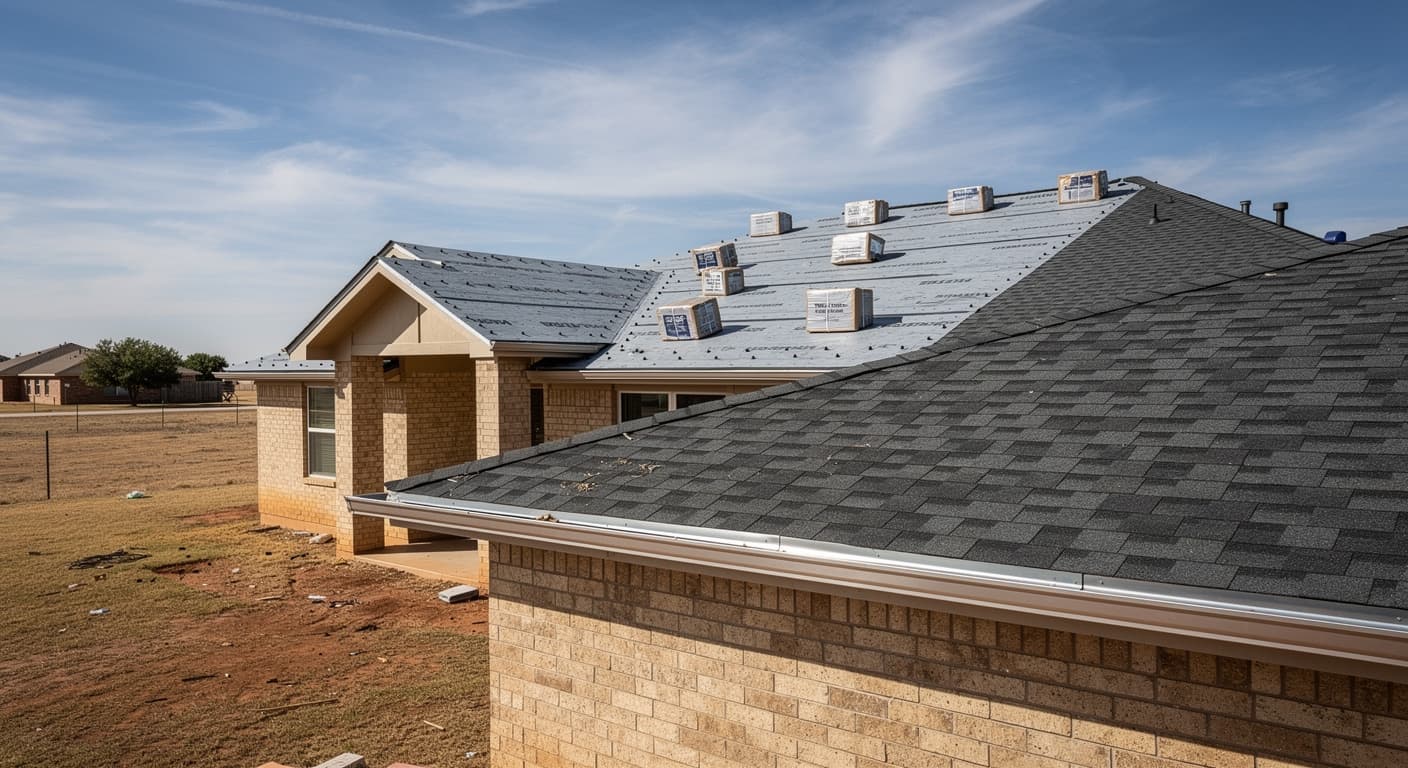
The City of Lubbock requires permits for structural, electrical, plumbing, and mechanical work, including window replacement, wall removal, new circuits, relocated plumbing, water heater replacement, and HVAC change-outs. A reroof needs a $75 roofing permit and a final inspection, and starting October 1, 2026, a residential roof replacement affidavit signed by both the contractor and the homeowner. The city has enforced the 2021 International Codes since June 3, 2024. Our roof replacement cost guide covers what a permitted reroof should include.
Your contractor should pull the permits. Homeowners can pull building, plumbing, and mechanical permits only for a homestead they live in, when they or immediate family do the work, and electrical permits must come from a licensed electrical contractor. A contractor who asks you to pull the permit is shifting legal responsibility to you, and the city lists that request as reportable. Permits expire 180 days after the last inspection, and inspections check code minimums, not workmanship.
The Lubbock Factor: Storm Chasers and Other Red Flags
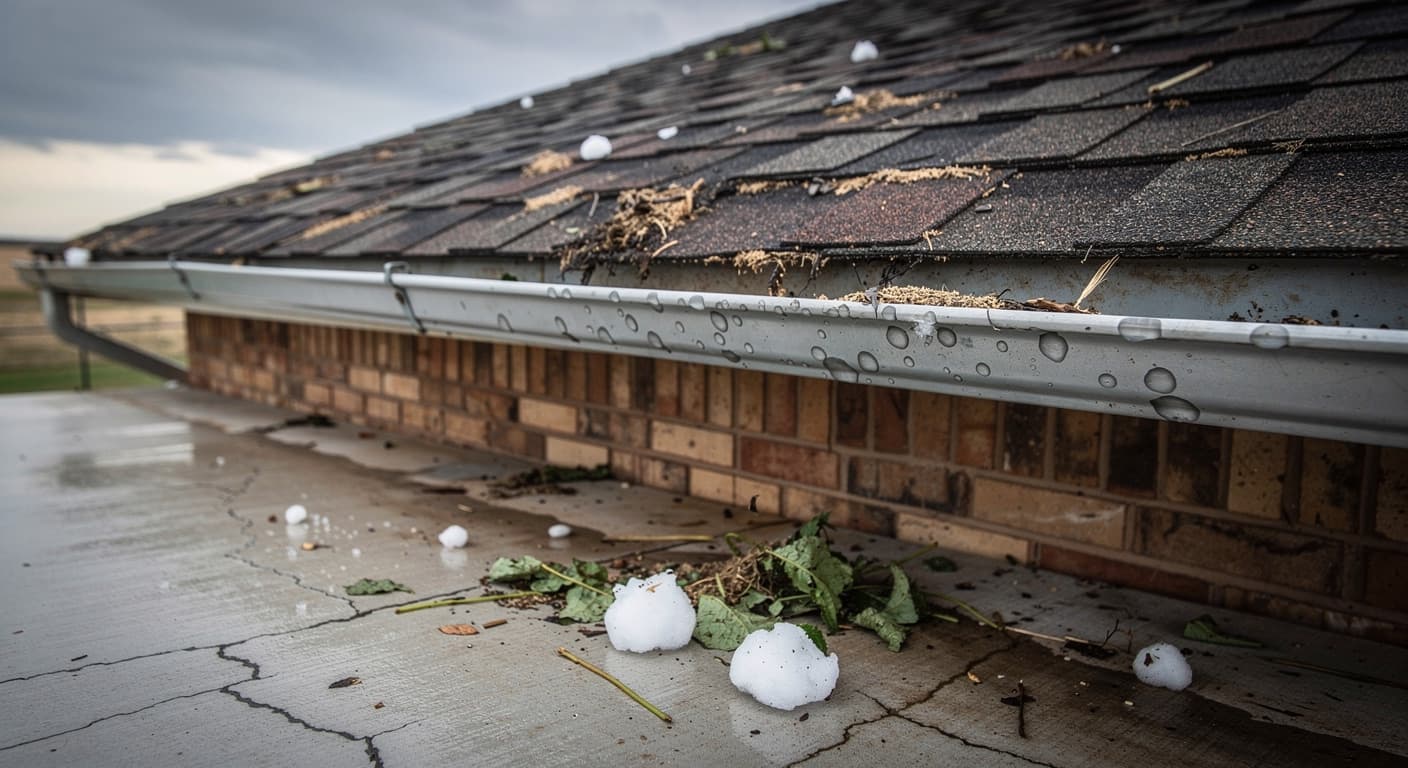
Hail from April through June and 60 to 100 mph wind events bring out-of-town crews to Lubbock doors every spring, and many are gone before the first leak. Offering to pay, waive, or rebate your deductible is a Class B misdemeanor under Business and Commerce Code Section 27.02, and insurance-paid contracts of $1,000 or more must say so in bold. After a declared disaster, a contractor without a local business address for at least a year cannot require payment before starting work (Chapter 58). Sign at home with a door-to-door seller and you generally have until midnight of the third business day to cancel (Chapter 601).
Work through our hail damage checklist before you sign, and start your bids with our list of the top roofing companies in Lubbock. Walk away from:
- An offer to cover, waive, or bury your deductible in the price.
- Contract language agreeing to repairs for the value of insurance proceeds, which TDI warns hands over your whole claim payment.
- Pressure to sign today, or a demand for cash or a big deposit before work starts.
- No city registration, no local address, or a request that you pull the permit.
- A price far below every other bid.
If a Job Goes Wrong: What Texas Law Gives You
Defect disputes run through Texas Property Code Chapter 27, the Residential Construction Liability Act. At least 60 days before filing suit, you send written notice by certified mail, return receipt requested, describing the defects with your evidence. The contractor gets 35 days to inspect and 60 days from your notice to make a written offer, which can be an offer to repair; accepted repairs are due within 60 days. Reject an offer a court later finds reasonable, and your recovery can be capped at that offer.
Chapter 27 overrides the Deceptive Trade Practices Act where they conflict on defects, but the DTPA still covers misleading practices, breach of warranty, and unconscionable conduct, with 60 days' notice, a two-year deadline, and up to three times economic damages for knowing violations. Job abandonment and misapplied trust funds fall outside Chapter 27. One correction to older guides: the Texas Residential Construction Commission was abolished through the Sunset process in 2009 and closed in 2010. This is general information, not legal advice.
A Note from Nextgen Blueprint
This guide was researched and published by Nextgen Blueprint, a Lubbock design-build general contractor founded by John Paul and his father-in-law, a Lubbock-area builder with more than 30 years in the trade. The statutes and city rules cited here were accurate as of September 2026; confirm permit questions with Building Safety and legal questions with a Texas attorney. If you are comparing remodel bids, our whole-home remodeling team will give you the disclosure statement, proof of registration and insurance, and a written, itemized quote to check.
Frequently asked questions
Do contractors need a license in Texas?
How do I check if a contractor is legitimate in Lubbock?
How much should I pay a contractor up front in Texas?
What is the 10 percent retainage rule in Texas?
Can a roofer waive my insurance deductible in Texas?
Can I cancel a contract with a door-to-door contractor in Texas?
Should my contractor or I pull the building permit in Lubbock?
What happened to the Texas Residential Construction Commission?
Sources and further reading
- [1]Texas Property Code Chapter 53: Mechanic's, Contractor's, or Materialman's Lien
- [2]Texas Property Code Chapter 27: Residential Construction Liability
- [3]City of Lubbock Building Safety: FAQs and contractor credentials
- [4]Texas Department of Insurance: How to avoid contracting scams
- [5]Texas Sunset Advisory Commission: Texas Residential Construction Commission
Written by
John Paul, Founder, Nextgen Blueprint
John Paul founded Nextgen Blueprint with his father-in-law, a Lubbock-area general contractor with 30+ years of experience. They build healthy, natural homes for Lubbock families, and approach every project with the kind of care and attention to detail most contractors save for their own home.
More from JohnRelated services
Filed under Homeowner Guides. Practical playbooks for owning a home on the South Plains.