Homeowner Guides12 min read
After a Lubbock Hailstorm: A Homeowner's Damage Checklist and Claim Guide (2026)
What Lubbock homeowners should do after hail: stay safe, confirm the storm, photograph damage, stop leaks, work with a local roofer, and file a Texas claim without falling for storm chasers.
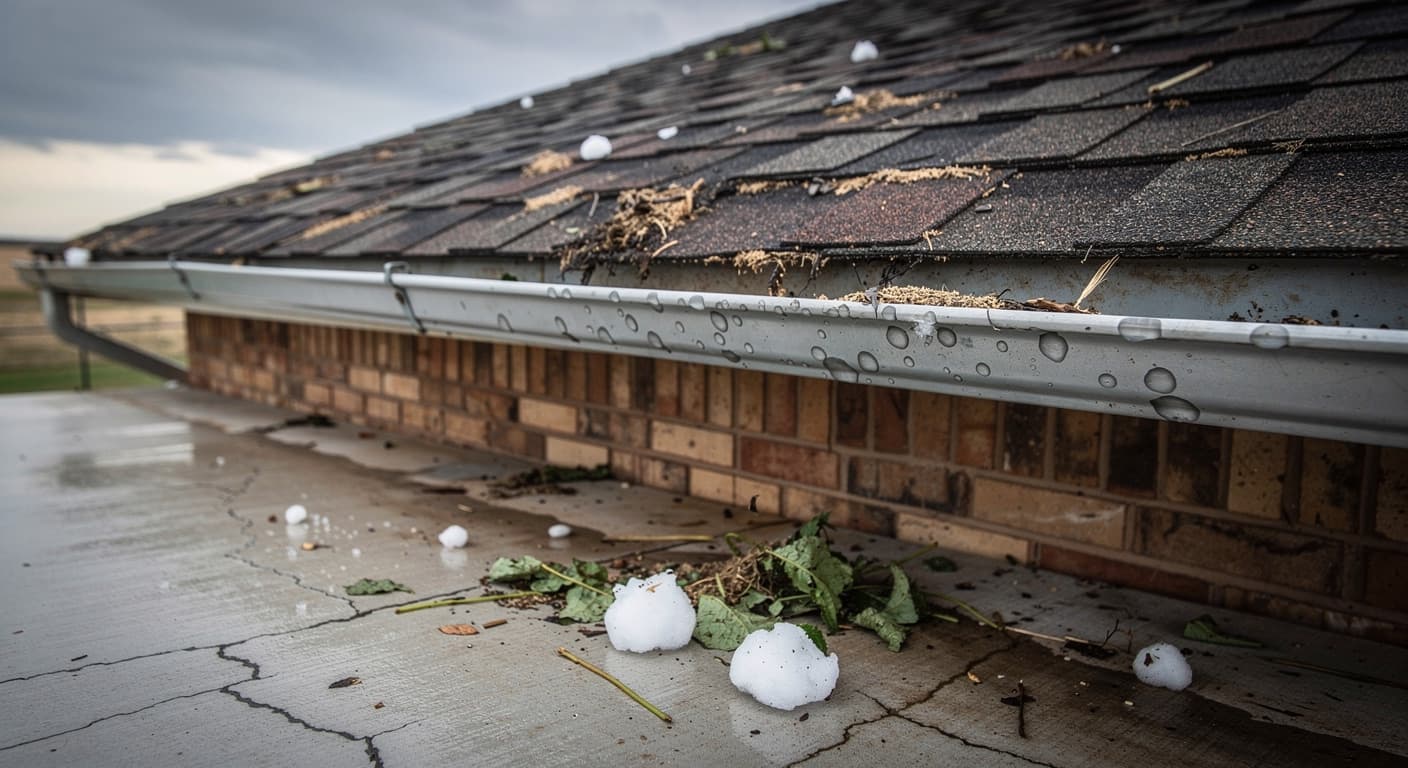
After a Lubbock hailstorm, work in this order: stay safe and off the roof, record the date and hail size, photograph the damage from the ground, check inside for leaks and make temporary repairs, have a reputable local roofer document the damage, and then file your claim. Many Texas policies carry a separate wind and hail deductible, often 1 to 2 percent of dwelling coverage, so a home insured for $300,000 pays the first $3,000 to $6,000, and Texas law makes it a crime for a contractor to waive or rebate it. Here is each step, how the claim works, and the deadlines that matter.
On this page
- 01What to Do After a Hailstorm in Lubbock: The Checklist at a Glance
- 02The Lubbock Factor: Why Hail Hits Harder on the South Plains
- 03Step 1: Safety First, and Why You Should Stay Off the Roof
- 04Step 2: Record the Date, Time, and Hail Size
- 05Step 3: The Exterior Photo Checklist
- 06Step 4: Check Inside for Leaks and Ceiling Stains
- 07Step 5: Prevent Further Damage and Save Every Receipt
- 08Step 6: Get a Local Roofer Inspection and Know the Texas Storm-Chaser Rules
- 09Step 7: File the Claim and Understand Deductibles, ACV, and RCV
- 10Claim Deadlines and What to Do If Your Claim Is Denied
- 11A Note from Nextgen Blueprint
- 12Frequently asked questions
What to Do After a Hailstorm in Lubbock: The Checklist at a Glance
Hail damage is easy to underestimate from the driveway and easy to mishandle in the first few days. Work through these steps in order.
- Get everyone safe, and stay off the roof.
- Record the date, time, and hail size, and confirm the storm in public reports.
- Photograph the roof from the ground and every damaged surface outside.
- Check ceilings, the attic, and window sills for leaks.
- Make temporary repairs to stop further damage, and save every receipt.
- Have a reputable local roofer inspect and document the damage.
- File the claim and meet the adjuster with your roofer there.
- Track the deadlines, and push back in writing if the claim falls short.
- Peak hail season
- April through June
- NWS severe hail size
- 1 inch (quarter) and up
- Common wind and hail deductible
- 1 to 2 percent of dwelling coverage
The Lubbock Factor: Why Hail Hits Harder on the South Plains
Lubbock sits in one of the most hail-prone corridors in Texas. Most of its hail falls April through June, but not all of it: on September 15, 2026, NWS Lubbock logged quarter-size hail on the city's northwest edge and a measured 71 mph gust south of Wolfforth.
Three local conditions make the same storm costlier here. At roughly 3,250 feet, intense UV and heat leave older shingles brittle, so a 15-year-old roof cracks under hail a newer one would shrug off. Strong storms here can carry 60 to 80 mph gusts that drive hail sideways into siding, screens, and fences. And a big storm draws out-of-town roofing crews within days, some of whom are hard to find once a warranty problem shows up.
Step 1: Safety First, and Why You Should Stay Off the Roof
Check for hazards before you check shingles. Stay clear of downed power lines and report them to LP&L or your electric provider. If you smell gas, leave and call from outside. If water is dripping near a light fixture, shut off that circuit at the breaker, and keep everyone out from under a sagging, wet ceiling.
Then stay on the ground. A hail-beaten roof is littered with loose granules that roll underfoot like ball bearings, and a fall from even a one-story eave can be serious. Photograph from the yard, an upstairs window, or with your phone's zoom, and leave the close inspection to a roofer with fall protection and your adjuster. Walking on freshly hit shingles can also crack ones the storm missed.
Step 2: Record the Date, Time, and Hail Size
Your claim is built on the date of loss, so write down the date, the approximate time, and the largest stones you saw while it is fresh. Once it is safe, photograph a few hailstones next to a ruler or a coin. The National Weather Service treats hail 1 inch across (quarter size) or larger as severe.
Then confirm the storm in the public record, because your insurer will. Your deductible applies to each claim, so if two storms hit in one season, you need to know which one did the damage.
| Where to look | What it shows | When it is available |
|---|---|---|
| NWS Lubbock storm report map | Preliminary hail and wind reports with size and location | The last 24 hours by default |
| NWS Lubbock event archive | Summaries of notable local storms | After significant events |
| NOAA Storm Prediction Center | Daily preliminary hail, wind, and tornado reports | Archived by date |
| NOAA Storm Events Database | The official record, searchable by county | About 75 to 90 days after the month ends |
Step 3: The Exterior Photo Checklist
Shoot wide photos of each side of the house first, then close-ups, and keep the original files with their dates. Soft metals are your strongest evidence, because aluminum and thin steel dent at hail sizes that may not visibly mark a shingle.
- Roof, from the ground: missing or cracked shingles, dark spots where granules are gone, and dented ridge caps.
- Gutters and downspouts: dents along the front lip, and granules washing out of the downspouts.
- Roof metals: turtle vents, ridge vents, pipe jacks, flashing, and drip edge.
- Siding, trim, and garage door: cracked vinyl, dented metal, chipped paint, and spatter marks.
- Windows: torn screens, cracked glass, and dented frames or window wraps.
- AC condenser: flattened or dented fins on all four sides.
- Fences, patio covers, and sheds: split boards, dented metal, and cracked panels.
- Vehicles: car damage is a separate auto claim under comprehensive coverage.
Step 4: Check Inside for Leaks and Ceiling Stains
Hail damage does not always leak right away, so check inside the day of the storm and again after the next hard rain. A stain that shows up two weeks later still traces back to the storm date.
- Ceilings in every room, especially below valleys, skylights, and roof vents.
- The attic, if you can see in safely from the hatch: wet insulation, dark spots on the roof deck, and daylight around pipes.
- Window sills and walls on the storm side, where wind-driven rain gets in.
- Once the roof is dried in, stained ceilings are part of the claim. Our drywall repair cost guide covers the fix, and our painting crew can match the finish.
Step 5: Prevent Further Damage and Save Every Receipt
You are expected to keep known damage from getting worse. Homeowners policies generally list protecting the property among your duties after a loss, and the Texas Department of Insurance (TDI) tells homeowners to cover holes and broken windows, remove standing water, and save receipts, since the policy may pay for temporary repairs.
The key word is temporary. TDI warns that permanent repairs made before the insurer sees the damage can give it a reason to deny the claim. Photograph everything before it is covered, and keep damaged items until the adjuster says you can toss them. If the house is not livable, ask about additional living expenses.
Step 6: Get a Local Roofer Inspection and Know the Texas Storm-Chaser Rules
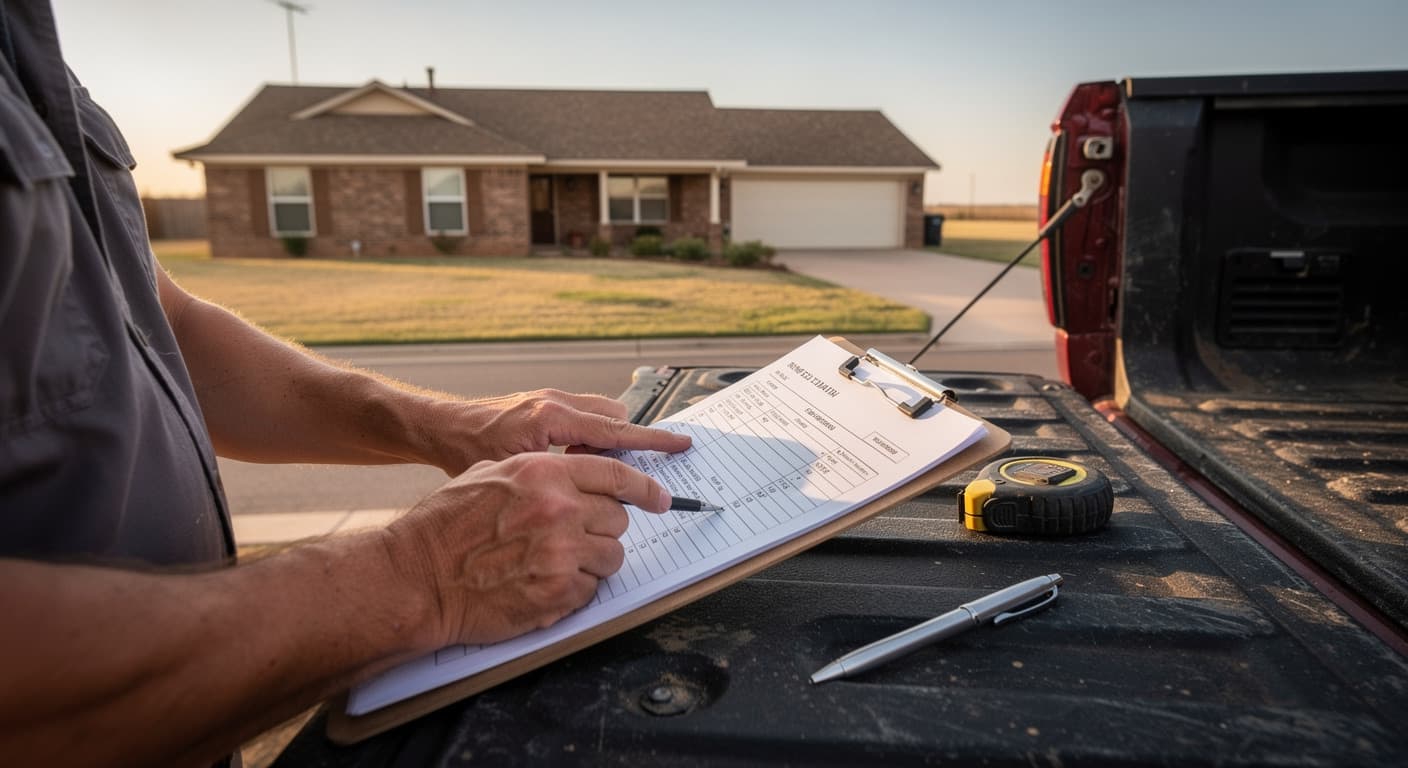
Before you file, or right alongside it, have an established local roofer inspect and document the damage: dated photos of each slope, dented soft metals, measurements, a repair-or-replace opinion, and an itemized estimate. That tells you whether the damage likely clears your deductible and gives you a record to compare with the adjuster's. Just do not let it delay the claim more than a few days. Our list of the top roofing companies in Lubbock is a good starting point, and TDI reminds insurers and contractors that homeowners can choose who repairs their home.
Texas does not license residential roofers, so know these rules, and use our guide to choosing a reliable contractor for the rest of your vetting.
- Deductible waivers are illegal. Insurance Code Section 707.002 requires you to pay your deductible, and Business and Commerce Code Section 27.02 makes it a Class B misdemeanor for a contractor to pay, waive, rebate, or credit it without the insurer's consent. Report offers to the Texas Attorney General at 800-621-0508.
- A roofer cannot be your adjuster. Insurance Code Section 4102.163 bars contractors from acting as your public adjuster, including filing or negotiating the claim, though a roofer can give an estimate and discuss it with your adjuster.
- Read before you sign. TDI warns that some contractors call a contract an estimate or a release just to get on your roof, and says not to sign anything agreeing to repairs 'for the value of insurance proceeds,' the clause to look for in any contingency agreement.
- Skip the assignment of benefits. An AOB lets a contractor file the claim, make repair decisions, and collect payment without you, and the NAIC notes you do not need one to get repairs done.
- Hold the down payment. After a declared disaster, Business and Commerce Code Chapter 58 generally bars contractors without a business address in your county or a neighboring county for at least a year from requiring payment up front.
- Use your three days. The FTC's Cooling-Off Rule generally lets you cancel a sale of $25 or more made at your home until midnight of the third business day.
Step 7: File the Claim and Understand Deductibles, ACV, and RCV
File by phone or online, note the claim number, and log every conversation. Be home for the adjuster visit with your roofer there, as TDI recommends, so a damaged slope or a row of dented vents does not get missed.
Two things decide what a hail damage roof insurance claim in Texas pays. One is the deductible, often a separate wind and hail deductible of 1 to 2 percent of dwelling coverage. The other is whether the roof is covered at replacement cost value (RCV) or actual cash value (ACV), and TDI notes some insurers switch aging roofs to ACV at renewal. RCV usually pays in two checks, the second after the work is done, and under Insurance Code Section 707.004 the insurer can hold that second check until you prove you paid your deductible.
If the roofer finds items the adjuster missed, such as rotten decking, they submit a supplement with photos. With a mortgage, expect the check to name your lender too. Our roof replacement cost guide shows what a new roof runs in Lubbock.
| Line item | RCV policy | ACV policy |
|---|---|---|
| Cost to replace the roof | $12,000 | $12,000 |
| Wind and hail deductible (1 percent of $300,000) | $3,000 | $3,000 |
| Depreciation on a 12-year-old roof (example) | $4,800, paid after the work is done | $4,800, never paid |
| Insurer pays in total | $9,000 | $4,200 |
| Your out-of-pocket | $3,000 | $7,800 |
Claim Deadlines and What to Do If Your Claim Is Denied
Texas insurers must acknowledge a claim within 15 days, accept or deny it within 15 business days of getting everything they requested (up to 45 days if they explain the delay), and pay within five business days of approving it. A denial must be in writing, with the reason. On your side, TDI notes some policies set a one-year deadline to file, and RCV policies usually set a window to finish repairs, so check your policy for both dates. If the answer is no, or too low:
- Get the decision in writing and find the policy language it cites.
- Send what the adjuster missed: your roofer's report, photos, and storm reports for your date of loss.
- Ask for a re-inspection with your roofer on site.
- If the dispute is over the amount rather than coverage, invoke appraisal. Each side hires an appraiser, an umpire settles the differences, and the result is binding.
- File a written complaint with TDI online, or call its help line at 800-252-3439.
- Consult a licensed public adjuster or an attorney. Texas generally requires written notice at least 61 days before you sue over storm damage.
A Note from Nextgen Blueprint
This guide was researched and published by Nextgen Blueprint, a Lubbock design-build contractor whose roofing team handles storm inspections, roof replacements, and the drywall and paint repairs that follow a leak. It is general information, not legal or insurance advice, and your policy controls your claim. Deadlines and legal references were checked against TDI guidance and Texas statutes and were accurate as of September 2026. After a storm, call (806) 472-4572, and we will document what we find in a written, itemized estimate you can compare with your deductible.
Frequently asked questions
What should I do after a hail storm in Lubbock?
Should I call a roofer or my insurance company first after hail?
Is it illegal for a roofer to pay or waive my deductible in Texas?
Will filing a hail claim raise my homeowners insurance in Texas?
What is the difference between ACV and RCV on a roof claim?
How long do I have to file a hail damage claim in Texas?
What can I do if my hail damage claim is denied?
Sources and further reading
Written by
John Paul, Founder, Nextgen Blueprint
John Paul founded Nextgen Blueprint with his father-in-law, a Lubbock-area general contractor with 30+ years of experience. They build healthy, natural homes for Lubbock families, and approach every project with the kind of care and attention to detail most contractors save for their own home.
More from JohnRelated services
Filed under Homeowner Guides. Practical playbooks for owning a home on the South Plains.