Cost Guides15 min read
Metal Roof Cost in Lubbock, TX: R-Panel vs Standing Seam, Hail & Insurance (2026)
What a metal roof costs in Lubbock in 2026: R-panel, standing seam, and stone-coated steel prices, gauge and paint finishes, what hail does to metal, the cosmetic damage exclusion, and when metal can go over shingles.
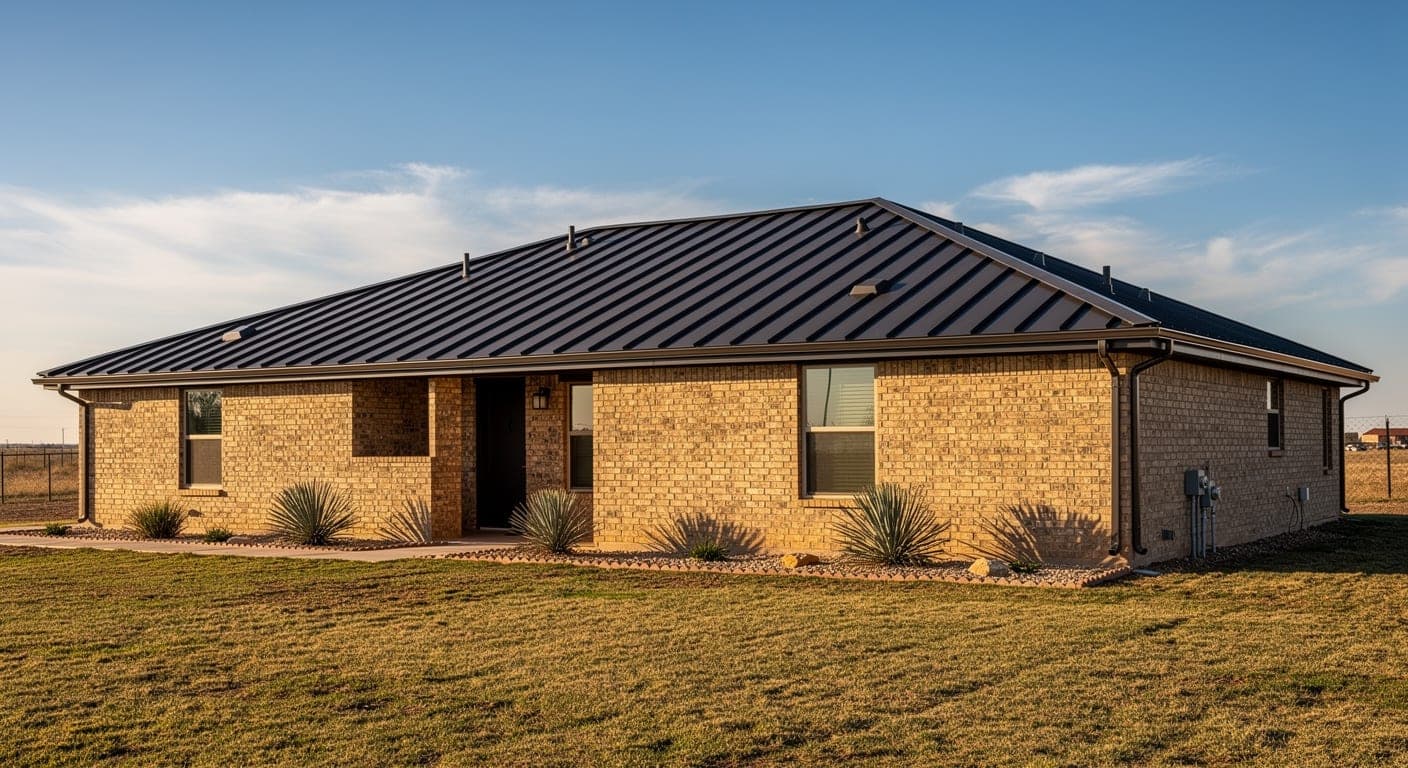
A metal roof on a typical Lubbock home costs $12,000 to $30,000+ installed in 2026. Exposed-fastener R-panel runs $12,000 to $20,000, stone-coated steel about $16,000 to $28,000, and standing seam $18,000 to $30,000 and up. That is more than the $8,000 to $13,000 most homeowners pay for architectural shingles, but metal lasts 40 to 60 years on the South Plains instead of 15 to 20. The catch in hail country is insurance: Texas policies can exclude cosmetic hail dents on metal, so read the policy before you choose the panel.
On this page
- 01What a Metal Roof Costs in Lubbock (2026)
- 02Where the Money Goes on a Metal Roof
- 03R-Panel vs Standing Seam vs Stone-Coated Steel
- 04Gauge and Paint: 24, 26, or 29 Gauge, Kynar or SMP
- 05The Lubbock Factor: What Hail Actually Does to a Metal Roof
- 06Insurance: Discounts and the Cosmetic Damage Exclusion
- 07Worked Example: Metal vs Class 4 Shingles on a 1,900 Square Foot Ranch
- 08Is a Metal Roof Worth It in Lubbock?
- 09Noise, Heat, and Lightning: Metal Roof Myths
- 10Metal Over Shingles, Permits, and Timeline in Lubbock
- 11How to Get an Accurate Metal Roof Quote
- 12A Note from Nextgen Blueprint
- 13Frequently asked questions
What a Metal Roof Costs in Lubbock (2026)
These are 2026 installed prices for a typical 2,000 square foot Lubbock home, which carries a roof of about 23 to 26 squares once pitch and overhangs are counted. A square is 100 square feet of roof surface. The prices include tear-off of one layer of shingles, underlayment, panels or shingles, trim, flashing, the City permit, and cleanup. The R-panel and standing seam ranges are the same ones on our roofing service page and in our roof replacement cost guide, which covers shingles in detail.
Per square, R-panel works out to roughly $460 to $870 and standing seam to roughly $700 to $1,300, against $350 to $550 for architectural shingles. A small, simple roof lands at the bottom of each range. A two-story house, a steep pitch, a lot of valleys and hips, or thicker metal pushes it to the top.
- Metal roof, typical home
- $12,000 to $30,000+
- R-panel
- $12,000 to $20,000
- Standing seam
- $18,000 to $30,000+
| Roof type | Installed cost (typical home) | Per square (approx.) | What you get |
|---|---|---|---|
| Architectural shingle (for comparison) | $8,000 to $13,000 | $350 to $550 | The Lubbock standard; 15 to 20 years here |
| Class 4 impact-resistant shingle | $9,500 to $16,000 | $370 to $700 | UL 2218 Class 4; usually earns an insurance discount |
| Metal, R-panel or ribbed | $12,000 to $20,000 | $460 to $870 | Exposed-fastener steel panels; 40-plus years |
| Stone-coated steel shingle or shake | $16,000 to $28,000 | $620 to $1,220 | Steel with a granule finish that looks like shingles, shake, or tile |
| Metal, standing seam | $18,000 to $30,000+ | $700 to $1,300 | Concealed fasteners, the longest-lived option |
Where the Money Goes on a Metal Roof
Metal costs more than shingles for two reasons: the material itself, and slower, more skilled labor. Panels are cut to length, every edge needs custom trim, and the crew has to handle long sheets on a windy roof. A full quote should break out these pieces:
- Panels or metal shingles: the largest line, driven by profile, gauge (thickness), and paint system.
- Tear-off and disposal of the old roof, plus any rotten decking replaced by the sheet. National estimates put tear-off alone at about $1,000 to $7,400 depending on size and weight.
- Underlayment: a high-temperature synthetic underlayment under the panels, and ice and water membrane in valleys and at penetrations.
- Trim and flashing: drip edge, eave and rake trim, ridge cap, valley metal, and the closures that keep dust, rain, and wasps out of the panel ribs.
- Fasteners or clips: painted screws with sealing washers on R-panel, or hidden clips on standing seam.
- Pipe boots, vents, and any skylight or chimney flashing, which take more time on metal than on shingles.
- The $75 City of Lubbock reroof permit and final inspection.
R-Panel vs Standing Seam vs Stone-Coated Steel
Most Lubbock metal roofs are one of three systems, and they differ more in how they are fastened than in the metal itself.
R-panel, also sold as ribbed or PBR panel, is the panel you see on shops, barns, and many ranch homes around the South Plains. It is screwed straight through the face of the panel into the deck or into wood strips called purlins. It is the least expensive metal and goes on fast. The trade-off is hundreds of exposed screws, each sealed by a rubber washer that weathers in the sun and needs periodic inspection.
Standing seam hides its fasteners. Clips hold the panels to the deck, and the raised seams lock together, which lets the metal expand and contract through Lubbock's big daily temperature swings without working screws loose. It costs the most, looks the cleanest, and needs the least upkeep.
Stone-coated steel is a steel shingle, shake, or tile profile coated with stone granules. It suits neighborhoods where deed restrictions or taste rule out a panel look. National installed prices run about $7 to $15 per square foot, which we place at roughly $16,000 to $28,000 on a typical Lubbock home.
| R-panel (exposed fastener) | Standing seam | Stone-coated steel | |
|---|---|---|---|
| Typical Lubbock cost | $12,000 to $20,000 | $18,000 to $30,000+ | $16,000 to $28,000 |
| Fasteners | Screws through the panel face | Hidden clips | Nails or screws hidden by the next course |
| Upkeep | Inspect screws and washers every few years | Low | Low; touch up chipped granules |
| Look | Agricultural, ranch | Clean, modern lines | Shingle, shake, or tile |
| Minimum pitch (model code) | 3:12 without lap sealant | 1/4:12 | Per manufacturer, usually steeper |
| Install time | 2 to 5 days | 3 to 7 days | Similar to standing seam |
Gauge and Paint: 24, 26, or 29 Gauge, Kynar or SMP
Gauge is metal thickness, and the scale runs backward: a lower number is thicker. Residential roofs typically run from 22 to 29 gauge. R-panel is commonly sold in 29 and 26 gauge, and standing seam in 24 and 26. Thicker steel costs more and resists denting better, which matters in a hail town. On a typical home, stepping from 29 to 26 gauge R-panel is one of the better uses of a metal roof budget.
The paint matters as much as the steel. The two common systems are SMP (silicone-modified polyester) and PVDF, often sold under the Kynar 500 name. A PVDF finish must be at least 70 percent PVDF resin to carry that name, and manufacturers rank it first for resisting fade and chalking. SMP is the mid-tier system found on most stock panel. PVDF raises the material price, but because labor does not change, the increase on the whole job is usually modest. Under high-altitude West Texas sun, especially on dark or red colors, PVDF is worth pricing. Read the paint warranty itself: fade and chalk coverage are separate terms from the steel warranty, and bright colors often get shorter terms.
The Lubbock Factor: What Hail Actually Does to a Metal Roof
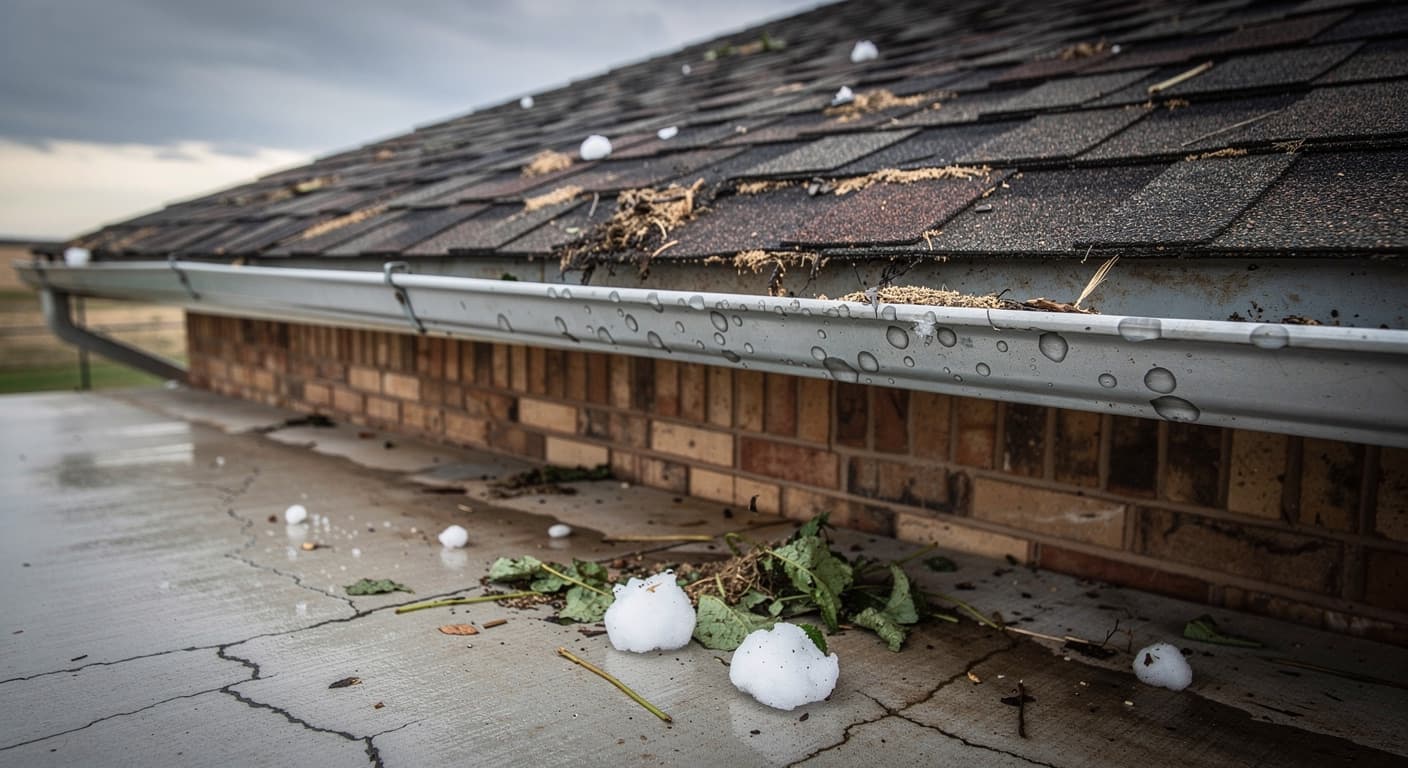
Hail is the reason most Lubbock homeowners look at metal. NOAA's Storm Prediction Center logged hail reports on an average of 50 days a year within about 124 nautical miles of Lubbock's radar from 1980 to 2006, including 937 reports of hail 2 inches or larger. Thunderstorm wind reports came on 34 days a year. No roof is immune to that.
Many metal roofing products carry a UL 2218 Class 4 impact rating, the top class. The test drops steel balls, up to 2 inches across for Class 4, on new samples and checks for cracks, splits, and ruptures. Under the test, cosmetic damage alone does not count as a failure. A Class 4 metal panel can dent and still pass, which is why a Class 4 metal roof and a Class 4 shingle behave differently after a storm: the shingle may come through looking fine or crack, while metal usually keeps out water but shows every dent.
Are those dents a problem? A study published by the International Institute of Building Enclosure Consultants in 2025 tested 26 gauge Galvalume R-panel dented with balls from 1.25 to 2 inches in a 336-hour salt spray test, and found no corrosion caused by the dents. The authors also inspected a Fort Worth R-panel roof hit by hail up to about 2.5 inches in 1995. Some 27 years later, the dents showed no corrosion, and the leaks they found were at screws and panel laps. Their conclusion: a dent is cosmetic unless it splits the metal or opens a seam. That is good news for performance and the heart of the insurance problem.
- Days with hail reports, Lubbock radar area
- 50 a year
- Reports of 2-inch or larger hail, 1980 to 2006
- 937
- Real metal roof lifespan
- 40 to 60 years
Insurance: Discounts and the Cosmetic Damage Exclusion
In August 2026 the Texas Department of Insurance (TDI) published four points every Lubbock homeowner should read before buying metal. A metal roof might lower your premium, but not every insurer offers a discount, and savings vary. Metal can still dent or scratch from hail, wind-blown debris, and branches. A roof discount may come with an exclusion for cosmetic damage, so if hail only changes how the roof looks and it still works, the insurer may not pay. And coverage for cosmetic damage can change at renewal, when insurers can add exclusions.
Texas has allowed these exclusions since 1998, when TDI approved optional endorsements for policies receiving an impact-resistant roof credit. They define cosmetic damage as damage that changes the roof's appearance but does not let water in or cause the roof to fail. Damage that does leak stays covered.
In practice, picture a 2-inch hailstorm that dents every panel on a standing seam roof without a single leak. With cosmetic coverage, that may be a claim. With the exclusion, you live with the dents. TDI also notes many policies reduce coverage as a roof ages, usually more slowly for metal than for shingles, and some insurers move older roofs to actual cash value. Our hail damage checklist covers how a claim works after a storm.
- Ask your agent for two premium quotes: with and without cosmetic coverage on the metal roof, and with any impact-resistant discount.
- Read the roof endorsements on your declarations page, and look for the words cosmetic damage.
- Ask whether the roof is covered at replacement cost or actual cash value, and whether that changes with age.
- Keep the product label, the installer's documentation, and the UL 2218 class, since the discount depends on them.
- Recheck every renewal. TDI's consumer help line is 800-252-3439.
Worked Example: Metal vs Class 4 Shingles on a 1,900 Square Foot Ranch
Take a 1,900 square foot 1970s brick ranch in central Lubbock with a simple gable and hip roof of about 24 squares, one layer of old shingles, and a few sheets of bad decking. Here is how four choices compare. The installed figures are illustrative points inside the published ranges, and the cost per year uses realistic South Plains lifespans, not the label.
| Option | Example installed cost | Realistic life here | Roof cost per year |
|---|---|---|---|
| Class 4 shingles | $12,500 | 15 to 20 years | About $625 to $830 |
| R-panel, 26 gauge, PVDF | $16,500 | 40 to 60 years | About $275 to $410 |
| Stone-coated steel | $21,500 | 40 to 60 years | About $360 to $540 |
| Standing seam, 24 gauge | $24,000 | 40 to 60 years | About $400 to $600 |
Is a Metal Roof Worth It in Lubbock?
On cost per year of roof, metal usually wins for an owner who plans to stay. The example above shows why: even standing seam costs less per year than Class 4 shingles if it lasts its full life. Metal also skips the reroof cycle that hits most Lubbock shingle roofs every 15 to 20 years.
Shingles still make sense in three cases. If you expect to sell within a few years, the extra upfront cost may not come back. If your insurer offers a strong Class 4 shingle discount but would add a cosmetic exclusion to metal, the math can tilt back toward shingles. And if you have an open hail claim, the settlement is generally based on replacing the roof you had, so an upgrade to metal is usually the difference you pay yourself.
Among metals, choose R-panel for the lowest cost on a simple roof and a ranch look, standing seam for the longest life and fewest leak points, and stone-coated steel when you want metal that reads as a shingle or shake.
Noise, Heat, and Lightning: Metal Roof Myths
Noise. Rain and hail on an open barn roof are loud, but a house is built differently. The Metal Construction Association notes that metal over a solid plywood deck with underlayment and attic insulation is no noisier than other roof types. A heavier rubberized underlayment can quiet it further. Metal screwed over open purlins with no deck is the version that drums.
Heat. Metal does not make a house hotter. Light and cool-pigmented metal finishes reflect sunlight, and the EPA reports studies finding that higher roof reflectance can cut peak cooling demand in air-conditioned homes by 11 to 27 percent. Results depend on color, attic insulation, and ductwork in the attic, so ask for the solar reflectance rating from the Cool Roof Rating Council if heat matters to you.
Lightning. The National Weather Service says the presence of metal makes no difference to where lightning strikes. Height, shape, and isolation decide that. TDI also notes that metal roofs resist fire.
Metal Over Shingles, Permits, and Timeline in Lubbock
Putting metal over the old shingles saves tear-off and disposal, and the reroofing section of the International Residential Code allows it in many cases. Lubbock enforces the 2021 IRC. As NRCA summarizes the model code, a new roof cannot go over an existing roof that is water-soaked or deteriorated, that is slate or tile, or that already has two or more layers. A complete metal system that carries its loads to the framing on its own, such as panels on purlins, can go over the old roof. The panel manufacturer must also allow it.
We usually recommend a tear-off anyway. It lets the crew find and replace soft decking, it removes the weight of the old layer, and it gives the underlayment a flat surface. Ask for both prices.
Inside city limits, a reroof needs a $75 permit and a final inspection, and a contractor working for you must be registered with the City. Changing the framing or pitch also needs a remodeling permit. Our Lubbock building permit guide covers the process. Expect two to five days of work for R-panel and three to seven for standing seam, plus lead time for panels cut to length.
How to Get an Accurate Metal Roof Quote
For a quick ballpark, our free instant estimate gives a range in under a minute. Then compare written bids on the same specification:
- Panel type, profile, gauge, paint system, color, and panel manufacturer.
- Tear-off or recover, with the per-sheet price for replacing bad decking.
- Underlayment type, plus ice and water membrane in valleys and at penetrations.
- Every trim piece: drip edge, rake, ridge, valley, closures, and pipe boot type.
- For R-panel, the screw type and pattern; for standing seam, the clip type and spacing at edges and corners, where wind pulls hardest.
- The UL 2218 class and the documents your insurer needs for any discount.
- Who pulls the permit, and the separate manufacturer and workmanship terms in writing.
- City registration and a local address. Our guide to choosing a reliable contractor covers the rest.
A Note from Nextgen Blueprint
This guide was researched and published by Nextgen Blueprint, a Lubbock design-build contractor whose roofing team installs shingle, Class 4, and metal roofs. Treat these numbers as Lubbock-market ranges to budget with as of October 2026, not a quote. The real figure depends on your roof's size, pitch, decking, and the panel you choose. Insurance rules and policy terms were checked against Texas Department of Insurance guidance as of the same date, but your policy controls. This is general information, not insurance advice, so talk with your agent before you choose a roof.
Frequently asked questions
How much does a metal roof cost in Lubbock, TX?
How much does a metal roof cost per square?
Is a metal roof worth it in Lubbock?
Will hail damage a metal roof?
Does homeowners insurance cover hail dents on a metal roof in Texas?
R-panel or standing seam: which is better?
Can you put a metal roof over shingles in Lubbock?
Are metal roofs loud in the rain?
Sources and further reading
- [1]Texas Department of Insurance: Metal roofs and home insurance, 4 key facts for homeowners
- [2]Texas Department of Insurance: Bulletin B-0030-98, cosmetic hail damage endorsements
- [3]Texas Department of Insurance: Replacing your roof
- [4]NOAA Storm Prediction Center: Lubbock radar severe weather climatology
- [5]IIBEC Interface: A study of corrosion resistance within hail dents in Galvalume-coated steel roof panels
- [6]NRCA Professional Roofing: Impact testing may not replicate products' hail resistances
- [7]NRCA Professional Roofing: Reroofing by the book
- [8]Metal Construction Association: Hail and metal roofs, debunking the myths
- [9]McElroy Metal: Metal roof paint systems, Kynar 500 vs SMP
- [10]U.S. EPA: Using cool roofs to reduce heat islands
- [11]National Weather Service: Lightning myths
- [12]Fixr: Stone-coated steel roofing guide
Written by
John Paul, Founder, Nextgen Blueprint
John Paul founded Nextgen Blueprint with his father-in-law, a Lubbock-area general contractor with 30+ years of experience. They build healthy, natural homes for Lubbock families, and approach every project with the kind of care and attention to detail most contractors save for their own home.
More from JohnRelated services
Filed under Cost Guides. What home projects actually cost in Lubbock, line by line.