Cost Guides14 min read
Slab Leak Repair Cost in Lubbock, TX: Detection, Repair & Reroute (2026)
What slab leak repair costs in Lubbock in 2026: leak detection, breaking the slab, tunneling, rerouting, and repiping, plus how leaks move clay-soil foundations and what Texas home policies pay for.
Slab leak repair in Lubbock typically costs $500 to $5,000 in 2026 for a single leak, plus $150 to $400 to find it with electronic leak detection. Where a job lands in that range depends on the route to the pipe: breaking through the floor, tunneling under the slab from outside, or abandoning the line and rerouting it through the attic. When leaks keep coming back, a whole-house PEX repipe at $4,000 to $15,000 often costs less than chasing them. Speed matters more here than in most places, because a leak under a slab soaks the clay that Lubbock foundations sit on, and Texas home policies treat a slow leak very differently from a sudden one.
On this page
- 01What Slab Leak Repair Costs in Lubbock (2026)
- 02Signs of a Slab Leak in a Lubbock Home
- 03How Leak Detection Works and What It Costs
- 04Three Ways to Repair a Slab Leak: Direct Access, Tunneling, or Reroute
- 05The Lubbock Factor: Clay Soil, Slab Movement, and Leaks
- 06A Worked Example: A 1980s Brick Ranch in Southwest Lubbock
- 07When a Whole-House Repipe Beats Chasing Leaks
- 08Does Homeowners Insurance Cover a Slab Leak in Texas?
- 09Licensing, Permits, and Timeline in Lubbock
- 10How to Get an Accurate Slab Leak Quote
- 11A Note from Nextgen Blueprint
- 12Frequently asked questions
What Slab Leak Repair Costs in Lubbock (2026)
A slab leak is a leak in a water supply or drain line that runs under or through a concrete slab foundation. Most Lubbock homes built since the 1970s sit on slabs, so most of their supply lines run under the floor.
National guides land near the Lubbock numbers. This Old House, citing HomeAdvisor data in an April 2026 update, puts slab leak repair at $630 to $4,400 with a $2,300 average, and Fixr puts the typical range at $1,000 to $4,000. Both quote reroutes of up to $15,000, which is whole-house work. The ranges below are 2026 Lubbock budgeting figures for the plumbing work. Flooring, drywall, and any foundation repair are extra, and they are often where the real bill sits.
- Single slab leak repair
- $500 to $5,000
- Electronic leak detection
- $150 to $400
- Whole-house PEX repipe
- $4,000 to $15,000
| Job | Typical Lubbock cost | What it covers |
|---|---|---|
| Electronic leak detection | $150 to $400 | Pressure test, isolate the line, and pinpoint the leak |
| Spot repair, single leak | $500 to $5,000 | Reach the pipe by the route that fits the floor and repair it |
| Direct access through the slab | $500 to $3,000 | Cut the floor and concrete, repair, backfill, and patch the concrete |
| Tunnel from outside the house | $1,500 to $5,000 | Short tunnel from an outside wall; long tunnels are priced by the foot |
| Reroute one line overhead | $1,500 to $5,000 | Cap the failed line and run new PEX through the attic and walls |
| Whole-house PEX repipe | $4,000 to $15,000 | Replace all supply lines, usually through the attic on slab homes |
| Drain camera inspection | $150 to $800 | Video of drain lines after a failed drain test |
Signs of a Slab Leak in a Lubbock Home
Slab leaks hide well, because the water has somewhere to go: down into the soil. Texas Farm Bureau Insurance and Fixr list the same warning signs, and most of them show up before any water reaches the floor. One sign alone can have other causes. Two or three together are worth a leak test.
- A water bill that jumps with no change in how you use water.
- The sound of running or hissing water when every fixture is off.
- A warm spot on a tile or concrete floor, which usually points to a hot water line.
- Low water pressure, or a water heater that seems to run constantly.
- Damp carpet, lifting laminate, or a musty smell with no visible source.
- A patch of unusually green grass or a wet spot in the soil along the foundation.
- New cracks in drywall or a door that suddenly sticks, if the leak has started moving the slab.
How Leak Detection Works and What It Costs
Leak detection typically costs $150 to $400 in Lubbock, and it is the money that keeps the rest of the bill down. A plumber who guesses breaks more concrete.
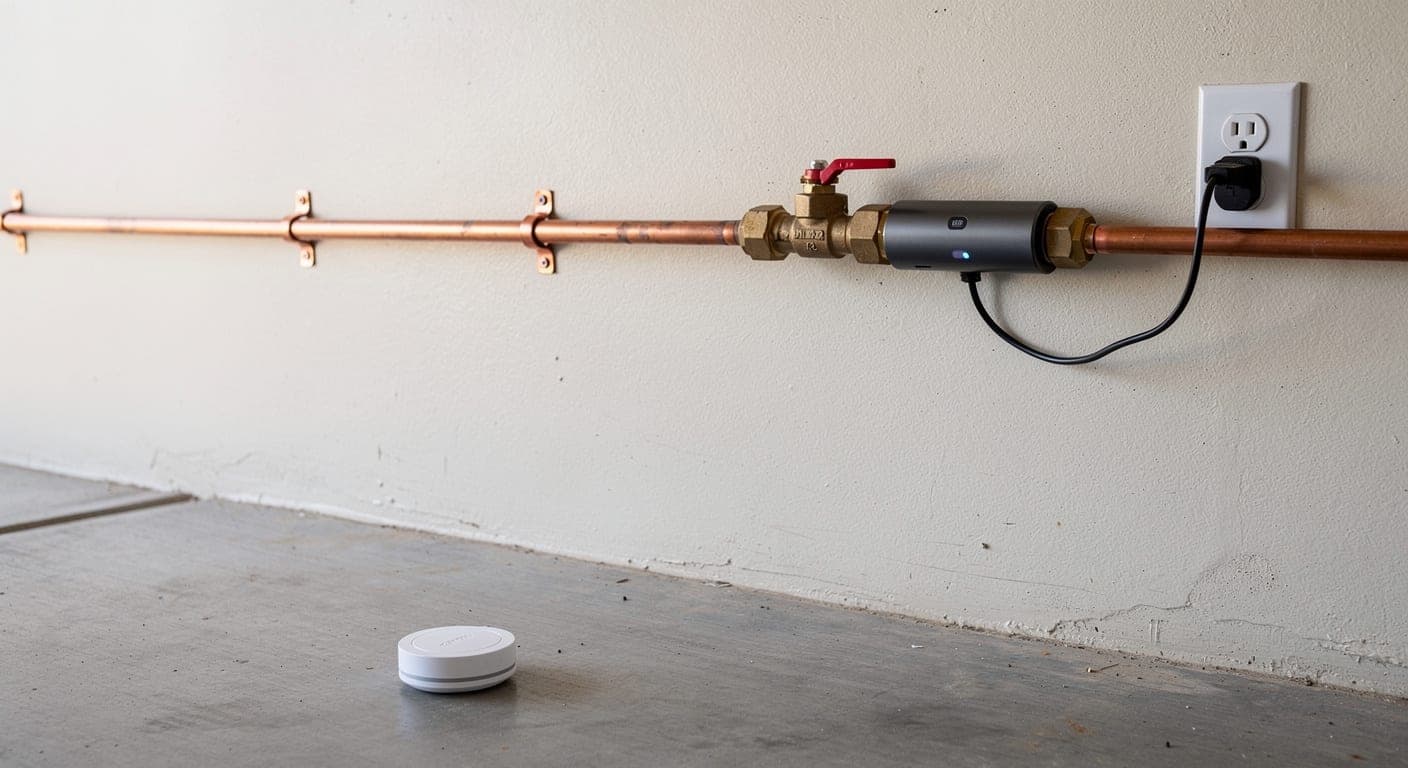
The visit usually starts by closing every fixture and pressure testing the system, then isolating the hot and cold sides to see which one is losing pressure. Next comes electronic leak location to narrow the leak to a spot on the floor, along with checks of the slab, baseboards, and yard for moisture. Fixr notes that some leaks take over an hour to find and that an inspection can run 1 to 3 hours. Ask for the results in writing, since they decide the repair route and help with any insurance claim.
Drain lines are tested differently, since they are not under pressure. At a 2005 meeting of the Foundation Performance Association, a Houston group of foundation engineers, an investigative plumber said that no published standard exists for testing drain lines under residential slabs. The common method is a hydrostatic test: pull a toilet, plug the line, fill the drains under the slab with water, and watch the level for about 30 minutes. If it drops, a camera finds the likely leak.
- Leak detection visit
- $150 to $400
- Typical hydrostatic drain test
- About 30 minutes
Three Ways to Repair a Slab Leak: Direct Access, Tunneling, or Reroute
Once the leak is pinpointed, the plumber has to reach the pipe or go around it. Each route trades cost against disruption.
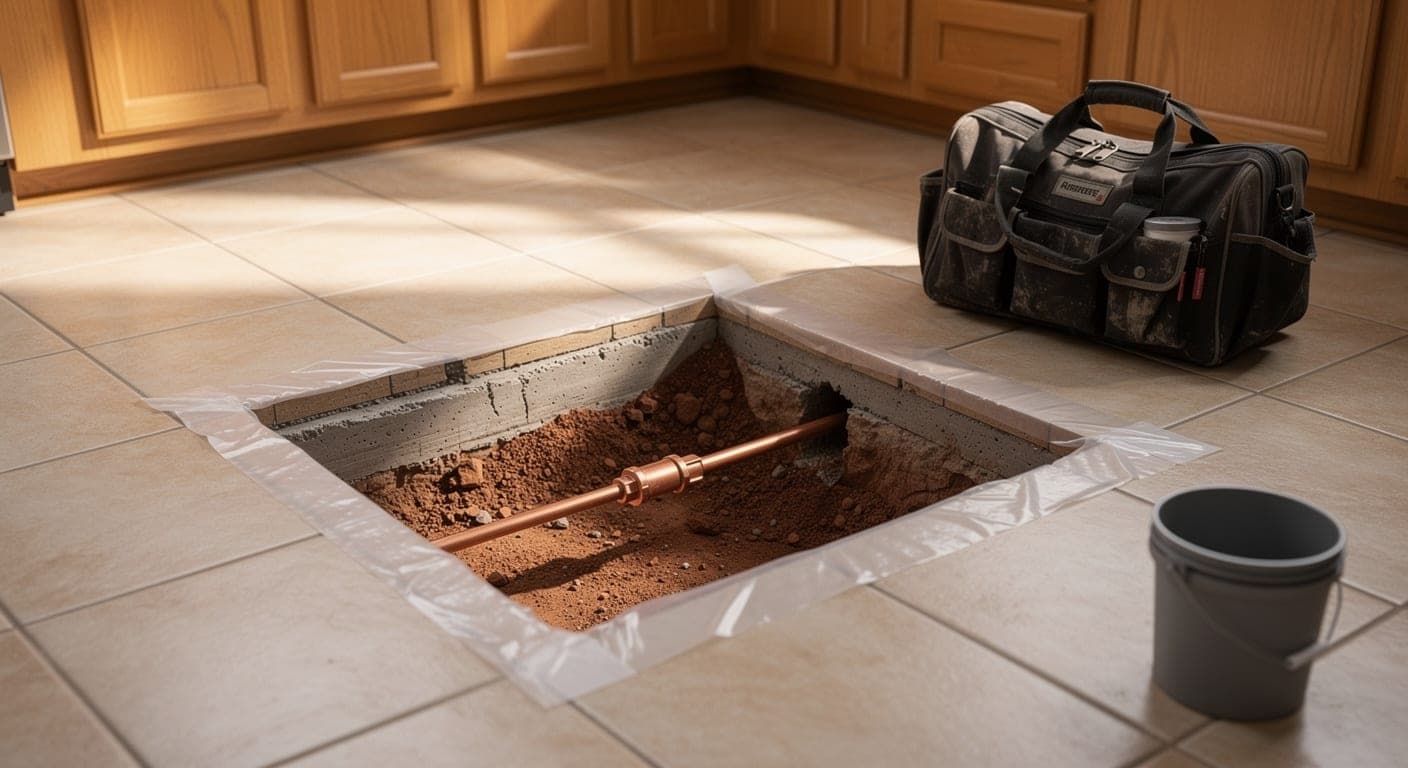
Direct access means cutting through the floor covering and jackhammering a hole in the slab above the leak, repairing the pipe, then backfilling and patching the concrete. For one leak it usually costs the least, and Fixr puts breaking the slab at $500 to $3,000. The catch is the floor. Tile rarely matches years later, and hardwood or LVP over the patch may need a whole room replaced.
Tunneling digs from outside the house, under the footing, to reach the pipe without touching the floor inside. It costs more for anything but a leak near an outside wall, because tunnels are dug by hand and priced by length. Under a finished kitchen or a large tile floor, though, it can still cost less in total.
A reroute caps the leaking line under the slab, leaves it in place, and runs a new line through the attic and down inside the walls. It avoids the slab entirely, and Fixr notes it is the usual answer when several under-slab pipes have problems. In Lubbock attics, new lines need to sit on the warm side of the insulation so they do not freeze.
| Method | Typical Lubbock cost | Best for | Trade-offs |
|---|---|---|---|
| Direct access | $500 to $3,000 | One leak under carpet, LVP, or an accessible tile area | Floor patch, dust, and a slab cut |
| Tunneling | $1,500 to $5,000 | Leaks near an outside wall, or under floors you cannot replace | Cost climbs with every foot of tunnel |
| Reroute one line | $1,500 to $5,000 | Hot water lines, repeat leaks on one branch, finished floors | Drywall openings, and the old line stays in the ground |
| Whole-house repipe | $4,000 to $15,000 | Older homes with a second or third leak | Largest bill, several days of work |
The Lubbock Factor: Clay Soil, Slab Movement, and Leaks
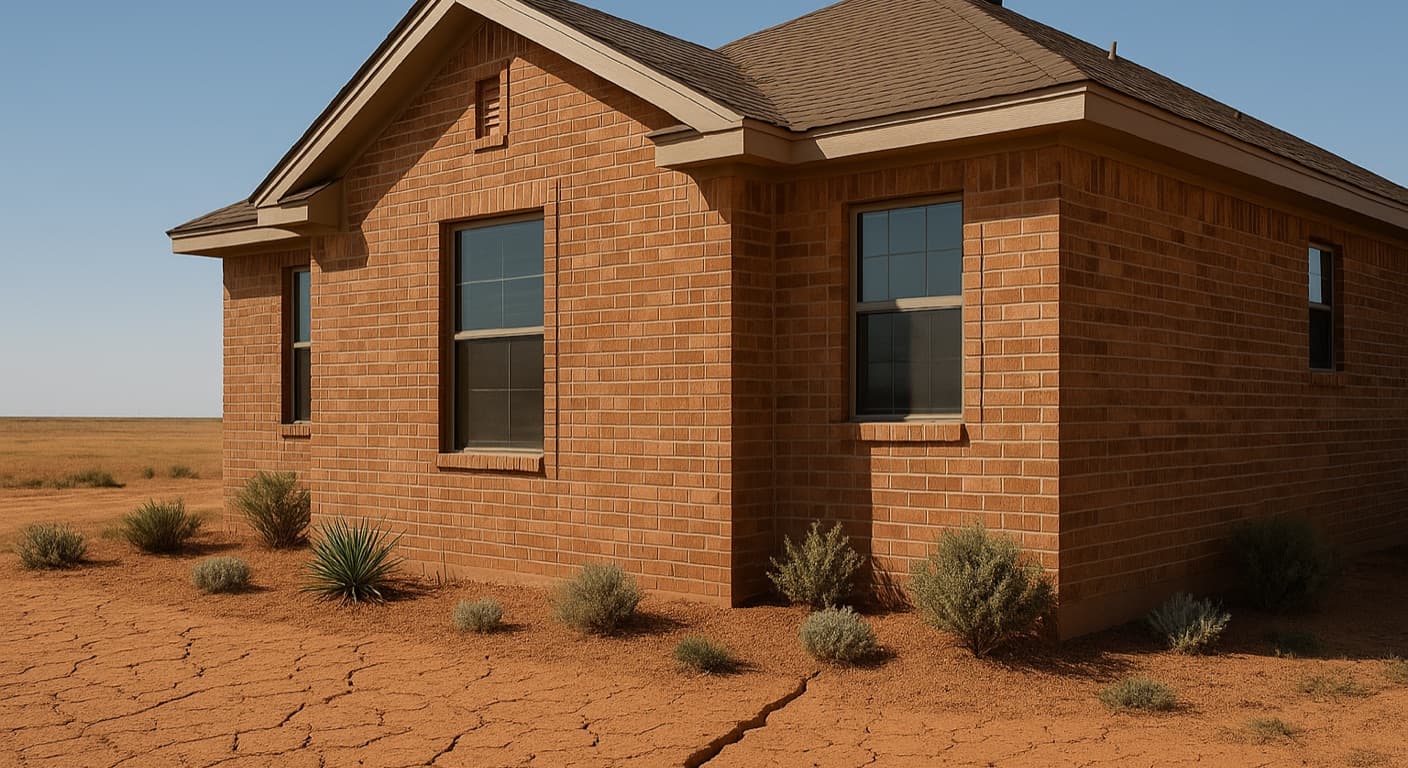
Lubbock's soil is why slab leaks deserve more urgency here than in a sandy-soil city. The USDA's official description of the Pullman series, common across the Southern High Plains, puts its clay content at 35 to 50 percent and classes it as a shrink-swell soil that opens cracks about a centimeter wide as it dries. The loamier Acuff series, whose type location is near Slaton in Lubbock County, carries 18 to 35 percent clay. Both sit over a caliche layer about 30 to 60 inches down.
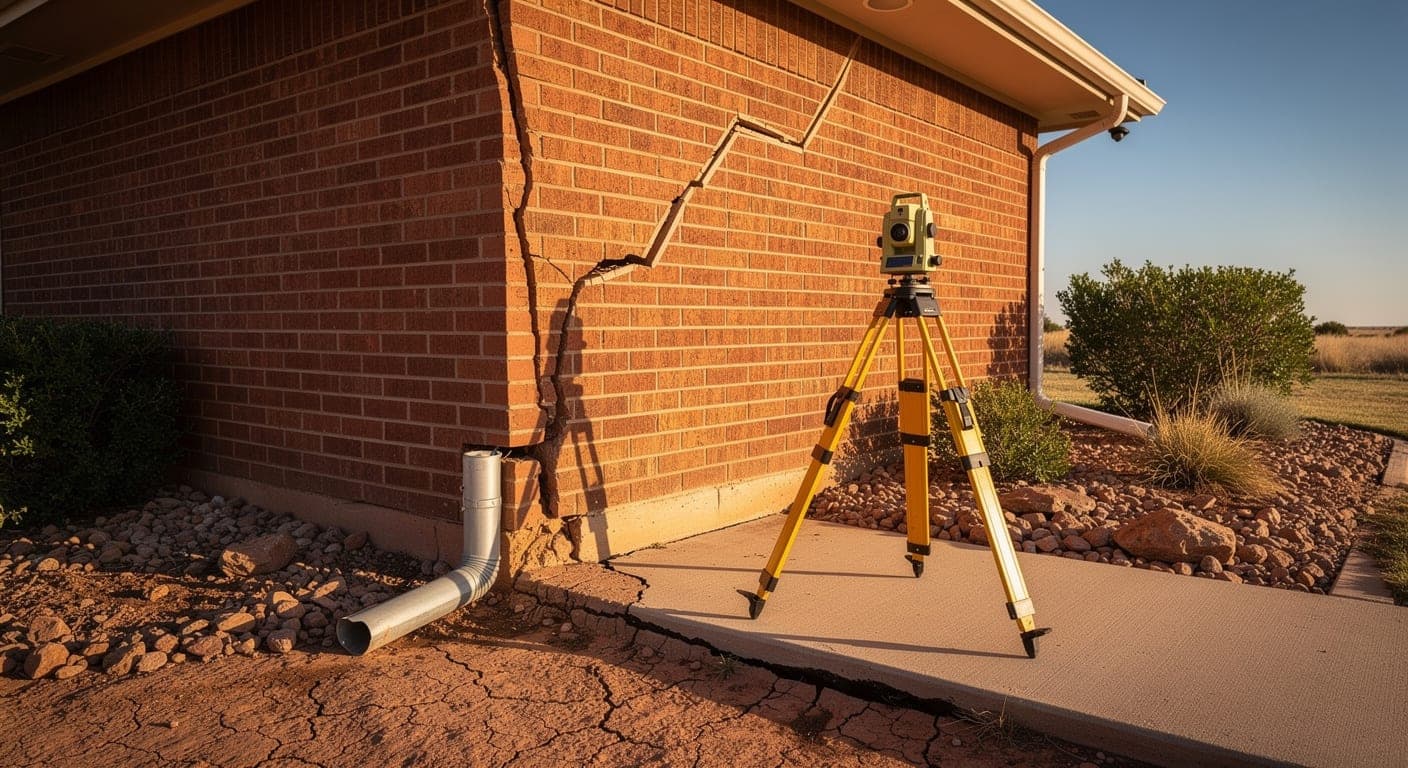
The movement runs both ways. A slab that rides the clay through a wet spring and a dry August puts stress on the pipes cast beneath it, and Texas Farm Bureau Insurance lists pressure from a shifting foundation among the common causes of slab leaks. Then a leak becomes its own cause. Lubbock averages only 18.33 inches of rain a year, according to the National Weather Service, so a steady leak can soak the clay under one room while the rest of the slab sits on dry soil. That uneven swelling, or soil washing out from a drain leak, is a classic source of localized foundation movement.
That is why the order of work matters. Fix the plumbing first, let the soil dry and stabilize, and then judge whether the slab needs foundation repair. An engineer's evaluation can measure whether one area has moved.
- Pullman series clay content
- 35 to 50 percent
- Lubbock normal annual rainfall
- 18.33 inches
- Depth to caliche
- About 30 to 60 inches
A Worked Example: A 1980s Brick Ranch in Southwest Lubbock
Take a hypothetical 1,700 square foot brick ranch on a slab, with copper supply lines under the floor. The owner notices a warm spot on the kitchen tile and a water bill about double the usual. Leak detection at $150 to $400 isolates the hot side and pinpoints a pinhole leak under the kitchen.
Option one is direct access through the tile: $500 to $3,000 for the plumbing and concrete patch, plus new tile. Replacing 40 square feet of tile at $8 to $20 per square foot adds $320 to $800, if matching tile can be found. Option two reroutes the kitchen hot line through the attic for $1,500 to $5,000, plus two or three small drywall patches at $150 to $400 each.
Budget-wise, the two options land close together, roughly $1,000 to $4,200 for direct access and $1,950 to $6,600 for the reroute with detection and patching. The reroute wins if the tile cannot be matched or if this is the second leak on the hot side. If a third leak shows up a year later, the math tips to a whole-house PEX repipe at $4,000 to $15,000.
When a Whole-House Repipe Beats Chasing Leaks
One leak in a 40-year-old copper system is a repair. A pattern is a signal that the pipe is wearing out, and each spot repair only fixes the few inches the plumber touched. Consider a repipe when:
- This is the second or third slab leak in a few years, especially on the hot side.
- The house still has galvanized steel supply lines, which corrode from the inside and cut pressure.
- Cast iron drains under the slab fail a hydrostatic test in more than one place. A supply repipe will not fix drains, but the same logic applies: plan a drain replacement or reroute instead of another patch. A Houston investigative plumber told the Foundation Performance Association that cast iron typically lasts 35 to 50 years, with failures seen after about 20.
- You are remodeling a kitchen or bathroom anyway, so walls and ceilings will already be open.
- Foundation repair is planned, since lifting a slab can stress old pipes beneath it.
Does Homeowners Insurance Cover a Slab Leak in Texas?
Partly, and it depends on how the leak happened and which endorsements you bought. The Texas Department of Insurance says most home policies cover sudden and accidental water damage but usually not damage from gradual leaks. A pinhole that seeped for months is the textbook gradual leak. TDI's consumer guide adds that all-risk policies usually do not pay to repair a home's foundation.
Two Texas endorsements change that. Under TDI Commissioner Order 02-0741, insurers using the standard ISO forms must offer new applicants, subject to their underwriting rules, a Water Damage Coverage-Texas Endorsement, which covers constant or repeated leakage from plumbing, and a Foundation Coverage-Texas Endorsement, which covers settling, cracking, and expansion of the foundation or floor slab caused by a plumbing leak. Both pay the cost of tearing out and replacing the part of the building needed to reach the leak. Neither pays to fix the pipe itself: the order says the loss to the system the water escaped from is not covered. The foundation endorsement is capped at 15 percent of the dwelling limit, so a $250,000 dwelling limit caps it at $37,500.
TDI says to report hidden water damage within days of finding it and not to make permanent repairs until the insurer sees the damage. Photograph everything, and ask the plumber for a written report naming the line and the cause. This is general information, not insurance advice. Your policy and endorsements decide the claim.
- Foundation endorsement cap
- 15 percent of dwelling limit
- Pipe repair itself
- Not covered
Licensing, Permits, and Timeline in Lubbock
Plumbing in Texas is licensed by the Texas State Board of Plumbing Examiners, which runs a public license search. The one exception is narrow: the Texas Occupations Code lets a property owner do plumbing in their own homestead without a license. Slab work is a poor DIY project, though, and a rental or a home you do not live in needs a licensed plumber. Ask City of Lubbock Building Safety whether your repair needs a permit before work starts. Repipes and other regulated plumbing work are permitted and inspected in Lubbock.
Fixr puts tunneling at 4 to 6 hours of work and breaking the slab at 1 to 2 days, and a reroute takes longer. A whole-house repipe usually takes 2 to 5 days. Plan for the drywall, flooring, and paint afterward, and for the soil to dry before anyone judges the foundation.
How to Get an Accurate Slab Leak Quote
Slab leak quotes vary because they price different routes. A good quote is specific enough to compare. Ask for these:
- The detection results in writing: which line, hot or cold, supply or drain, and roughly where.
- The method and why: direct access, tunnel length, or the reroute path through the attic.
- A side-by-side price for a reroute or whole-house repipe on any second leak.
- What the price includes after the pipe is fixed: concrete patch, backfill, floor covering, and drywall.
- A pressure or hydrostatic test after the repair to confirm the system holds.
- The plumber's license number from the Texas State Board of Plumbing Examiners, and who pulls any permit.
- No pressure to lift or pier the foundation the same week. Fix the leak first and let the soil settle.
A Note from Nextgen Blueprint
This guide was researched and published by Nextgen Blueprint, a Lubbock design-build contractor. Our licensed plumbers handle leak detection, slab leak repair, reroutes, and PEX repipes, and because we also do foundation repair, drywall, and flooring, we can close up the floors and walls a leak repair opens. Treat these figures as 2026 Lubbock budgeting ranges, accurate as of October 2026, not a quote, since the route to the pipe and what sits on top of it set the real price. Get a written, itemized estimate before work starts.
Frequently asked questions
How much does slab leak repair cost in Lubbock, TX?
How much does slab leak detection cost?
Is it better to reroute or repair a slab leak?
Does homeowners insurance cover slab leaks in Texas?
Can a slab leak cause foundation problems in Lubbock?
How do I know if I have a slab leak?
How long does slab leak repair take?
Sources and further reading
- [1]Texas Department of Insurance: Commissioner Order 02-0741, New ISO Residential Property Policy Forms Approved
- [2]Texas Department of Insurance: When are water damage and mold covered by insurance?
- [3]Texas Department of Insurance: Home insurance policies, all risk or named peril
- [4]USDA NRCS: Pullman Series Official Soil Description
- [5]USDA NRCS: Acuff Series Official Soil Description
- [6]National Weather Service Lubbock: Comparison of 30 Year Climate Normals
- [7]Foundation Performance Association: January 2005 meeting, testing and repairing drain lines below slabs
- [8]Texas State Board of Plumbing Examiners
- [9]Texas Occupations Code Section 1301.051, Homestead Exemption
- [10]Texas Farm Bureau Insurance: Guide to slab leaks
- [11]This Old House: How Much Does Slab Leak Repair Cost?
- [12]Fixr: Slab Leak Repair Cost
Written by
John Paul, Founder, Nextgen Blueprint
John Paul founded Nextgen Blueprint with his father-in-law, a Lubbock-area general contractor with 30+ years of experience. They build healthy, natural homes for Lubbock families, and approach every project with the kind of care and attention to detail most contractors save for their own home.
More from JohnRelated services
Filed under Cost Guides. What home projects actually cost in Lubbock, line by line.