Cost Guides11 min read
Drywall Repair Cost in Lubbock, TX: Holes, Cracks & Texture Matching (2026)
What drywall repair costs in Lubbock in 2026: prices by damage type, minimum charges, texture and paint matching, ceiling leaks and insurance, and cracks that return on clay soil.
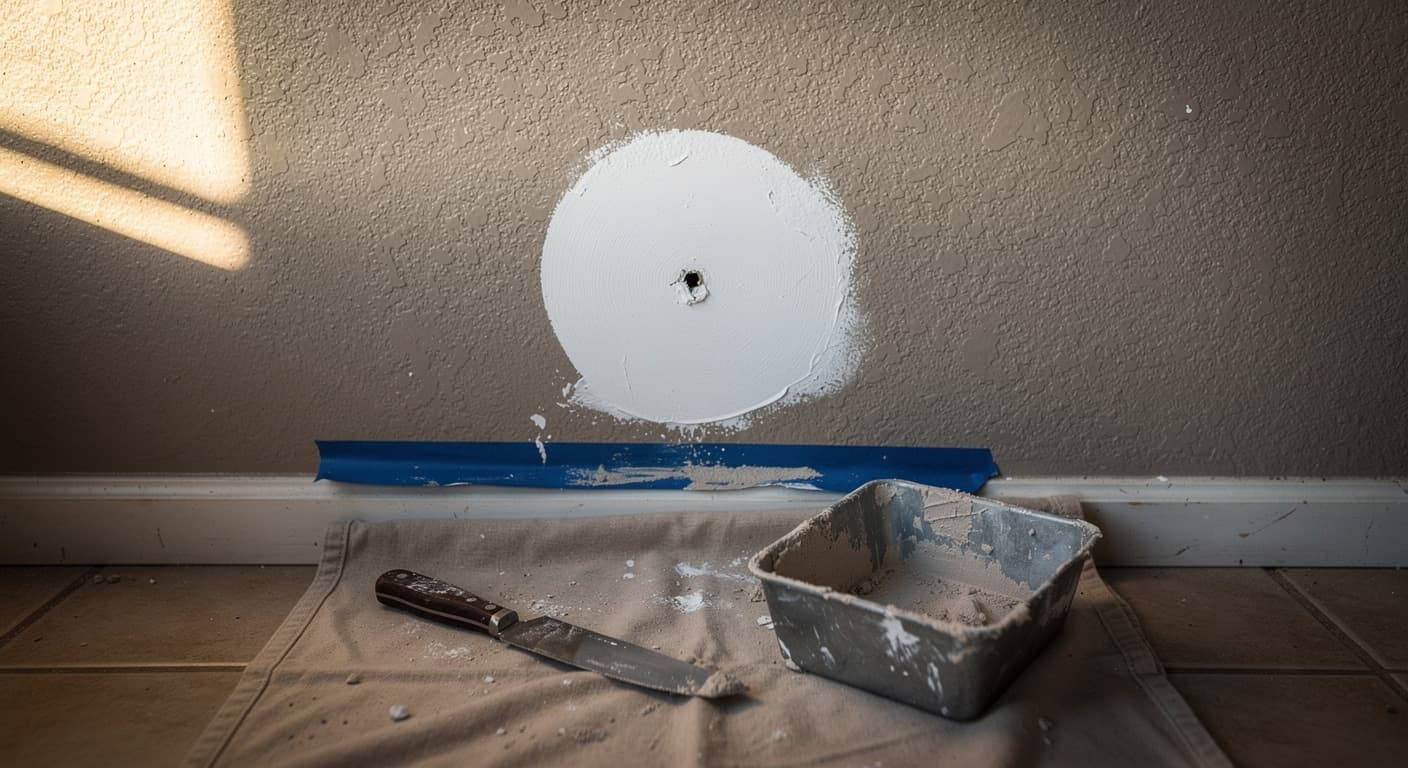
Most drywall repairs in Lubbock cost $200 to $600 in 2026, and a doorknob or fist-size hole typically runs $150 to $400 patched and texture-matched. Nail pops and small holes run $75 to $150 as part of a larger visit, ceiling water damage runs $500 to $2,500, and a whole wall can pass $2,500. The line that surprises people is the minimum: most pros charge $150 to $400 for a stand-alone visit, because even a small patch means setup, drying time, and often a second trip. The other surprise is that the patch is the easy part. Texture and paint are where the time goes, and on Lubbock clay, fixing a crack without asking why it formed usually means paying twice.
On this page
- 01What Drywall Repair Costs in Lubbock (2026)
- 02How Drywall Repair Is Priced: Minimums, Trips, and Finish
- 03Texture Matching: Why It Is the Hard Part
- 04Paint Blending: Touch-Up or Repaint Corner to Corner
- 05The Lubbock Factor: Clay Soil, Dry Air, and Hail
- 06Ceiling Water Damage: Costs, First Steps, and Insurance
- 07Repair or Replace: Where the Line Sits
- 08DIY or Pro, Timeline, and Permits
- 09How to Get an Accurate Quote
- 10A Note from Nextgen Blueprint
- 11Frequently asked questions
What Drywall Repair Costs in Lubbock (2026)
Drywall repair is priced by the damage, but the finish work around it moves the number just as much. These 2026 Lubbock ranges include the patch, compound, texture match, and primer; full repainting is usually separate. Lubbock construction wages run about 24 percent below the national average in Bureau of Labor Statistics data, so local prices sit below many of the national figures online.
- Typical repair visit
- $200 to $600
- Minimum service charge
- $150 to $400
- Retexture a wall or ceiling
- $1 to $2 per sq ft
| Repair | Typical 2026 Lubbock cost | What it usually involves |
|---|---|---|
| Nail pops and small holes (up to about 1 inch) | $75 to $150 | A handful in one room: reset or fill, spot texture, spot prime |
| Doorknob and fist-size holes (2 to 6 inches) | $150 to $400 | Cut out, new drywall patch, tape, three coats, texture match |
| Stress cracks and corner bead | $150 to $600 | Re-tape the crack or replace crushed bead, then feather and texture |
| Large patch or one full sheet (up to 4 by 8 feet) | $400 to $1,200 | Wood backing, new board, full finish, texture |
| Ceiling water damage | $500 to $2,500 | Cut out wet board, replace soaked insulation, stain-blocking primer |
| Whole-wall replacement | $800 to $2,500+ | Remove, hang, tape, finish, texture, and prime a full wall |
How Drywall Repair Is Priced: Minimums, Trips, and Finish
Most of a drywall bill is setup and drying, not patching. A fist-size hole is maybe an hour of hands-on work, but premixed compound usually needs several hours to overnight to dry between coats, and every return trip costs money. That is why nearly every pro carries a minimum, and why the first hole in a visit is expensive while the fifth is cheap.
- Minimum charge: $150 to $400 for a stand-alone visit in Lubbock, usually enough to cover several grouped small repairs.
- Trips: premixed compound often means two or three visits. Setting-type compound, the powder finishers call hot mud, hardens chemically instead of drying, so small repairs can often be done in a day.
- Size and access: bigger holes need wood backing, repairs over several square feet often run $3 to $8 per square foot, and ceilings and stairwells cost more than eye-level patches.
- Paint: texture is usually included, painting often is not. Repainting runs roughly $1 to $3 per square foot of wall, so ask whether paint means a touch-up or the whole wall.
- Older homes: the EPA lists textured paint and patching compounds on walls and ceilings among the places asbestos may be found, so have it tested before anyone sands or cuts old texture.
Texture Matching: Why It Is the Hard Part
Making the patch disappear is the skill, and texture is most of it. In our experience, most Lubbock homes built in the last few decades have orange peel or knockdown walls, while older homes near Texas Tech are more likely to have smooth walls, plaster, or hand-applied texture. Old texture has often been painted two or three times, which softens it in a way fresh texture does not, so a good finisher tests the spray on scrap drywall before feathering it into your wall. The goal is a patch you cannot pick out from normal viewing distance.
- Orange peel: fine droplets of thinned compound sprayed from a hopper gun. The most forgiving to match once mud thickness, air pressure, and nozzle size are dialed in.
- Knockdown: a heavier splatter flattened with a wide knife minutes after spraying. Timing controls the look, so it is harder to match.
- Skip trowel: applied by hand with a curved trowel. It has to be matched stroke by stroke and is the hardest to hide on a large patch.
- Smooth: nothing hides the repair, so blending often means skimming a wide area, sometimes the whole wall, up to a Level 5 finish.
Paint Blending: Touch-Up or Repaint Corner to Corner
A perfectly textured patch can still stick out because of the paint. Paint manufacturers point to the usual culprits: a different batch, a different tool (a brush touch-up on a rolled wall), a patch with a different texture than the wall around it, and painting in very different temperatures. Paint also shifts as it ages, and bare joint compound absorbs paint differently than painted drywall, so an unprimed patch flashes as a dull or shiny spot.
The reliable fix is to spot-prime the patch, then repaint the wall from one inside corner to the next so the eye never finds an edge. Flat and matte paints touch up best; eggshell, satin, and semi-gloss usually need the full wall. Repainting one wall typically adds $200 to $500, less when a painter is already on site. Keep leftover paint labeled with the brand, color, sheen, and room. For whole-room numbers, see our house painting cost guide.
The Lubbock Factor: Clay Soil, Dry Air, and Hail
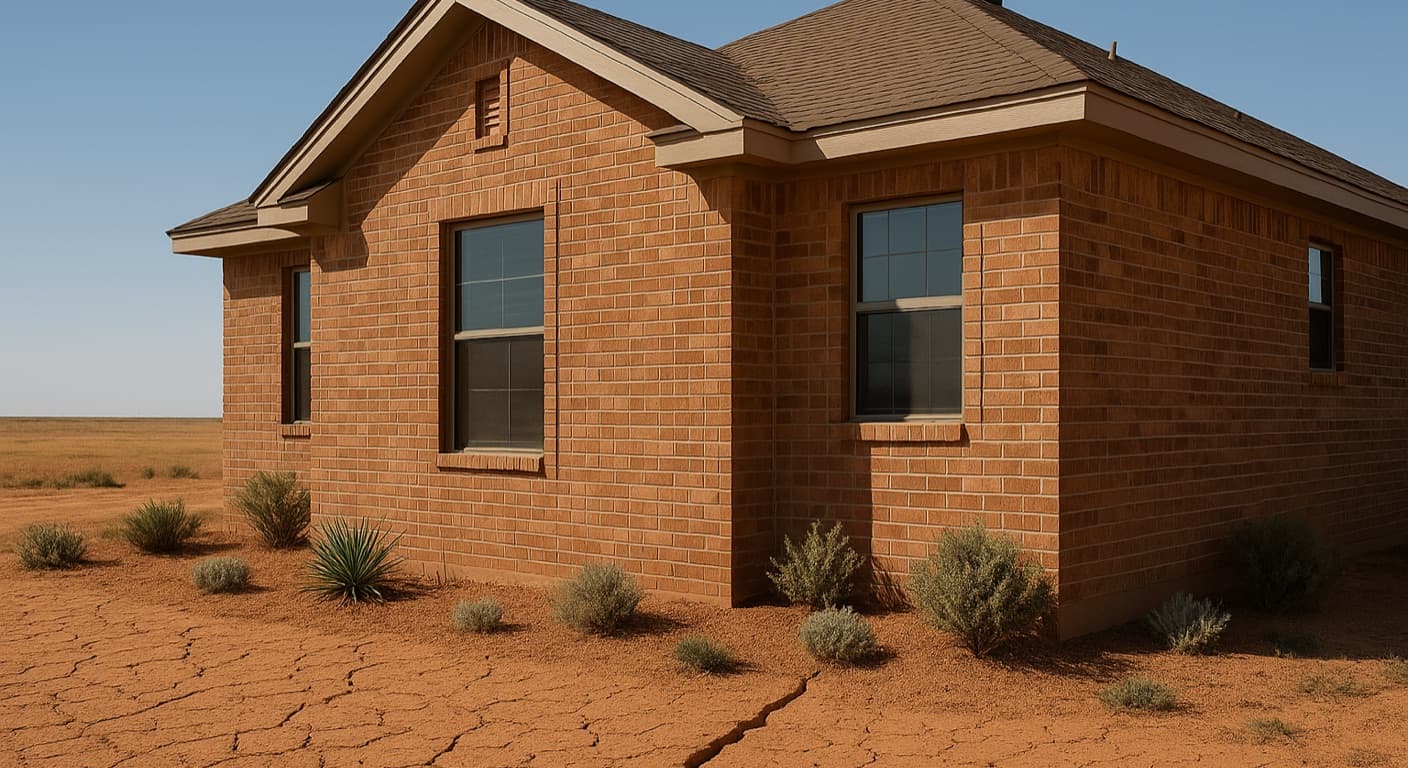
Three local forces shape drywall repair here. The first is the ground. Much of Lubbock sits on expansive clay that swells when wet and shrinks when dry, and slabs and framing move with it. Drywall is rigid, so it cracks at weak points: diagonally off door and window corners, and where walls meet ceilings. A crack that opens in a dry August and tightens after a wet spring is moving with the soil, and new tape will not stop it.
Before paying to fix a crack, mark each end with a pencil and the date and watch it for a few months. If it grows, or doors start sticking, have the foundation checked first. Our foundation repair cost guide covers what that costs, and we offer free foundation inspections. Because we handle the structural repair and the finish work after it, the drywall, doors, and trim get restored once the structure is stable.
The second force is dry air. Premixed compound dries fast here, which helps until a thick fill shrinks and cracks, and the Gypsum Association's guidance for hot, dry conditions recommends setting-type compound for embedding tape because it resists edge cracking. The third is weather. Spring hail from April through June and 60 to 100 mph winds damage roofs, and the first sign inside is often a brown ring on a ceiling. Fix the roof and dry the ceiling before patching; our hail damage checklist covers what to document.
Ceiling Water Damage: Costs, First Steps, and Insurance
Ceilings cost more than wall patches because wet board has to come down, soaked insulation above it usually goes too, and overhead work is slower. A stain on a ceiling that is still firm and dry may need only stain-blocking primer and ceiling paint, typically $200 to $500. Sagging board means replacing the section, usually $500 to $1,500 with texture, and larger areas with wet insulation or mold run $2,500 and up.
Insurance follows the cause. The Texas Department of Insurance explains that most home policies cover sudden and accidental water damage but not a continuous leak, wear and tear, or mold removal beyond repairing damage from a covered event. A ceiling soaked when hail or wind opened the roof is often covered with the roof claim, while a stain that spread for months from a worn roof or slow drip usually is not. Policies vary, so check yours.
- Stop the water with a roof tarp or by shutting off the supply, and photograph everything first. TDI advises only temporary repairs until the insurer sees the damage.
- Start drying right away. The EPA advises drying water-damaged areas within 24 to 48 hours to prevent mold growth.
- Stay out from under a sagging ceiling, since waterlogged drywall is heavy and can drop with little warning.
- Confirm the area reads dry with a moisture meter before new board, texture, and paint go up.
Repair or Replace: Where the Line Sits
Most drywall damage is a repair. Replacement makes sense when the board itself has failed.
- Repair when the drywall is firm and dry: holes, dents, nail pops, stable cracks, and stains that seal under primer.
- Replace the section when the board is soft, crumbling, sagging, or moldy, or stayed wet longer than about 48 hours.
- Replace the wall when damage covers most of it. HomeGuide suggests considering replacement past about 60 percent of the wall area, and it is the easy call when the wall is already open for plumbing or electrical work.
- If a crack keeps coming back, neither answer works until the movement behind it is fixed.
DIY or Pro, Timeline, and Permits
Small repairs are fair game for a homeowner. A $10 to $30 patch kit and a can of spray texture handle nail holes, anchor holes, and small dents. Call a pro for anything bigger than a few inches, ceilings, water damage, corner bead, recurring cracks, smooth walls, or a patch in strong window light. DIY repairs that disappoint usually fail on texture and paint, not the patch.
A small patch is an hour or two of work but usually one to two days start to finish because of drying, and large repairs or ceilings take two to three days. Routine drywall repair generally does not need a permit, but work that moves wiring, plumbing, or framing may, so confirm with the City of Lubbock.
How to Get an Accurate Quote
Drywall quotes vary because the finish work behind them varies. To compare them fairly:
- Send a close-up of each repair with a tape measure in the frame, plus a wide shot of the wall and a low-angle shot of the texture.
- Group every repair in the house into one visit so a single minimum covers it all.
- Ask whether texture matching, primer, and paint are included, and whether paint means a touch-up or the full wall.
- Ask how many trips the job takes and whether setting compound is used for fill coats.
- For cracks, ask what is causing them. For water damage, ask the contractor to confirm the source is fixed and the area reads dry.
- Get it itemized in writing. For a ballpark first, our free instant estimate returns a range in under a minute.
A Note from Nextgen Blueprint
This guide was researched and published by Nextgen Blueprint, a Lubbock design-build contractor that handles drywall patching and repair along with the foundation, roofing, and painting work that often causes or follows it. Treat these numbers as 2026 Lubbock-market ranges to budget with, not a quote, since the real figure depends on the damage, your texture and paint, and the cause. The pricing and insurance information was accurate as of September 2026. Always get a written, itemized estimate that spells out the finish work included.
Frequently asked questions
How much does drywall repair cost in Lubbock, TX?
How much does it cost to patch a hole in drywall?
Why do drywall contractors charge a minimum for small repairs?
How much does it cost to repair a water-damaged ceiling?
Can a drywall patch match orange peel or knockdown texture?
Why does the crack in my wall keep coming back?
Does homeowners insurance cover drywall water damage in Texas?
How long does drywall repair take?
Sources and further reading
- [1]HomeGuide: How Much Does Drywall Repair Cost? (2026)
- [2]Angi: How Much Does Drywall Repair Cost? (2026 Data)
- [3]Texas Department of Insurance: Home Insurance Guide
- [4]U.S. EPA: A Brief Guide to Mold, Moisture and Your Home
- [5]U.S. Bureau of Labor Statistics: Occupational Employment and Wages in Lubbock, May 2024
Written by
John Paul, Founder, Nextgen Blueprint
John Paul founded Nextgen Blueprint with his father-in-law, a Lubbock-area general contractor with 30+ years of experience. They build healthy, natural homes for Lubbock families, and approach every project with the kind of care and attention to detail most contractors save for their own home.
More from JohnRelated services
Filed under Cost Guides. What home projects actually cost in Lubbock, line by line.