Design & Materials11 min read
Level 5 Drywall Finish Cost in Lubbock: What It Is and When It's Worth It (2026)
What a Level 5 drywall finish costs in Lubbock in 2026, how it differs from Level 4 under GA-214, when low sun and sheen paint make it worth paying for, and how to judge the result.
A Level 5 drywall finish in Lubbock typically adds $1.00 to $1.75 per square foot of wall and ceiling surface over a standard Level 4 finish in new construction, and skimming existing textured walls smooth runs about $1.50 to $3.50 per square foot. That puts a 12 by 12 room at roughly $900 to $2,000 as a retrofit and a whole house at $8,000 to $25,000. Level 5 adds one step, a thin skim coat over the entire surface, so paint lands on one uniform surface instead of paper and taped joints. Whether it pays off comes down to light: where low West Texas sun rakes across a wall, or where you want sheen or dark paint, it is the finish that keeps joints from showing.
On this page
- 01What a Level 5 Drywall Finish Costs in Lubbock (2026)
- 02Drywall Finish Levels 0 to 5, Explained (GA-214)
- 03What Level 5 Adds, and What It Does Not
- 04Level 5 vs Level 4: Where the Money Goes
- 05When Level 5 Is Worth It, and When It Is Not
- 06The Lubbock Factor: Low Sun, Dry Air, and Shifting Clay
- 07Spray vs Hand-Troweled Skim Coats, and How Long It Takes
- 08How to Judge a Level 5 Finish: Raking Light and the 5-Foot Rule
- 09How to Get an Accurate Quote
- 10A Note from Nextgen Blueprint
- 11Frequently asked questions
What a Level 5 Drywall Finish Costs in Lubbock (2026)
Level 5 is priced per square foot of wall and ceiling surface, not floor area; a 12 by 12 bedroom with 8-foot ceilings has about 530 square feet of it. National guides put a basic skim coat at about $1.00 to $1.35 per square foot, and Homewyse's calculator with a Lubbock ZIP code comes in near $1.00 to $1.19. Work built for critical light needs more passes, sanding, and primer, hence the ranges below.
- Upgrade over Level 4
- $1.00 to $1.75 per sq ft
- Skim textured walls smooth
- $1.50 to $3.50 per sq ft
- 12 by 12 room retrofit
- $900 to $2,000
| Scope | Typical 2026 Lubbock cost | Notes |
|---|---|---|
| Level 5 upgrade over new Level 4 work | $1.00 to $1.75 per sq ft | Skim coat, sanding, and primer added to the drywall bid |
| New construction, hang and finish to Level 5 | $2.50 to $4.50 per sq ft | Versus about $1.50 to $3.00 for Level 4 |
| Skim existing textured walls smooth | $1.50 to $3.50 per sq ft | Two or three passes over orange peel or knockdown, plus prep |
| One feature wall | $400 to $1,500 | Minimum charges dominate; tall walls need scaffolding |
| One 12 by 12 room, walls and ceiling | $900 to $2,000 | Retrofit in a lived-in home, before paint |
| Whole house, about 2,000 sq ft | $8,000 to $25,000+ | Low end is a new-build upgrade; high end is skimming texture |
Drywall Finish Levels 0 to 5, Explained (GA-214)
Finish levels come from GA-214, published by the Gypsum Association with the wall, ceiling, and painting trade groups. The current edition, GA-214-2021, is titled Levels of Finish for Gypsum Panel Products; older editions were called Recommended Levels of Gypsum Board Finish.
| Level | What GA-214 requires | Typically used for |
|---|---|---|
| Level 0 | Board hung; no tape, compound, or bead | Temporary work or undecided finishes |
| Level 1 | Tape embedded in compound at joints and inside corners | Attics, above ceilings, concealed areas |
| Level 2 | Level 1 plus a thin coat over tape; one coat on fasteners and bead | Under tile, garages, storage |
| Level 3 | One more coat on joints; two coats on fasteners and bead | Medium or heavy texture |
| Level 4 | Two coats on flat joints, one on inside corners, three on fasteners and bead | Flat paint, light texture, wallcovering |
| Level 5 | Level 4 plus a skim coat over the entire surface | Sheen or gloss paint, dark colors, critical lighting |
What Level 5 Adds, and What It Does Not
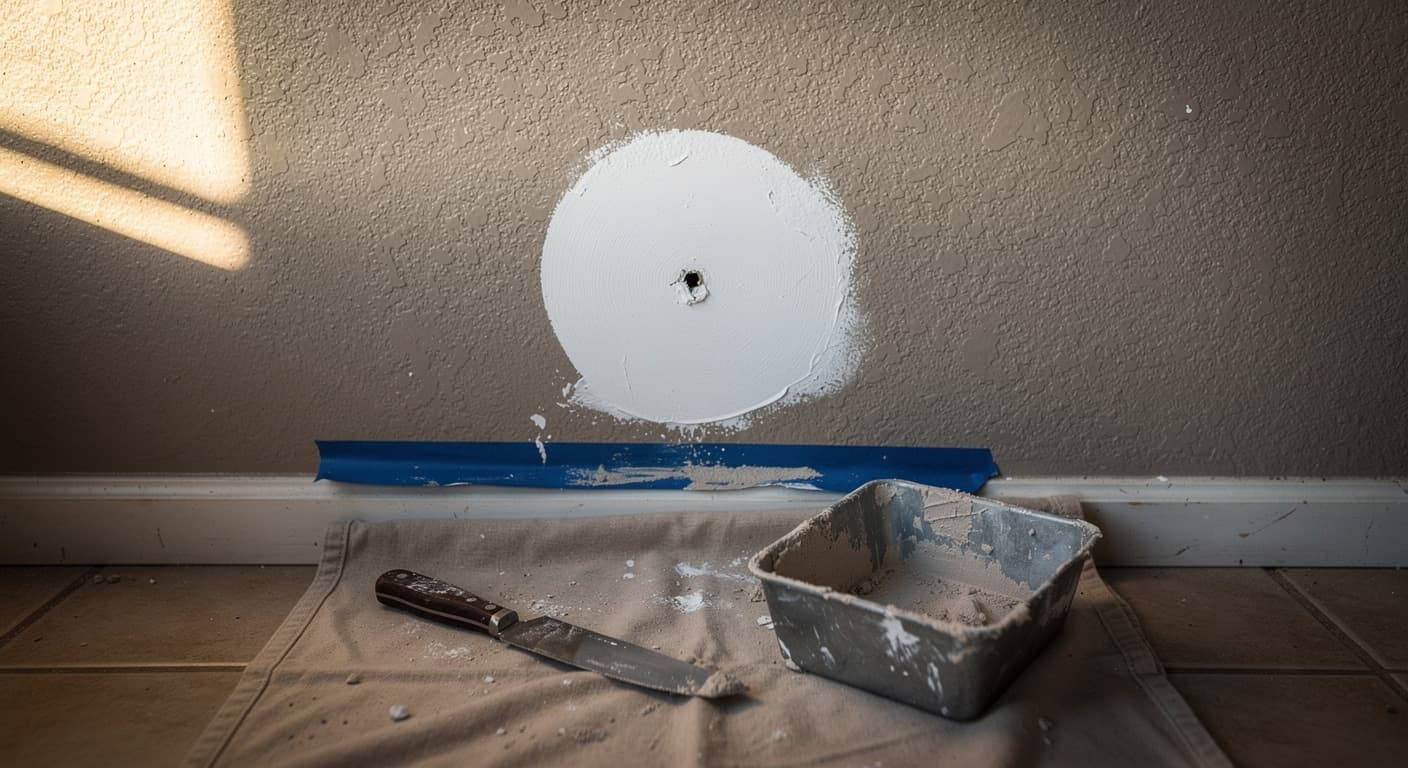
A Level 4 wall has two surfaces under the paint: the paper face of the drywall and the compound over joints and screws. They absorb paint differently, so in strong side light the joints can show through as bands, which the trade calls joint photographing. Level 5 covers everything with a thin skim of joint compound or a product made for the purpose, and GA-214 describes it as the most effective way to get a uniform surface that keeps joints and fasteners from showing.
It is not magic, and the standard says so. GA-214 notes that a perfectly flat surface is not possible with gypsum panels and that a skim coat will not match true plaster. Level 5 evens out texture and porosity. It does not straighten a bowed stud, square a corner, or stop a crack from a moving foundation.
Level 5 vs Level 4: Where the Money Goes
The premium is almost all labor: every pass has to be applied, dried, sanded, and checked, and labor runs roughly 70 percent of skim coating cost. A 2,000 square foot home carries about 8,000 to 10,000 square feet of drywall, so Level 5 everywhere adds $8,000 to $17,500 in new construction, while doing just the great room, kitchen, and entry, often about 2,000 square feet of surface, adds roughly $2,000 to $3,500. What moves the number:
- Passes: one skim over clean Level 4 work is the baseline. Covering texture usually takes two or three, and HomeGuide notes that going past two coats raises cost 50 to 100 percent.
- Height: ceilings are slower, and contractors typically charge 10 to 20 percent more for ceilings over 10 feet.
- Prep: popcorn removal adds about $1 to $2 per square foot, and damage gets repaired before any skim goes on.
- A lived-in house: moving furniture, masking, and containing sanding dust take real time; vacuum sanders with HEPA filtration and plastic containment keep the rest of the house clean.
- Primer and paint: Level 5 still needs primer, and paint is a separate line, often $1 to $3 per square foot on new drywall.
When Level 5 Is Worth It, and When It Is Not
GA-214 points to Level 5 for smooth walls with sheen or gloss paint, dark or deep colors, and critical lighting, which it defines as strong side light from windows or surface-mounted fixtures. The paint part catches people: GA-214 defines flat as 0 to 5 gloss units at 60 degrees, and the MPI paint standard puts eggshell at about 10 to 25 units. A smooth eggshell wall is technically a Level 5 application, though Level 4 with eggshell usually looks fine in ordinary light. Our advice: Level 5 where these conditions stack up, Level 4 elsewhere.
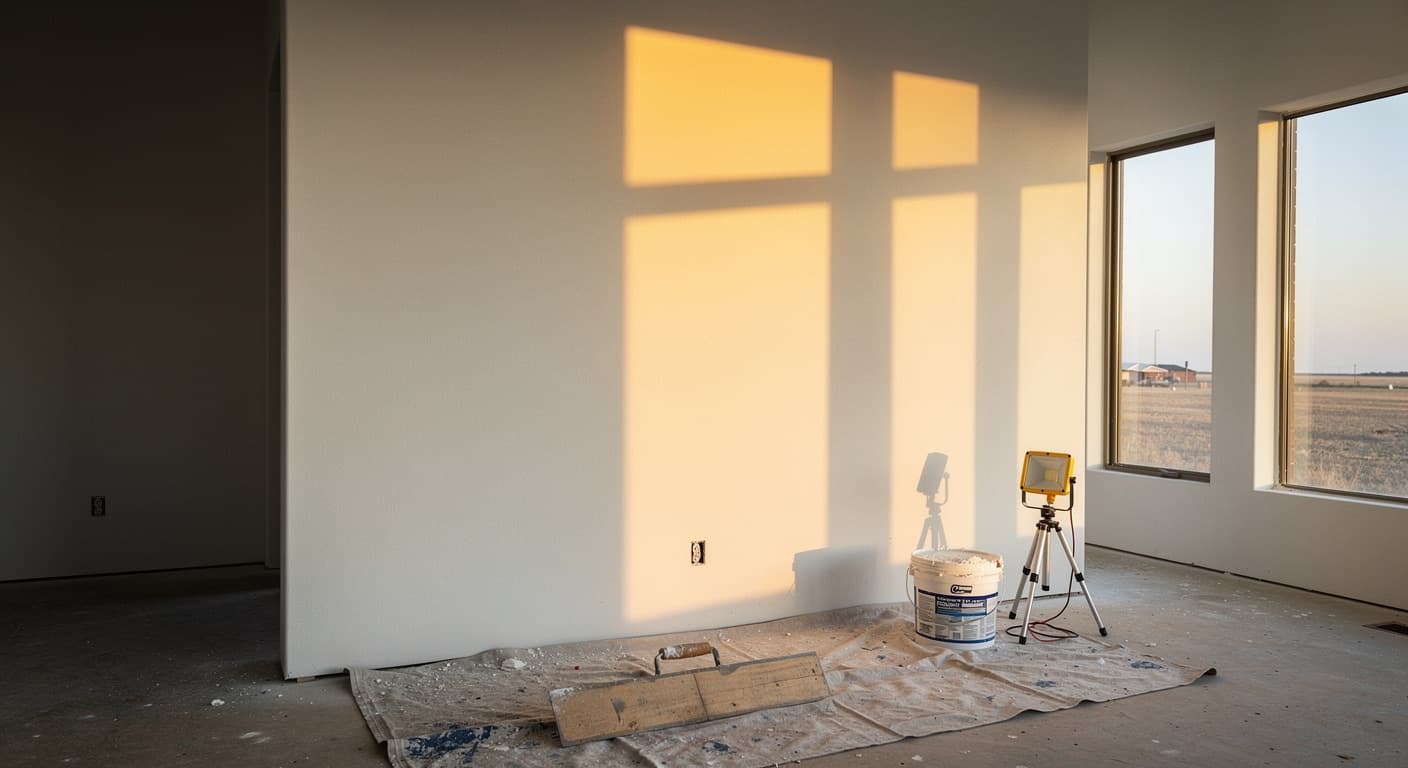
- Worth it: great rooms and entries with big east- or west-facing windows, where low sun rakes along the walls.
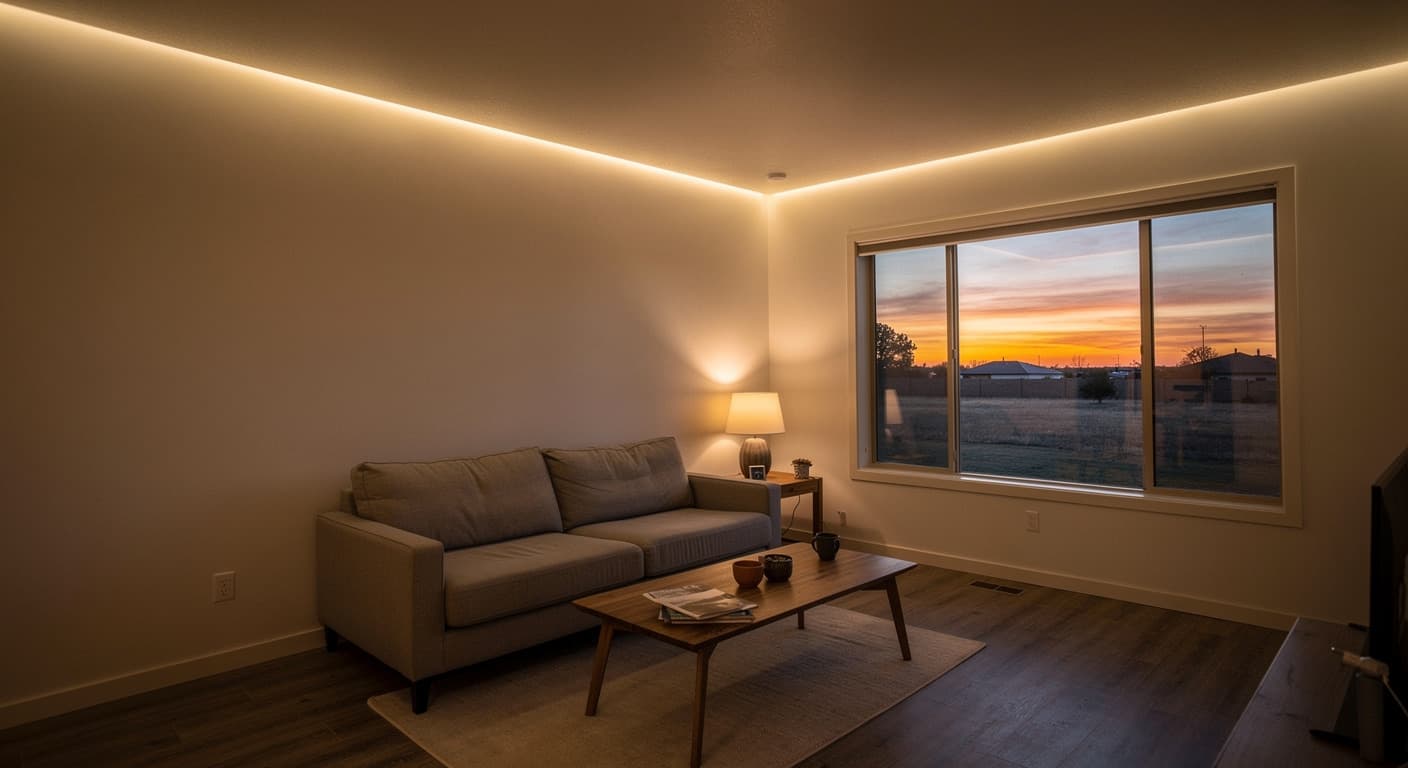
- Worth it: surfaces washed by LED cove, wall-wash, or grazing fixtures. Planning tunable lighting? Our circadian lighting guide shows how those layouts use walls and ceilings.
- Worth it: dark colors, even in flat, and satin or glossier paint on any smooth wall.
- Worth it: smooth-wall modern interiors, where long walls and minimal trim leave joints nowhere to hide.
- Not worth it: orange peel and knockdown, which hide what Level 5 fixes, and closets, laundry rooms, and garages.
- Cheaper fixes for hard light: GA-214 also lists texture and draperies or blinds that soften shadows.
The Lubbock Factor: Low Sun, Dry Air, and Shifting Clay
Lubbock is close to a worst case for critical lighting. At about 33.6 degrees north, the midday sun in late December sits only about 33 degrees above the horizon, and morning and evening sun comes in nearly flat much of the year. The South Plains horizon is flat and open, so that light reaches deep into east- and west-facing rooms, and many newer homes in south and southwest Lubbock pair open great rooms with tall windows.
Dry air is the second factor. The Gypsum Association's GA-236 guide to joint treatment in extreme weather notes that hot, dry conditions speed drying and shorten working time. Its chart shows a thin coat of premixed compound drying in about five hours at 90 degrees and 20 percent humidity, and it flags drying under about eight hours as a common cause of poor results. Good crews here close windows, cut drafts, work smaller sections, and avoid over-thinning the mud.
The third factor is the ground. Expansive clay moves slabs and framing, and a hairline crack that texture would hide shows plainly on a smooth wall. If your home has a history of movement, stabilize it first; our foundation repair cost guide covers what that involves, and our drywall repair cost guide covers the cracks afterward. On new construction, plan a touch-up visit after the first year.
Spray vs Hand-Troweled Skim Coats, and How Long It Takes
GA-214 does not care how the skim goes on, only that it covers the entire surface. Hand troweling with a wide knife is still the best choice for retrofits and furnished rooms. Roll-and-knife work rolls on thinned compound and pulls it down with a wide blade, which is faster on big walls. Spray work uses an airless rig for compound that is then leveled, or for a primer-surfacer such as USG's Tuff-Hide, which USG markets as one spray step in place of a separate skim coat and primer. Spray is fastest in an empty new house; masking eats the savings in one furnished room.
Level 5 typically adds two to four days to a new-construction drywall schedule. A retrofit room takes three to five days before paint, and a whole house two to four weeks. HomeGuide puts typical drying at 12 to 24 hours per coat; Lubbock's dry air often shortens that, but a careful crew does not rush it.
How to Judge a Level 5 Finish: Raking Light and the 5-Foot Rule
GA-214 sets a clear standard: view the surface from at least 5 feet away, straight on, under the lighting the room will actually have, including daylight and fixtures like wall washers. Finishers hold a work light at a low angle to find flaws during the job, but a light held flat against any wall will find something. Use this sequence:
- Ask for one sample wall first, primed and checked under real light. GA-214 recommends job-site mock-ups for Levels 3 through 5.
- Inspect after primer and before finish paint, when flaws are easy to see and cheap to fix.
- Check at the worst hour: west walls near sunset, east walls in early morning, cove lights after dark.
- From 5 feet back, look for joint bands, crowned seams, screw dimples, sanding scratches, and dull or shiny patches.
- Mark issues with painter's tape so the crew can fix them before the final coats.
How to Get an Accurate Quote
Level 5 bids vary more than most drywall work because the scope is easy to under-describe. To compare them fairly:
- Name the level room by room in writing, and ask the contractor to reference GA-214 so everyone means the same thing.
- Ask how many skim passes are included, and whether primer, dust control, and a post-primer touch-up round are in the price.
- Describe the light: window directions, cove or wall-wash fixtures, and the paint color and sheen you plan to use.
- For textured walls, ask whether the plan is to skim over the texture or remove it first.
- Get it itemized. For a ballpark first, our free instant estimate returns a range in under a minute.
A Note from Nextgen Blueprint
This guide was researched and published by Nextgen Blueprint, a Lubbock design-build contractor that does Level 5 drywall finishing in new construction and remodels. Treat these numbers as 2026 Lubbock-market ranges to budget with, not a quote, since the real figure depends on your surface area, texture, ceiling heights, and lighting. The pricing and GA-214 details were accurate as of September 2026. Get a written, itemized estimate that names the finish level for every room; if you are building, our guide to the cost to build a house in Lubbock shows where drywall fits.
Frequently asked questions
How much does a Level 5 drywall finish cost?
What is the difference between Level 4 and Level 5 drywall?
Is Level 5 drywall worth the extra cost?
Does eggshell paint need a Level 5 finish?
How much does it cost to skim coat walls in Lubbock?
How long does a Level 5 finish take?
How do you inspect a Level 5 drywall finish?
Sources and further reading
- [1]Gypsum Association: GA-214-2021 Levels of Finish for Gypsum Panel Products (PDF)
- [2]Gypsum Association: GA-236-2023 Joint Treatment Under Extreme Weather Conditions (PDF)
- [3]HomeGuide: How Much Does It Cost to Skim Coat Walls and Ceilings? (2026)
- [4]Angi: How Much Does It Cost to Skim Coat Walls? (2026 Data)
- [5]Homewyse: Cost to Skim Coat (2026 calculator)
Written by
John Paul, Founder, Nextgen Blueprint
John Paul founded Nextgen Blueprint with his father-in-law, a Lubbock-area general contractor with 30+ years of experience. They build healthy, natural homes for Lubbock families, and approach every project with the kind of care and attention to detail most contractors save for their own home.
More from JohnRelated services
Filed under Design & Materials. Finishes, materials, and design choices that last out here.