Cost Guides14 min read
Heat Pump Installation Cost in Lubbock, TX: Heat Strips, Dual Fuel & Panels (2026)
What a heat pump costs to install in Lubbock in 2026: all-electric vs dual fuel, heat strip amps and panel capacity, heating costs on local gas and electric rates, hard freezes like February 2021, generators, and permits.
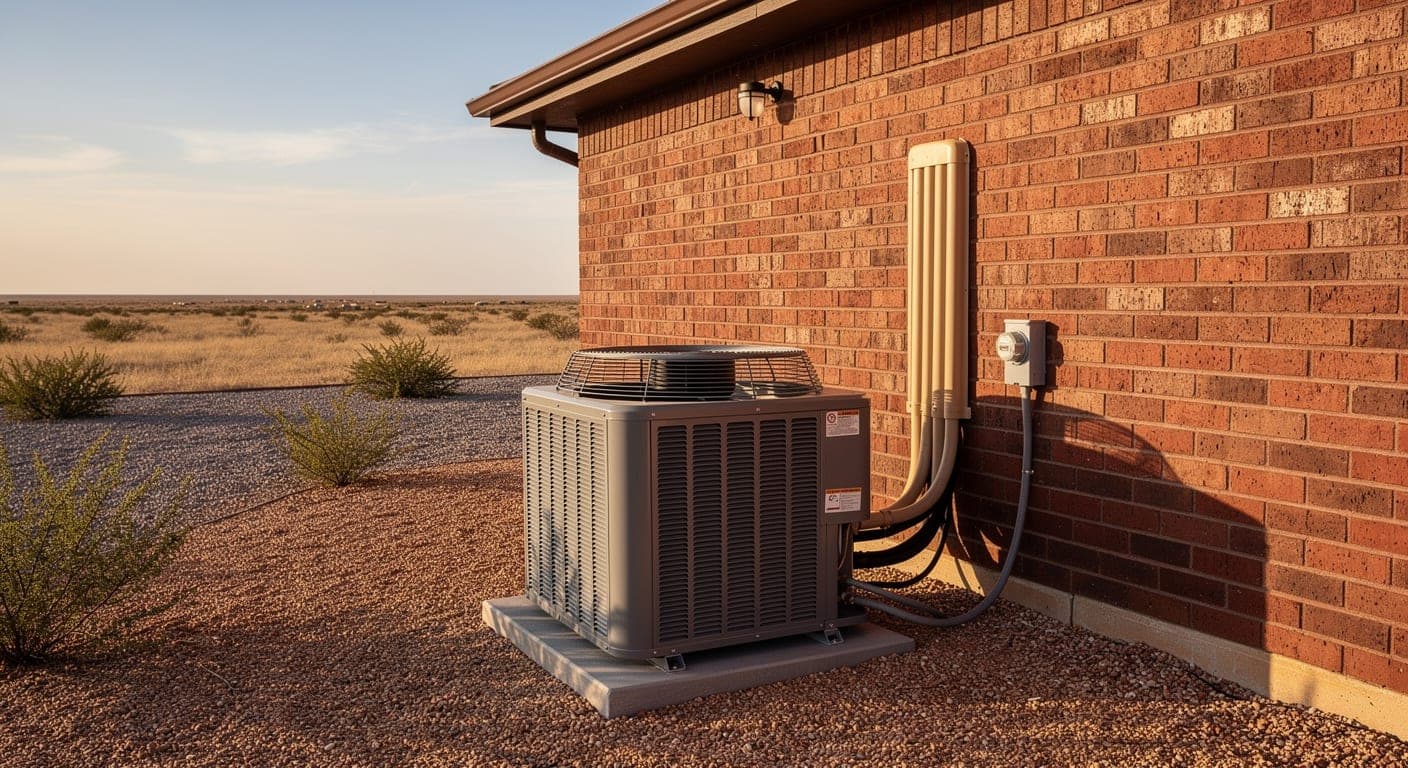
Heat pump installation in Lubbock typically costs $7,500 to $14,000 in 2026 for a ducted 2 to 4 ton system with an air handler, heat strips, and permit, and large or variable-speed systems run $14,000 to $22,000. Adding a heat pump to a compatible gas furnace for dual fuel heat costs about $3,500 to $8,000. The equipment is only part of the decision. Lubbock's inexpensive natural gas, hard freezes like February 2021, the amps your heat strips draw, and the size of your electrical panel decide which system makes sense and what the full job costs.
On this page
- 01What Heat Pump Installation Costs in Lubbock (2026)
- 02Where the Money Goes on a Heat Pump Installation
- 03Heat Pump vs Gas Furnace vs Dual Fuel in Lubbock
- 04What It Costs to Heat in Lubbock: Gas, Heat Pump, or Heat Strips
- 05The Lubbock Factor: Mild Winter Days and Hard Freezes
- 06Heat Strips, Amps, and Your Electrical Panel
- 07Backup Power: How Electric Heat Changes Generator Sizing
- 08Worked Example: Replacing Both Systems in a 1978 Lubbock Ranch
- 09Permits, Licensing, Tax Credits, and Timeline in Lubbock
- 10How to Get an Accurate Heat Pump Quote
- 11A Note from Nextgen Blueprint
- 12Frequently asked questions
What Heat Pump Installation Costs in Lubbock (2026)
Most Lubbock heat pump jobs take one of three shapes: replacing an old heat pump or electric furnace, swapping a gas furnace and central air conditioner for an all-electric heat pump, or adding a heat pump on top of a gas furnace so the two share the work, called dual fuel. Modernize's August 2026 figures put ducted heat pump replacements in the Amarillo and Lubbock region at $7,500 to $14,000, and Fixr's national figures for hybrid systems run $7,500 to $12,000. The ranges below assume existing ducts in fair shape and include the permit.
- Typical ducted heat pump system
- $7,500 to $14,000
- Heat pump added to a gas furnace
- $3,500 to $8,000
- 10 kW heat strip draw at 240 volts
- About 42 amps
| Scope | Installed cost (Lubbock, 2026) | What it covers |
|---|---|---|
| Ducted heat pump system, 2 to 4 tons | $7,500 to $14,000 | Outdoor unit, air handler with heat strips, line set, pad, thermostat, permit |
| Large or variable-speed system | $14,000 to $22,000 | 5 tons, high-efficiency, or cold-climate rated equipment |
| Heat pump added to an existing gas furnace | $3,500 to $8,000 | Outdoor unit, matched coil, and dual fuel controls on a compatible furnace |
| Complete dual fuel system | $9,000 to $15,000 | New heat pump and new gas furnace, installed together |
| Ductless mini-split, single zone | $3,000 to $6,000 | One outdoor unit and one indoor head for a room or addition |
| New 240-volt heat strip circuit | $800 to $2,500 | Breaker and wiring to the air handler when converting from gas |
| Panel upgrade, 100 to 200 amp | $2,000 to $5,000 | Only when the load calculation shows the service is too small |
Where the Money Goes on a Heat Pump Installation
Two quotes for the same house can differ by thousands of dollars because they price different jobs. A complete quote for a ducted system should list:
- The outdoor heat pump, sized from a heating and cooling load calculation for your house rather than copied from the old unit's label.
- The indoor air handler, or for dual fuel, a coil matched to the furnace. The indoor and outdoor units have to be rated to work together.
- Heat strips: electric resistance coils in the air handler that add heat in hard cold and during defrost. The coils are inexpensive; the circuit that feeds them is not.
- The refrigerant line set, condensate drain, pad, outdoor disconnect, and a thermostat that can control a heat pump and its backup heat.
- Duct sealing or repair. The Department of Energy's federal buying guide warns that oversizing, improper refrigerant charging, and leaky ducts cost efficiency, comfort, and equipment life.
- The mechanical permit, plus an electrical permit for any new circuit or panel work.
Heat Pump vs Gas Furnace vs Dual Fuel in Lubbock
A heat pump is an air conditioner that can run in reverse. In summer it moves heat out of the house, and in winter it pulls heat from the outdoor air and moves it inside. ENERGY STAR says an air-source heat pump can deliver up to three times more heat energy than the electricity it uses, because it moves heat instead of making it. As the outdoor air gets colder, there is less heat to move, so capacity and efficiency fall and the system leans on backup heat.
That backup is either heat strips in the air handler or a gas furnace. An all-electric heat pump uses strips. A dual fuel system pairs the heat pump with a gas furnace, and the thermostat hands heating to the furnace below a set outdoor temperature. Fixr notes that heat pumps heat most efficiently when it is at least 30 to 40 degrees outside, and that high-efficiency models can run down to about 5 degrees but may struggle to keep the house warm.
| Factor | Gas furnace and central air | All-electric heat pump | Dual fuel |
|---|---|---|---|
| Winter heat source | Gas burner | Heat pump, then heat strips | Heat pump, then gas furnace |
| Summer cooling | Separate air conditioner | The same heat pump | The same heat pump |
| Needs gas service | Yes | No | Yes |
| New heavy 240-volt circuit | No | Yes, when converting from gas | No |
| Winter load on a generator | Blower and controls | About 42 amps per 10 kW of strips | Blower and controls |
| Best fit | Gas homes with a sound furnace | Homes without gas, or replacing electric heat | Gas homes replacing the air conditioner |
What It Costs to Heat in Lubbock: Gas, Heat Pump, or Heat Strips
Fuel prices decide whether a heat pump saves money here, and Lubbock gas is inexpensive. KCBD reported in 2025 that the average Atmos Energy customer in Lubbock used about 50 Ccf of gas a month, for a bill of about $45.60 under the new rate settlement, or roughly 91 cents per Ccf with the customer charge included. The EIA's preliminary average for Texas residential electricity was 15.88 cents per kilowatt-hour in July 2026. The table uses those figures to price 100,000 Btu of heat, about one therm, delivered into the house.
The math uses EIA conversions of 3,412 Btu per kilowatt-hour and 103,700 Btu per Ccf, and a heat pump rated 7.8 HSPF2, the ENERGY STAR level. HSPF2 is measured in Btu per watt-hour, so 7.8 means about 7,800 Btu per kilowatt-hour averaged over a rated heating season. Because the gas figure includes the fixed customer charge, an extra Ccf actually costs less. Your electric plan and gas bill will differ, so rerun it with your own rates.
The pattern is clear. A heat pump heats for less than half the cost of heat strips or baseboard heat, so an all-electric home gains the most. A gas home that goes all-electric would likely pay more in winter at these prices. That is the case for dual fuel in a gas home: the heat pump handles cooling and mild heating days, and the furnace takes the cold nights.
| Heat source | Energy for 100,000 Btu | Approximate cost |
|---|---|---|
| Heat strips or baseboard (resistance) | 29.3 kWh | $4.65 |
| Heat pump, 7.8 HSPF2 seasonal average | 12.8 kWh | $2.04 |
| Gas furnace, 80 percent efficient | 1.21 Ccf | $1.10 |
| Gas furnace, 95 percent efficient | 1.02 Ccf | $0.93 |
The Lubbock Factor: Mild Winter Days and Hard Freezes
Lubbock winters suit a heat pump most of the time. National Weather Service normals for 1991 to 2020 put the average January high at 55.0 degrees and the average low at 27.1, so many winter days sit in the range where a heat pump works well, while most nights dip below freezing for a few hours.
The hard freezes are the test. In February 2021, Lubbock fell to 0 degrees late on February 14 and early on the 15th, the lowest reading since 1989, with highs of only 14 on both days. The city stayed below freezing for nearly 186.5 consecutive hours, from the afternoon of February 11 to the morning of February 19. ENERGY STAR's cold climate certification tests heat pumps down to 5 degrees, and Fixr notes that even high-efficiency models may struggle near that point, so in a week like that the heat strips or the furnace carry the house.
That is why backup heat sizing matters more here than the average winter suggests. Strips sized only for typical nights can leave a house cold in a week like 2021, and strips sized for that week set the electrical load. Our frozen pipes guide covers protecting the rest of the house during a freeze.
- Average January low (1991 to 2020)
- 27.1°F
- Lubbock low, February 14 and 15, 2021
- 0°F
- Hours below freezing, February 2021
- About 186.5
Heat Strips, Amps, and Your Electrical Panel
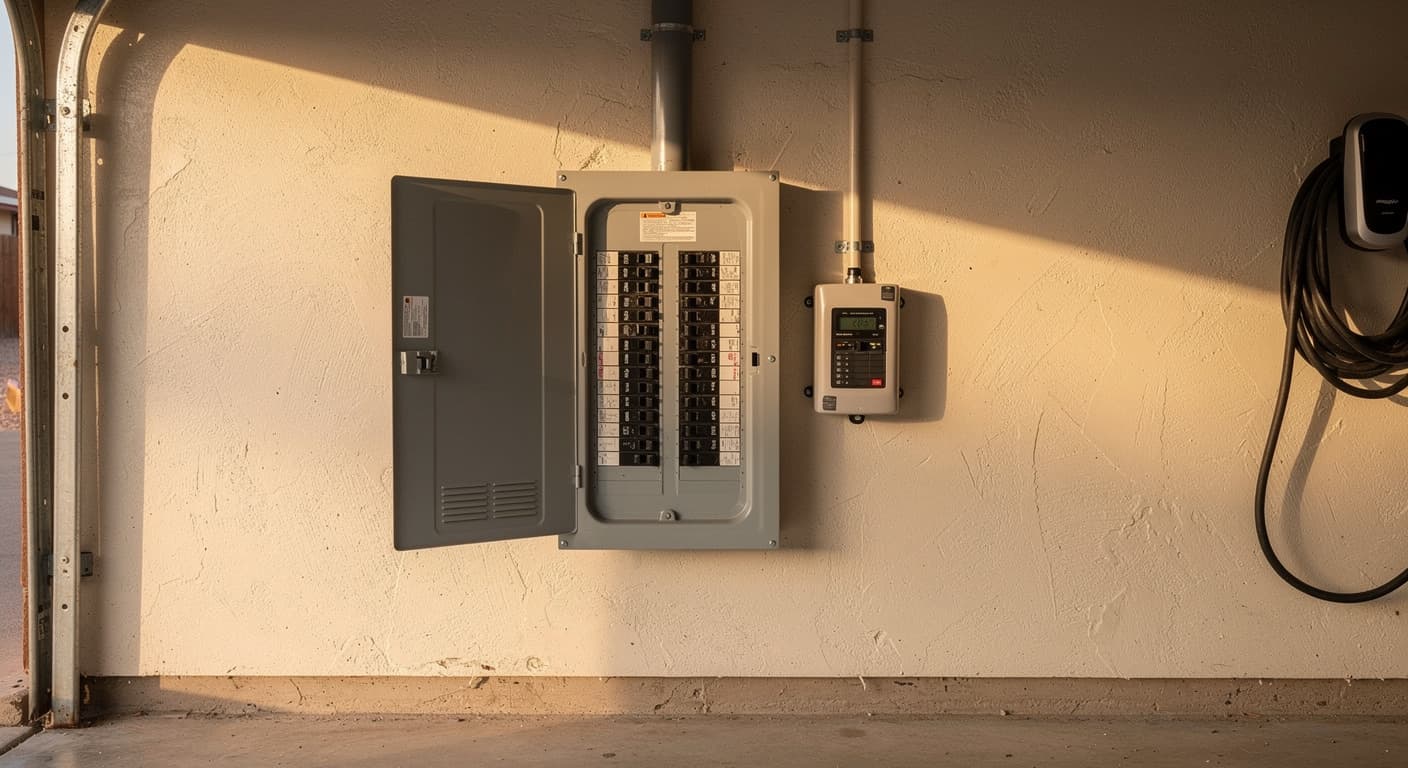
Heat strips are rated in kilowatts, and the current they draw is simple division: watts divided by volts. At 240 volts, every 5 kilowatts of strip pulls about 21 amps, before the blower and the outdoor unit are counted. The circuit and the panel have to be sized for the full strip rating on the equipment nameplate.
When a heat pump replaces a gas furnace, the air handler needs a heavy 240-volt circuit the furnace never had, priced like other large circuits at $800 to $2,500. Whether the panel can carry it is a load calculation question. A 200 amp house with gas appliances often can. A 100 amp house with an electric range, electric dryer, and central air often cannot, and adding 15 kilowatts of strips to it can mean a panel upgrade at $2,000 to $5,000. Our electrical panel upgrade cost guide explains how that calculation works. Dual fuel avoids most of this, because the furnace, not strips, handles the cold.
| Heat strip size | Draw at 240 volts | Heat output |
|---|---|---|
| 5 kW | About 21 amps | About 17,000 Btu per hour |
| 10 kW | About 42 amps | About 34,000 Btu per hour |
| 15 kW | About 63 amps | About 51,000 Btu per hour |
| 20 kW | About 83 amps | About 68,000 Btu per hour |
Backup Power: How Electric Heat Changes Generator Sizing
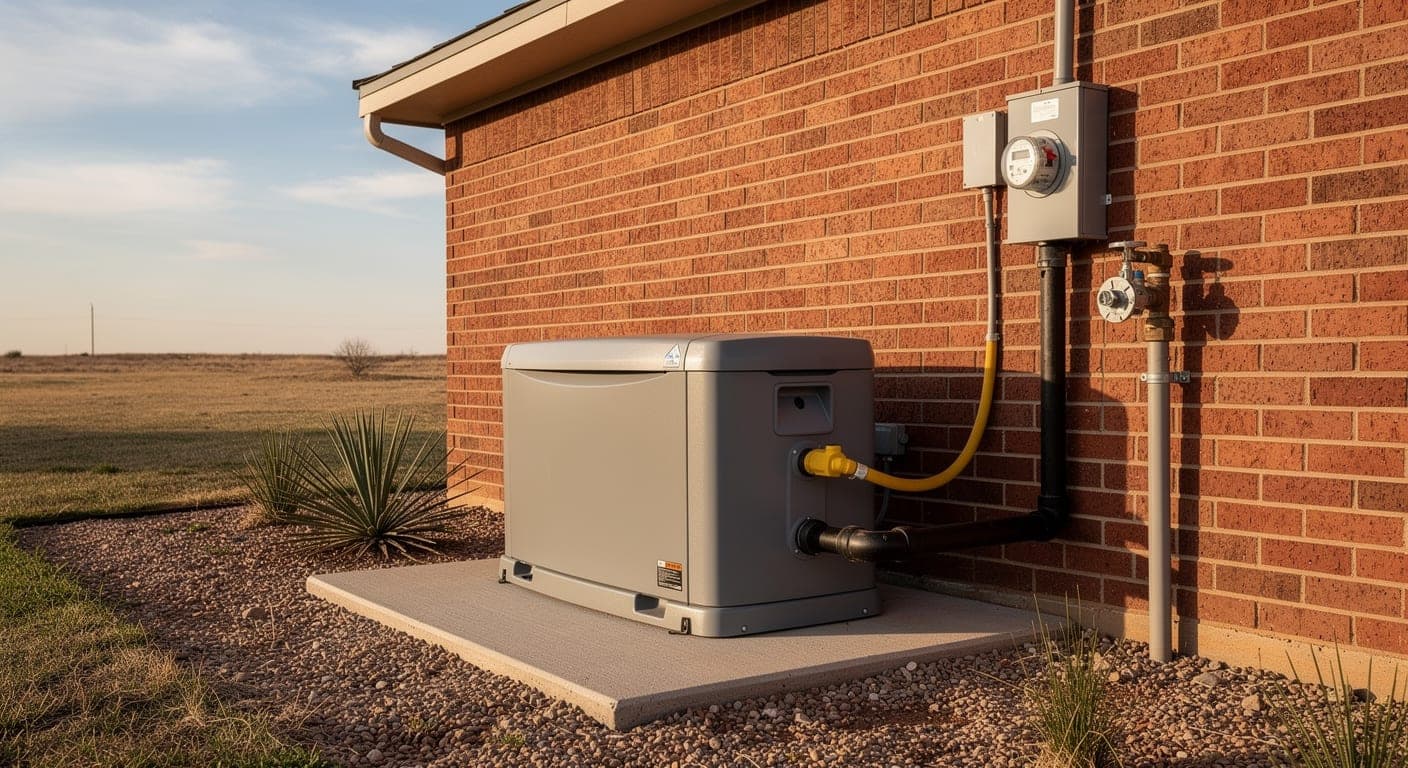
Your heating fuel also decides what a generator has to carry. A gas furnace needs power only for its blower and controls, so a modest standby unit, or a portable generator connected through an interlock kit, can keep a gas-heated house warm through an outage. A heat pump with strips is a much larger load: 10 kilowatts of strips alone draw about 42 amps, more than a 7,500 watt portable generator can supply.
For an all-electric house, an electrician will usually either size the standby generator up or keep the strips off generator power and let the heat pump run alone, which may not hold temperature on a night near zero. Dual fuel keeps backup simple, since the furnace heats on generator power with a small electrical load. Our generator installation cost guide covers standby units at $5,000 to $15,000 installed.
Worked Example: Replacing Both Systems in a 1978 Lubbock Ranch
Take a 1,800 square foot 1978 brick ranch in central Lubbock with a 20-year-old gas furnace, an aging 3-ton air conditioner, ducts in fair shape, and a 100 amp panel that already serves an electric range and dryer. The owners want to replace both systems before next summer and are weighing two paths.
The all-electric path removes the furnace and installs a 3-ton heat pump with an air handler and 10 kilowatts of strips. The load calculation fails on 100 amps, so the panel is upgraded to 200. The dual fuel path installs the same heat pump on a new gas furnace, keeps the existing gas line, and needs no heavy new circuit.
On the fuel math above, the dual fuel house also heats for less in cold weather. The all-electric path makes more sense when a house has no gas service, when the furnace location or gas piping is a problem, or when the owners plan to close the gas account entirely.
| Line item | All-electric heat pump | Dual fuel |
|---|---|---|
| Heating and cooling equipment, installed | $8,500 to $12,000 with air handler and strips | $9,000 to $15,000 with new furnace |
| New heat strip circuit | $800 to $2,500 | Not needed |
| Panel upgrade to 200 amps | $2,000 to $5,000 | Not needed |
| Likely total | $11,300 to $19,500 | $9,000 to $15,000 |
Permits, Licensing, Tax Credits, and Timeline in Lubbock
Inside city limits, replacing heating or air conditioning equipment needs a City of Lubbock permit, according to the city's Building Safety guidance as reported by KFYO in August 2026. Homeowners can pull mechanical permits for work they do themselves, but electrical work requires a licensed electrical contractor or master electrician. In Texas, contractors who install, repair, or maintain air conditioning, refrigeration, or heating systems must be licensed by TDLR, and you can check a license with the agency's Verify a License search. Fees and requirements change, so confirm them with City of Lubbock Building Safety before work starts.
The federal 25C credit, which allowed up to $2,000 a year for qualified heat pumps, applied to improvements made through December 31, 2025, according to the IRS. Older pages may still describe it as available, so do not count on it for a 2026 install. This is general information, not tax advice.
If the job includes a panel upgrade, plan on the one to three weeks our panel guide describes for permits, LP&L coordination, and inspection, on top of the equipment schedule.
How to Get an Accurate Heat Pump Quote
Ask each contractor for a written, itemized quote, and use the same checklist for all of them:
- Ask for a written heating and cooling load calculation for your house, not a size copied from the old unit.
- Get the heat strip size in kilowatts, the circuit size, and whether your panel passes a load calculation with it.
- For dual fuel, ask how the coil will be matched to the furnace and what switchover temperature they will set, and why.
- Compare SEER2 and HSPF2 ratings. The ENERGY STAR level in DOE's federal buying guide is 15.2 SEER2 and 7.8 HSPF2.
- Confirm the quote includes the mechanical permit, any electrical permit, duct sealing, the thermostat, and removal of the old equipment.
- Verify the TDLR license, and read our guide to choosing a reliable contractor.
A Note from Nextgen Blueprint
This guide was researched and published by Nextgen Blueprint, a Lubbock design-build contractor. Our electrical team handles the heat strip circuits, load calculations, and panel upgrades that heat pump conversions often need, and our whole-home remodel projects plan heating and cooling changes with the rest of the house. Treat these figures as October 2026 budgeting ranges for the Lubbock market, not a quote. Your price depends on the system size, the condition of the ducts, your panel, and whether you keep gas. Get written, itemized estimates from a TDLR-licensed air conditioning contractor and a licensed electrician before you commit.
Frequently asked questions
How much does a heat pump installation cost in Lubbock, TX?
Is a heat pump cheaper to run than a gas furnace in Lubbock?
Do heat pumps work in Lubbock winters?
How many amps does a heat strip draw?
Do I need a panel upgrade to install a heat pump?
What is a dual fuel heat pump, and how much does it cost?
Is there still a federal tax credit for heat pumps?
Do I need a permit to replace a heat pump in Lubbock?
Sources and further reading
- [1]National Weather Service Lubbock: February 2021 Winter Storm and Record Cold
- [2]National Weather Service Lubbock: January Climate Normals (1991 to 2020)
- [3]ENERGY STAR: Air Source Heat Pumps
- [4]U.S. Department of Energy FEMP: Purchasing Energy-Efficient Residential Air-Source Heat Pumps
- [5]U.S. EIA: Electric Power Monthly, Average Price of Electricity by State (Table 5.6.A)
- [6]U.S. EIA: How do I convert natural gas prices to dollars per Btu or therm?
- [7]IRS: Energy Efficient Home Improvement Credit
- [8]TDLR: Air Conditioning and Refrigeration Contractors
- [9]KCBD: Atmos Energy to raise rates in May (April 2025)
- [10]KFYO: Lubbock home improvement permits (August 2026)
- [11]Modernize: Heat Pump Costs in Texas
- [12]Fixr: Hybrid Heat Pump Cost
Written by
John Paul, Founder, Nextgen Blueprint
John Paul founded Nextgen Blueprint with his father-in-law, a Lubbock-area general contractor with 30+ years of experience. They build healthy, natural homes for Lubbock families, and approach every project with the kind of care and attention to detail most contractors save for their own home.
More from JohnRelated services
Filed under Cost Guides. What home projects actually cost in Lubbock, line by line.