Healthy & Smart Home11 min read
Whole-House Air Purification in Lubbock: Dust, Allergies, HEPA and ERV Costs (2026)
2026 Lubbock costs for MERV 13 media cabinets, whole-house HEPA, UV lamps, duct sealing, and ERVs, plus how dust season, static pressure, and upkeep change the math.
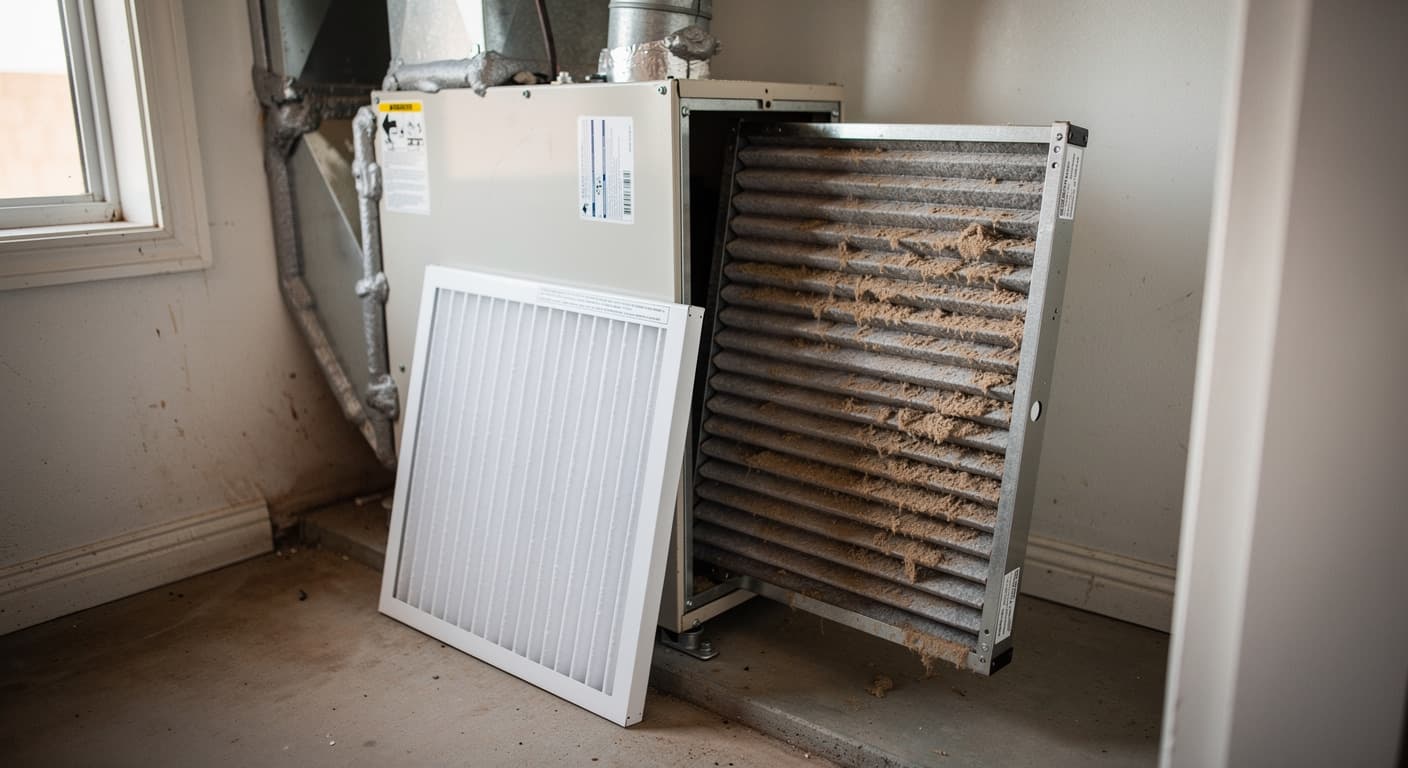
Whole-house air purification in Lubbock costs $400 to $1,000 installed in 2026 for a MERV 13 media filter cabinet, $1,500 to $4,500 for a whole-house HEPA system, and $2,000 to $5,000 for an ERV that brings in filtered fresh air. For most homes, the best value is not the most expensive box. It is a deep MERV 13 filter the blower can actually push air through, return ducts sealed so attic dust cannot sneak around it, and a fan schedule that keeps air moving on dust days. Here is what each option measurably does, what it costs, and what it takes to maintain.
On this page
- 01What Whole-House Air Purification Costs in Lubbock (2026)
- 02The Lubbock Factor: Dust Storms, Harvest Dust, and Pollen
- 03MERV and HEPA Ratings, Explained Accurately
- 04Media Cabinet, Whole-House HEPA, or Electronic Air Cleaner
- 05Static Pressure: Why a Better Filter Can Hurt Your HVAC
- 06UV Lamps: What They Do and Do Not Do
- 07Duct Sealing: The Upgrade That Makes Filters Work
- 08ERV vs. HRV: Why an ERV Usually Fits a Semi-Arid Climate
- 09Air Quality Monitors and Maintenance Costs
- 10How to Get an Accurate Quote
- 11A Note from Nextgen Blueprint
- 12Frequently asked questions
What Whole-House Air Purification Costs in Lubbock (2026)
Whole-house air cleaning works through your central heating and cooling system, so price depends on the equipment and how much the ductwork has to change. The ranges below are 2026 installed prices in the Lubbock market, where HVAC labor runs somewhat below the big Texas metros. Most homes need one or two of these, not all six.
- MERV 13 media cabinet
- $400 to $1,000
- Whole-house HEPA
- $1,500 to $4,500
- ERV fresh air
- $2,000 to $5,000
| Option | Installed cost | What it does |
|---|---|---|
| MERV 11 to 13 media cabinet (4 to 5 inch) | $400 to $1,000 | Deep pleated filter replaces the thin 1-inch slot |
| Electronic air cleaner | $600 to $2,000 | Charged plates collect particles; cells need washing |
| Whole-house HEPA system | $1,500 to $4,500 | Separate blower pulls part of the airflow through a sealed HEPA filter |
| UV lamp at the cooling coil | $400 to $1,000 | Limits microbial growth on the coil; captures no dust |
| Duct sealing (most homes) | $1,000 to $4,000 | Stops dusty attic air from leaking into the returns |
| ERV fresh-air system | $2,000 to $5,000 | Filtered outdoor air with heat and moisture recovery |
The Lubbock Factor: Dust Storms, Harvest Dust, and Pollen
South Plains air arrives in seasons, and each brings something to filter. The National Weather Service office in Lubbock lists six blowing-dust events in its 2026 archive between late January and mid-May; on March 11 the Lubbock airport recorded a 60 mph gust as dust cut visibility to 1 to 2 miles at times. Fall brings harvest, and Plains Cotton Growers says its 42-county region grows roughly 35 percent of the nation's cotton, so field and gin dust comes with the season near farmland. Pollen follows the pattern allergists describe, trees and grasses in spring and ragweed and other weeds in fall, and local forecasts list ragweed, grasses, and elm among the top allergens.
The house matters as much as the weather. In most slab-on-grade Lubbock homes the ducts run through the attic, and a leaky return there pulls in air that never touches the filter, so we check the returns before recommending any filter. The climate is also semi-arid with dry winters, which shapes the ventilation choice below.
MERV and HEPA Ratings, Explained Accurately
MERV, the Minimum Efficiency Reporting Value, comes from the ASHRAE 52.2 test. It rates filters from 1 to 16 by single-pass capture in three particle-size bands between 0.3 and 10 microns, and MERV 13 is the first level that must catch at least half of the smallest band. HEPA is a separate standard: the Department of Energy definition, cited by the EPA, requires capturing at least 99.97 percent of particles at 0.3 microns, the hardest size to catch.
The EPA's technical summary adds a practical point: given how few hours a home's HVAC fan runs, most MERV 13 filters are likely almost as effective as HEPA at lowering most sizes of indoor particles. Also treat hospital-grade or medical-grade as marketing terms, not ratings; the same summary says there is no widely accepted definition of HEPA performance in consumer products. Ask for the MERV rating or HEPA test data instead.
| Rating | 0.3 to 1 micron | 1 to 3 microns | 3 to 10 microns |
|---|---|---|---|
| MERV 8 | No minimum | 20% or more | 70% or more |
| MERV 11 | 20% or more | 65% or more | 85% or more |
| MERV 13 | 50% or more | 85% or more | 90% or more |
| HEPA | 99.97% or more | 99.97% or more | 99.97% or more |
Media Cabinet, Whole-House HEPA, or Electronic Air Cleaner
A media cabinet is where most Lubbock homes should start. It swaps the thin filter slot for a 4 or 5 inch deep pleated filter, which packs more media into the same opening, so it reaches MERV 11 to 13 with less airflow resistance than a 1-inch filter of the same rating. No moving parts, one filter to change.
A whole-house HEPA system is a separate cabinet with its own blower beside the air handler. It pulls a share of the return air through a prefilter and a sealed HEPA filter and sends it back into the ducts. It suits tight homes that want the highest capture, but it treats only part of the airflow and adds a second fan to maintain.
An electronic air cleaner collects particles on charged plates with low resistance and washable cells, but it needs regular cleaning, and the EPA cautions that electrostatic precipitators and ionizers may emit ozone. If you want one, choose a model certified to the California Air Resources Board ozone limit. We do not recommend ionizers or add-on devices whose claims go beyond particle capture.
Static Pressure: Why a Better Filter Can Hurt Your HVAC
Every blower has a limit on how hard it can push. The EPA's technical summary warns that not all residential HVAC fans can handle high-efficiency filters without losing airflow, heating or cooling capacity, and comfort. That is why a 1-inch MERV 13 filter dropped into an old return grille can backfire: it captures more, but the system moves less air through it.
The fix is measurement. A technician reads total external static pressure with a manometer and compares it with the equipment's rated limit, often around 0.5 inches of water column for residential systems. Deep media lowers resistance, and the filter frame must seal so air cannot slip around it. Runtime matters too. The EPA says central systems usually run less than 25 percent of the time during heating and cooling seasons, and a filter only cleans air while the fan is on, so in dust season we often set the fan to circulate continuously at low speed.
UV Lamps: What They Do and Do Not Do
UV lamps are the most oversold item here, so this is what the EPA's research summary supports. A UV-C lamp aimed at the cooling coil and drain pan can limit mold and bacteria growth on those damp surfaces. One study it cites found a 99 percent reduction in growth on exposed HVAC surfaces but only a 25 to 30 percent drop in airborne bacteria, because air passes the lamp in seconds. UV captures no dust or pollen, and the EPA found no research showing it reduces dust mite or mold allergens.
Uncoated UV-C lamps can generate ozone, so ask for an ozone-free lamp, and plan on a replacement bulb about once a year at roughly $20 to $70. A coil lamp is a reasonable add-on if your coil has had growth problems, not a substitute for a good filter.
Duct Sealing: The Upgrade That Makes Filters Work
ENERGY STAR estimates that 20 to 30 percent of the air moving through a typical duct system is lost to leaks, holes, and poor connections. Return leaks matter most for air quality, because the return side runs under suction and pulls in air from wherever the duct runs, which in a Lubbock attic means dust and insulation fibers. The EPA notes that return leakage can bypass the filter entirely and recommends well-sealed ducts.
Sealing runs about $1 to $2 per square foot of home, or $1,000 to $4,000 for most houses, using mastic at accessible joints or an aerosol sealant injected from inside the ducts. Ask for a duct leakage test before and after, typically $200 to $450, so you see the result in numbers. Crushed or disconnected ducts may need replacement instead.
ERV vs. HRV: Why an ERV Usually Fits a Semi-Arid Climate
Filtration cleans the air already in the house; ventilation replaces some of it with outdoor air, diluting the carbon dioxide and household chemicals a particle filter cannot catch. ASHRAE Standard 62.2 sets the minimum whole-house rate a designer sizes to. An HRV recovers heat only. An ERV recovers heat and moisture, and the Department of Energy's Building America guidance notes it can help retain indoor moisture where winter air is uncomfortably dry. That is the Lubbock case.
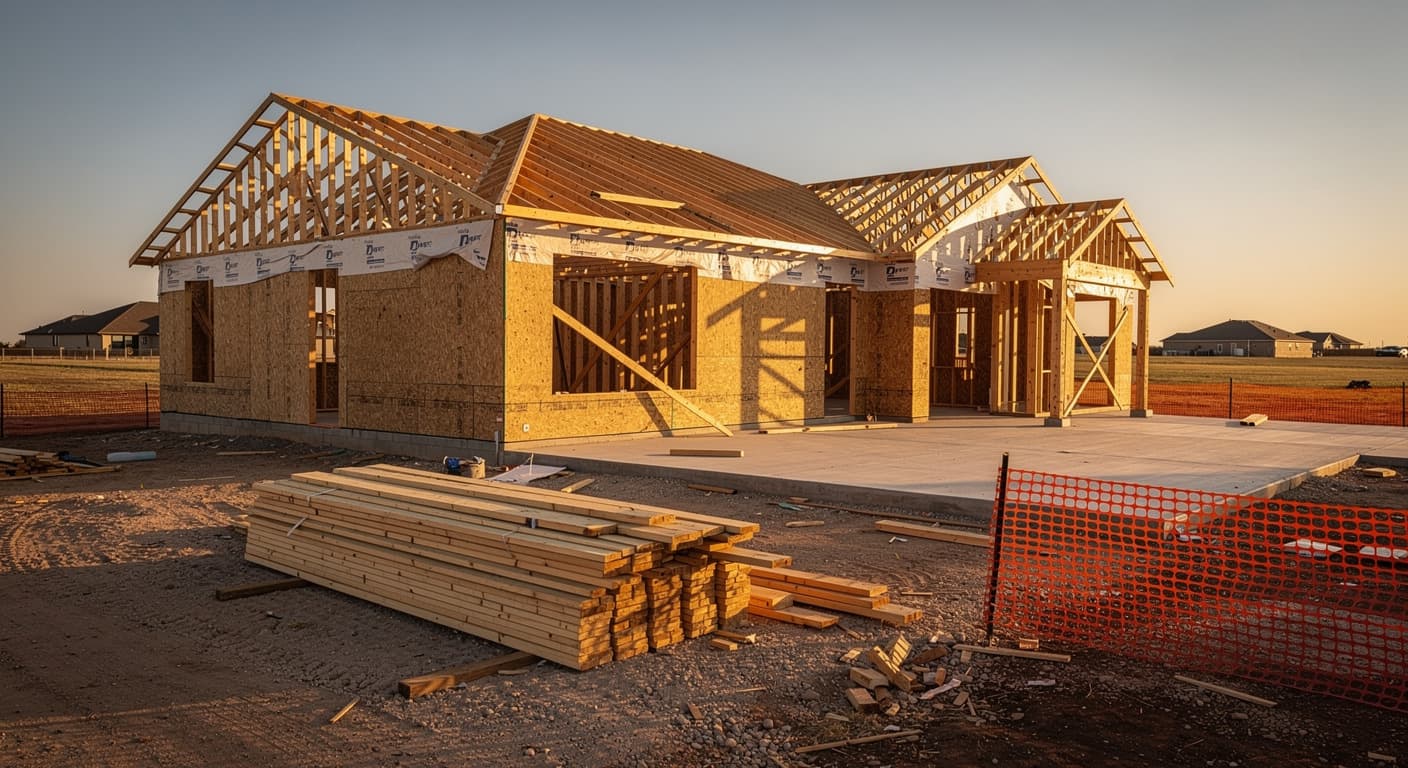
In a dust region, the details decide whether an ERV helps. The outdoor intake needs its own filter and a spot away from driveways and bare dirt, and the unit should pause during dust events. Tying an ERV into the central ducts without a dedicated run can short-circuit the airflow, so good installs duct at least one side separately. Expect $2,000 to $5,000 installed, more when new ducts must cross finished ceilings. If you are building a new home, ducting one during framing costs far less.
Air Quality Monitors and Maintenance Costs
A monitor tells you whether any of this works. Consumer units that track PM2.5, carbon dioxide, VOCs, and humidity list for roughly $300. Watch PM2.5 during a dust event with the fan running to see whether the filter keeps up, and use CO2 as a ventilation gauge; Building America notes several authorities treat 700 to 1,200 ppm as a maximum. Read VOC numbers as trends, since those sensors estimate from a subset of gases and low-cost sensors drift. To tie sensors into the HVAC or ERV controls, we typically budget $500 to $2,000.
Maintenance is where cheap systems get expensive. Put these on your Lubbock home maintenance calendar:
- Media cabinet: $10 to $60 per filter, replaced once or twice a year; check it every three months in dust season.
- Whole-house HEPA: prefilters several times a year and the HEPA filter on the maker's schedule, which can run a few hundred dollars.
- Electronic air cleaner: wash the cells every three to six months, and after major dust events.
- UV lamp: about $20 to $70 a year.
- ERV: clean or replace the intake and core filters on the maker's schedule, and after major dust events.
How to Get an Accurate Quote
Air quality quotes are hard to compare because the same house can get a $500 filter proposal and a $10,000 package. To compare fairly:
- Ask for static pressure readings before and after, and the blower's rated limit, in writing.
- Get the exact filter: MERV rating under ASHRAE 52.2, depth, and the price of replacements.
- For HEPA, ask for the unit's airflow, whether the housing is sealed, and the filter costs.
- Ask whether the quote includes a duct leakage test and sealing the returns.
- For an ERV, confirm the design airflow under ASHRAE 62.2, the intake location and filter, and how it is ducted.
- Ask for ozone certification on any electronic or UV product.
- Start with our free instant estimate for a ballpark range in under a minute, then get a written, itemized quote.
A Note from Nextgen Blueprint
This guide was researched and published by Nextgen Blueprint, a Lubbock design-build contractor that installs filtration, duct sealing, and ERV fresh air as part of our healthy living systems work, often alongside whole-house water filtration for the same home. Treat these numbers as 2026 Lubbock-market budgeting ranges, not a quote, since your figure depends on your equipment, ductwork, and house. Pricing and technical details were accurate as of September 2026. We would rather measure static pressure and duct leakage before recommending anything, then put a written, itemized quote in front of you.
Frequently asked questions
How much does a whole-house air purifier cost in Lubbock?
Is a whole-house HEPA filter worth it?
What MERV rating should I use in Lubbock?
Can a MERV 13 filter damage my HVAC system?
Do UV lights in HVAC systems work?
Should I get an ERV or an HRV in Lubbock?
How do I keep dust out of my house during a Lubbock dust storm?
Sources and further reading
- [1]U.S. EPA: What Is a MERV Rating?
- [2]U.S. EPA: Residential Air Cleaners, A Technical Summary (3rd Edition)
- [3]National Weather Service Lubbock: March 11, 2026 Wind and Dust Event
- [4]Building America Solution Center: Whole House Ventilation Strategies for Existing Homes
- [5]HomeGuide: Whole-House Air Purifier Cost (2026)
Written by
John Paul, Founder, Nextgen Blueprint
John Paul founded Nextgen Blueprint with his father-in-law, a Lubbock-area general contractor with 30+ years of experience. They build healthy, natural homes for Lubbock families, and approach every project with the kind of care and attention to detail most contractors save for their own home.
More from JohnRelated services
Filed under Healthy & Smart Home. Cleaner water, cleaner air, better light, smarter systems.