Healthy & Smart Home10 min read
Healthy Living Construction in West Texas: A Lubbock Guide (2026)
What healthy living construction means in Lubbock in 2026: local water testing, dust and fresh air, radon, moisture, trustworthy material labels, and system costs.
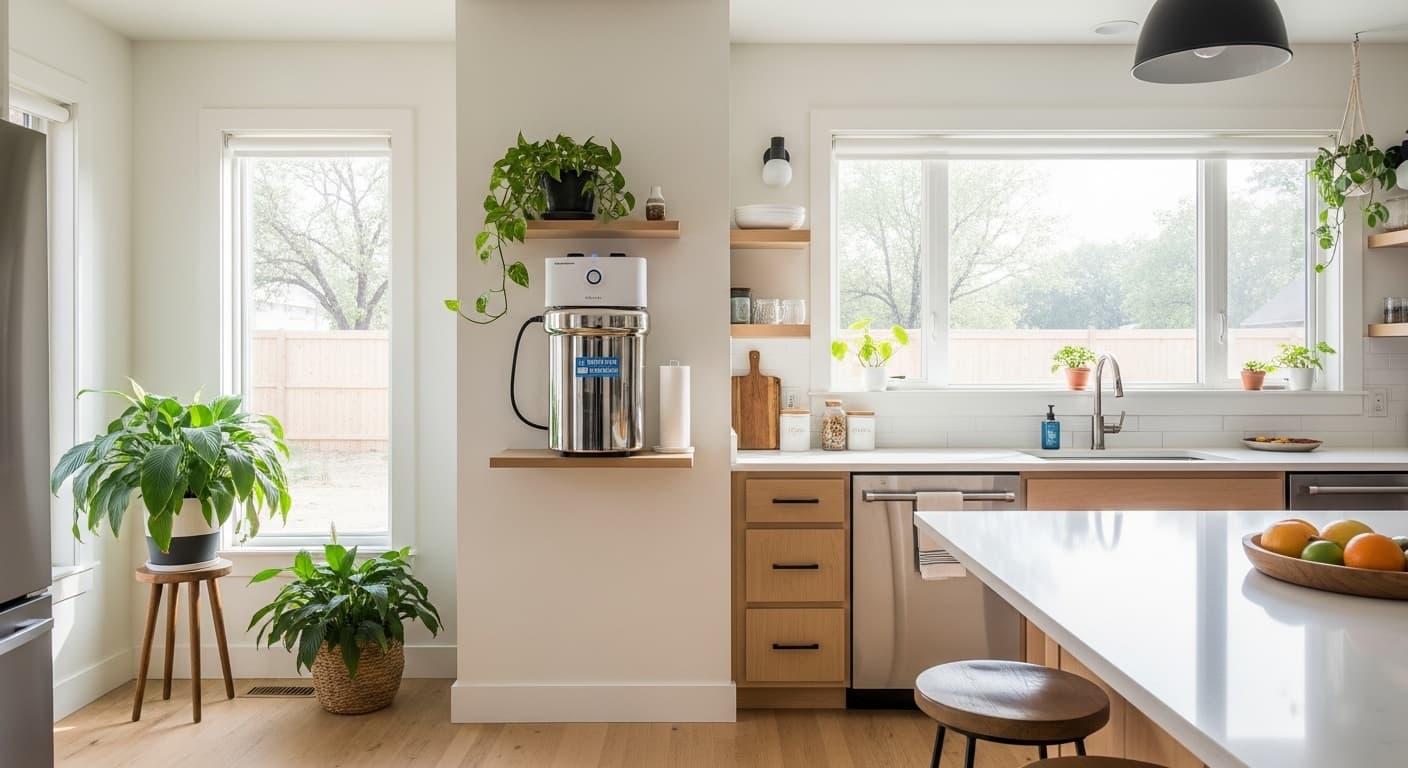
Healthy living construction means building or remodeling a home so its water, air, materials, moisture, light, and sound measurably beat code minimum. In Lubbock that starts with what West Texas makes necessary: treating mineral-heavy water, filtering dust while bringing in fresh air, controlling moisture, testing for radon, and choosing finishes with certified low emissions. An essential package of water treatment, upgraded filtration, and low-VOC finishes typically runs $8,000 to $25,000 in 2026, and a complete air-and-water package with fresh-air ventilation and radon control runs $15,000 to $40,000. Nearly every piece costs less built in during new construction or a remodel than added to a finished house.
On this page
- 01What Healthy Living Construction Means and What It Costs (2026)
- 02Water: What Lubbock's Testing Shows and How to Treat It
- 03Air: Dust, Filtration, and Fresh-Air Ventilation
- 04The Lubbock Factor: A Dry Climate That Still Grows Mold
- 05Materials and Finishes: The Certifications That Mean Something
- 06Radon: Why Lubbock County Homes Should Be Tested
- 07Light and Sound: Circadian Lighting and Acoustic Comfort
- 08Why Building It In Costs Less Than Retrofitting
- 09How to Plan a Healthy Home Project in Lubbock
- 10A Note from Nextgen Blueprint
- 11Frequently asked questions
What Healthy Living Construction Means and What It Costs (2026)
Healthy living construction is a set of measurable targets, not a product line: what comes out of the tap, what the air carries, what the finishes release, how dry the structure stays, and how the light and sound behave. Each target has a system behind it and a test that confirms it worked. We describe these systems by what they measurably do, not by health promises. The ranges below are 2026 installed prices in Lubbock.
- Essential package
- $8,000 to $25,000
- Complete air and water package
- $15,000 to $40,000
- EPA radon action level
- 4 pCi/L
| System | Typical installed cost (2026) | What it measurably does |
|---|---|---|
| Water softener | $1,200 to $3,800 | Removes hardness that scales pipes and water heaters |
| Reverse osmosis | $300 to $1,000 under-sink; $4,800 to $12,000 whole-house | Reduces dissolved solids, nitrate, arsenic, and fluoride |
| Whole-house filtration | $400 to $800 MERV 13; $1,000 to $4,000 HEPA bypass | Captures fine dust; HEPA stops 99.97 percent of 0.3 micron particles |
| ERV fresh-air ventilation | $2,000 to $5,000 | Filtered outdoor air with heat and moisture exchange; more when new ductwork is needed |
| Radon mitigation | $1,200 to $2,500 on most slab homes | Vents soil gas from under the slab, confirmed by a retest |
| Low- and zero-VOC finishes | $2,000 to $8,000 added across a home | Lower emissions, verified by third-party chamber testing |
Water: What Lubbock's Testing Shows and How to Treat It
Lubbock blends four sources: Lake Meredith and Roberts County groundwater from the Canadian River Municipal Water Authority, Lake Alan Henry, and the city's Bailey County well field. The city's annual report says the water meets state and federal standards; what stands out is the mineral load.
Entry-point testing in TCEQ's Drinking Water Viewer from 2024 through 2026 shows total hardness of about 110 to 265 mg/L, roughly 6.5 to 15.5 grains per gallon, with the north Lubbock plant at the high end (above 180 mg/L is very hard on the USGS scale). Dissolved solids ran about 375 to 890 mg/L, often above EPA's 500 mg/L guideline for taste and scaling. Your tap depends on the local blend, so test before sizing equipment.
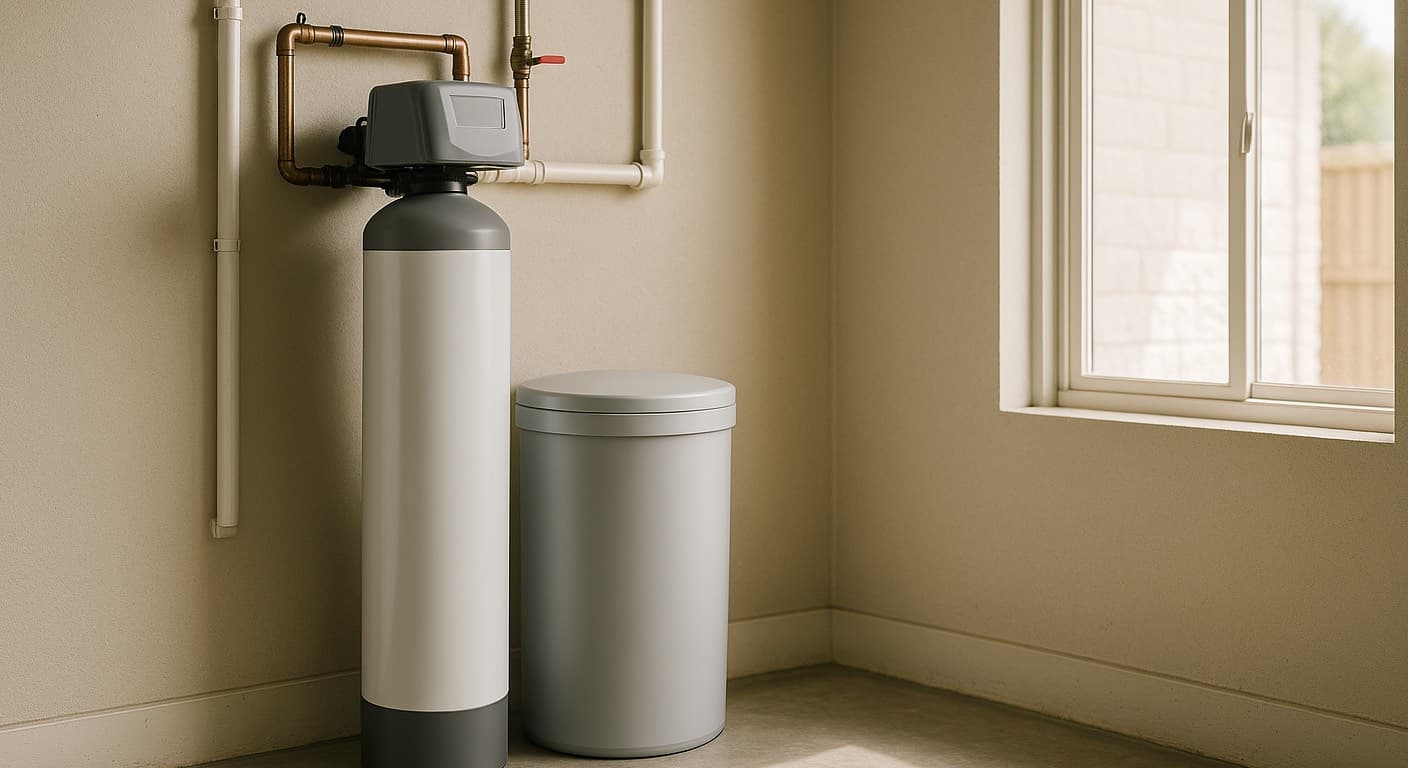
A softener removes hardness and protects the plumbing and water heater. Carbon improves taste and odor; if your water is disinfected with chloramine, common on Texas city systems, ask for catalytic carbon. Under-sink reverse osmosis reduces dissolved solids, nitrate, arsenic, and fluoride in drinking water, and whole-house RO on Lubbock water needs softening, storage, and a pump. Our water softener cost guide and whole-house water filtration guide cover sizing and pricing.
Air: Dust, Filtration, and Fresh-Air Ventilation
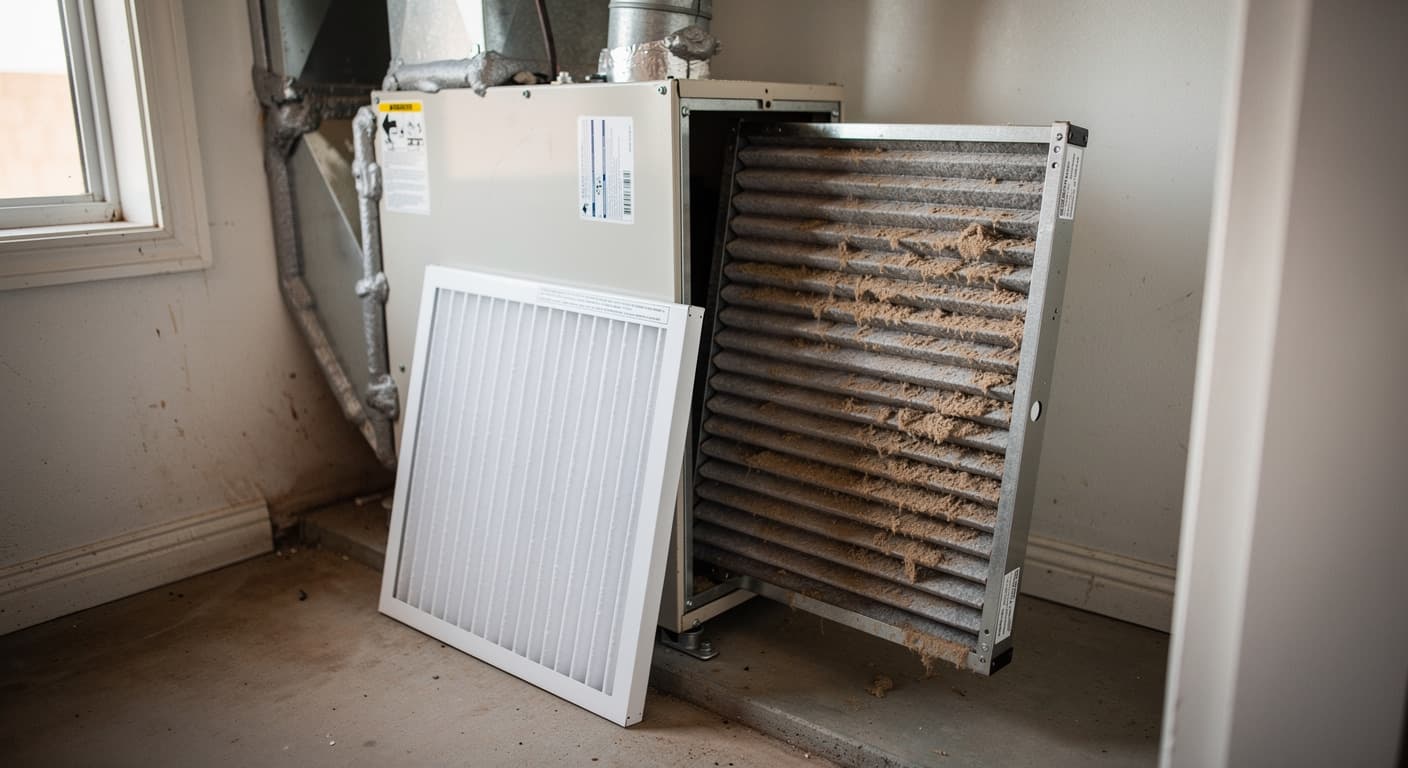
West Texas air brings its own load: spring dust storms, seasonal pollen, and the fall cotton harvest and ginning season. EPA recommends at least a MERV 13 filter, or as high as your system can handle; MERV 13 removes at least 50 percent of the smallest particles tested. A deep media cabinet ($400 to $800 installed) keeps that filter from choking airflow. HEPA captures 99.97 percent of particles at 0.3 microns but is too restrictive for a standard return, so whole-house HEPA goes in as a bypass unit ($1,000 to $4,000), and integrated systems that add returns, duct sealing, and monitoring run $4,000 to $15,000. Skip anything that produces ozone, as EPA advises; our whole-house air purification guide compares the options.
Keeping dust out takes a tight envelope, and a tight house needs planned fresh air. The 2021 International Residential Code (adopted by Lubbock in 2024 with local amendments, so confirm details with the city) caps new-home air leakage at 5 air changes per hour on a blower-door test and requires mechanical ventilation in homes built to its air-sealing rules. For a 1,501 to 3,000 square foot home with two or three bedrooms, its table calls for 60 cubic feet per minute of continuous outdoor air. An ERV delivers that air through a filter while exchanging heat and some moisture with the outgoing air.
The Lubbock Factor: A Dry Climate That Still Grows Mold
Dry air helps outdoors, but indoor mold needs only a moisture source, and West Texas houses supply their own: a slow supply-line leak in a slab that has moved on expansive clay, a clogged AC condensate line, a bath without a working exhaust fan, a roof leak after spring hail, or an evaporative cooler on an older home. EPA puts it simply: the key to mold control is moisture control: keep indoor humidity below 60 percent, ideally 30 to 50 percent, and dry leaks within 24 to 48 hours, which in most cases keeps mold from growing. That means bath fans ducted outdoors, mold-resistant board and a waterproofing membrane in showers, condensate lines with a float safety switch, and leak sensors at the water heater. Most of it is specification rather than equipment.
Materials and Finishes: The Certifications That Mean Something
Paints, adhesives, sealants, and composite wood release volatile organic compounds (VOCs), most heavily in the weeks after installation, and EPA notes that many VOCs run consistently higher indoors than outdoors, up to ten times higher. A tight house holds onto whatever the finishes release, so choose them carefully.
Zero-VOC and low-VOC labels describe what is in the can, and store-added tint can raise it, so ask for zero-VOC colorant too. Emissions certifications are stronger because they test what a product releases into room air. GREENGUARD Gold, run by UL, limits emissions of more than 360 VOCs plus total chemical emissions under the California Department of Public Health's Standard Method, the same method behind FloorScore for hard flooring, underlayments, and flooring adhesives. For cabinets made from plywood, particleboard, or MDF, look for a TSCA Title VI label. Composite wood made or imported since March 2019 must carry it, showing it meets EPA formaldehyde limits set at the same levels as California's CARB Phase 2 rule, and no-added-formaldehyde (NAF) products go further.
Radon: Why Lubbock County Homes Should Be Tested
Radon is a radioactive soil gas from the natural breakdown of uranium, and it can enter through the slab. EPA's guidance is to fix a home at 4 picocuries per liter (pCi/L) or higher and to consider fixing between 2 and 4.
EPA's Map of Radon Zones places Lubbock County, along with Hockley, Hale, and much of the Panhandle, in Zone 2, a predicted average indoor screening level of 2 to 4 pCi/L. Terry County, around Brownfield, is in Zone 3, the lowest. The 1993 map cannot predict an individual home, EPA says, so test yours: a kit runs about $10 to $30 and a professional test $125 to $400. If a home tests high, sub-slab depressurization (a sealed pipe and fan venting soil gas above the roof) typically costs $1,200 to $2,500, up to about $5,000 on large or complex homes.
Light and Sound: Circadian Lighting and Acoustic Comfort
Lighting and acoustics are easiest to get right before drywall. For light, the measurable pieces are color temperature (warm 2,700 kelvin in the evening, cooler 4,000 kelvin and up by day), dimming range, color rendering, and flicker. Tunable LED systems shift color temperature through the day, useful where summer sunsets come around 9 p.m. Whole-home circadian lighting runs $5,000 to $25,000, and our circadian lighting guide explains where to spend.
For sound, the measure is Sound Transmission Class (STC); higher blocks more airborne noise, and a typical uninsulated interior wall rates in the low to mid 30s. Mineral wool in bedroom and bath walls, solid-core doors, a second drywall layer on shared walls, and bath fans rated 1 sone or less make rooms noticeably quieter against wind and road noise near Loop 289 or the Marsha Sharp Freeway. Built in, these details cost a fraction of the $1,400 to $4,300 it takes to soundproof one finished 12 by 12 room later, and whole-home acoustic packages run $3,000 to $15,000.
Why Building It In Costs Less Than Retrofitting
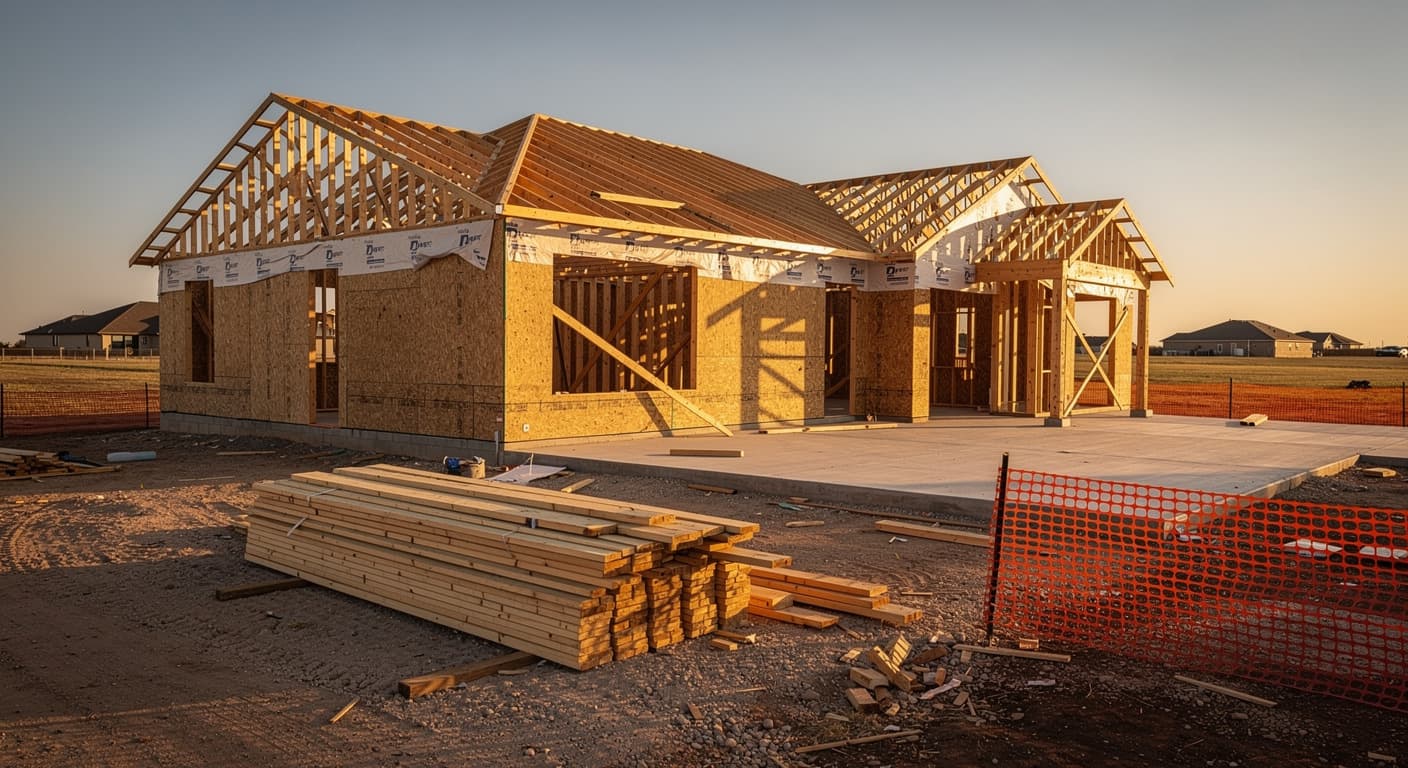
The expensive part of a retrofit is access, not equipment, which is why our new construction projects plan these systems from the first drawings. Where the savings come from:
- Water: a softener loop and a kitchen RO line and drain are short runs before the walls close.
- Air: returns and a filter cabinet sized for MERV 13 avoid airflow problems, and ERV ducts run through open framing instead of finished ceilings.
- Radon: gravel, a vapor barrier, sealed penetrations, and a vent pipe cost less than a retrofit, according to EPA, and can take a fan later.
- Materials: specifying low-emission finishes up front avoids paying for them twice.
- Light and sound: neutral wires, control wiring, and mineral wool go in while the framing is open.
- Testing: a blower-door test and a water analysis before move-in confirm the targets.
How to Plan a Healthy Home Project in Lubbock
Start with measurements and spend where the numbers point:
- Read the city's annual water quality report, then test your own tap for hardness and dissolved solids.
- Test for radon, and retest long-term if the result is near or above 4 pCi/L.
- On an existing home, get a blower-door and duct leakage test to find where dust gets in.
- Choose filtration your system can carry, at least MERV 13 in a deep media cabinet, and plan ERV fresh air whenever you tighten the envelope.
- Write the material spec before demolition: zero-VOC paint and colorant, GREENGUARD Gold or FloorScore products, and TSCA Title VI or NAF cabinetry.
- Get a written, itemized quote listing each system and the test that will verify it.
A Note from Nextgen Blueprint
This guide was researched and published by Nextgen Blueprint, a Lubbock design-build contractor that builds healthy living systems into new construction and remodels, from water treatment to ERV fresh air. Treat the numbers here as 2026 Lubbock-market ranges to budget with, not a quote. The pricing, water data, and code references were accurate as of September 2026, and our healthy living systems page covers each system we install.
Frequently asked questions
What is healthy living construction?
How much does it cost to build a healthy home in Lubbock?
How hard is Lubbock's tap water?
Do I need a water softener or reverse osmosis in Lubbock?
Is radon a problem in Lubbock, TX?
What air filter is best for Lubbock dust?
Does an airtight house need an ERV?
Sources and further reading
Written by
John Paul, Founder, Nextgen Blueprint
John Paul founded Nextgen Blueprint with his father-in-law, a Lubbock-area general contractor with 30+ years of experience. They build healthy, natural homes for Lubbock families, and approach every project with the kind of care and attention to detail most contractors save for their own home.
More from JohnRelated services
Filed under Healthy & Smart Home. Cleaner water, cleaner air, better light, smarter systems.