Healthy & Smart Home11 min read
Whole-House Water Filtration in Lubbock: What's in the Water and What It Costs (2026)
What is in Lubbock tap water according to the city's 2025 report, when to test your own, and 2026 installed costs for carbon filters, softeners, reverse osmosis, and UV.
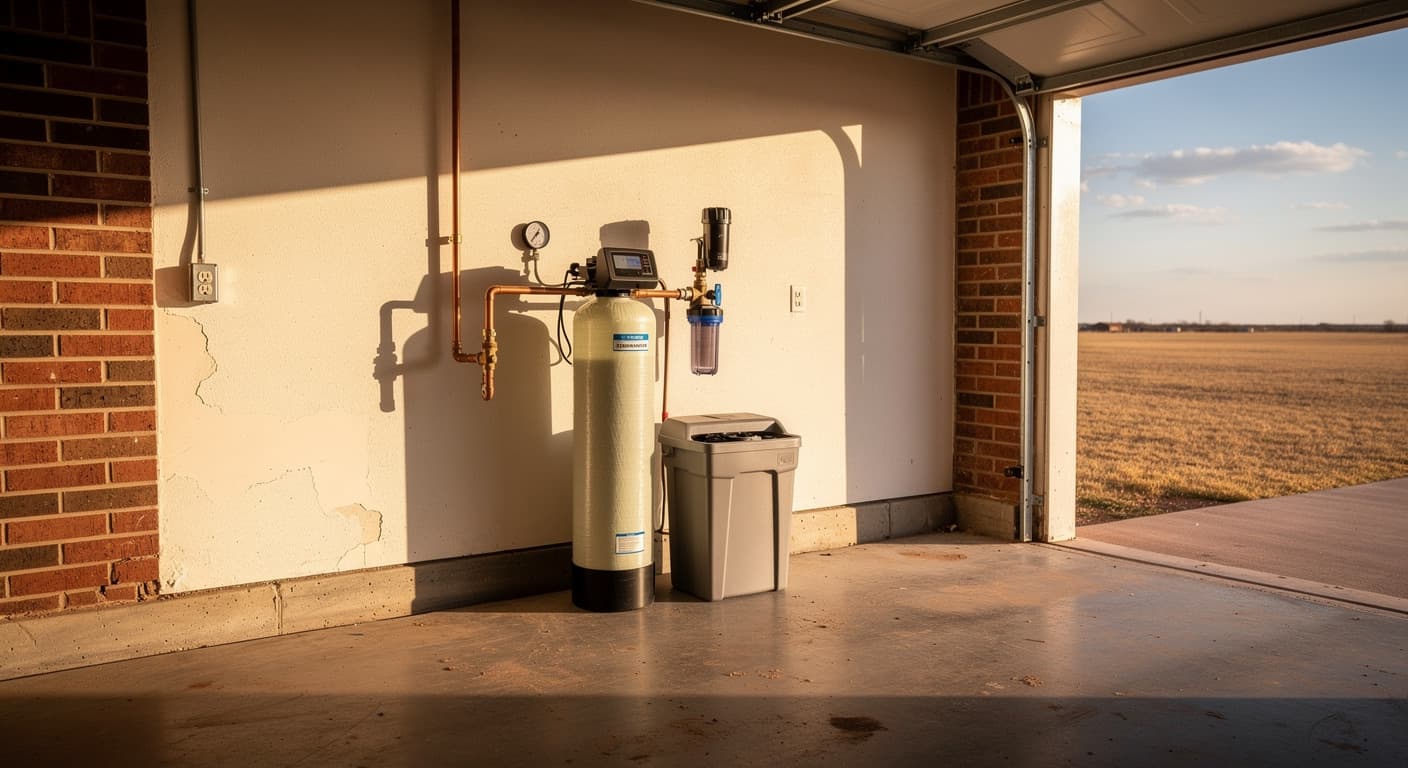
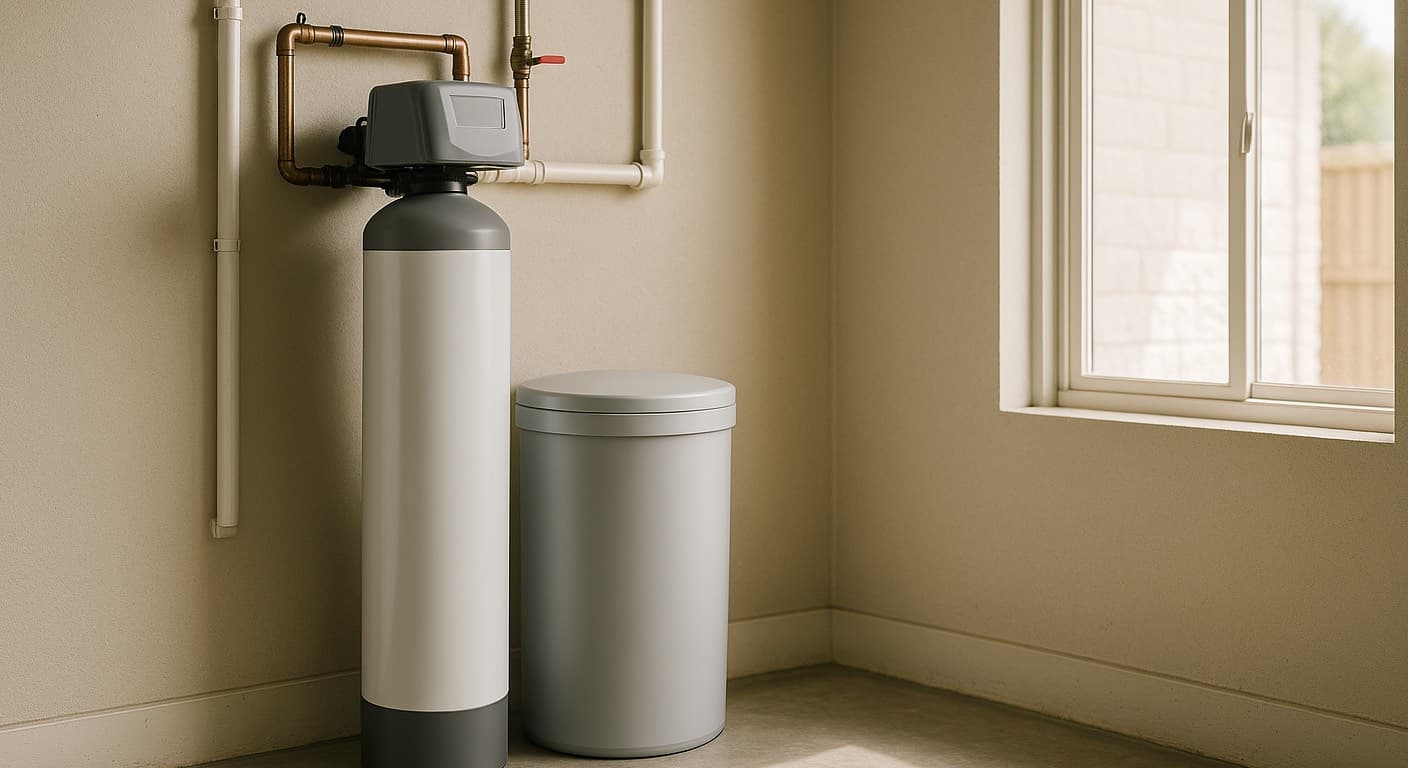
Whole-house water filtration in Lubbock costs $1,000 to $3,000 installed in 2026 for a sediment and catalytic carbon system, and most homes that add a softener and a kitchen reverse osmosis unit spend $2,500 to $8,000 for the full setup. A complete whole-house reverse osmosis system, with the pretreatment Lubbock water needs, runs $6,000 to $12,000. What you should buy depends on what is in your water, and the city publishes that every year. Its 2025 report shows hardness averaging about 10 grains per gallon, dissolved solids averaging 633 parts per million, and a chloramine disinfectant residual, with every regulated contaminant under its federal limit. Homes on private wells should start with a lab test.
On this page
- 01What Whole-House Water Filtration Costs in Lubbock (2026)
- 02What's Actually in Lubbock Tap Water (2025 Report)
- 03How to Read the Report and When to Test Your Own Water
- 04Private Wells Around Lubbock: Arsenic, Fluoride, and Nitrate
- 05The Lubbock Factor: A Blended Supply, Hard Water, and Chloramine
- 06Whole-House Reverse Osmosis: What It Really Costs
- 07RO Wastewater in a Drought Region
- 08Maintenance Costs: Filters, Membranes, Salt, and Lamps
- 09A Recommended Stack for Typical Lubbock Homes
- 10How to Get an Accurate Quote
- 11A Note from Nextgen Blueprint
- 12Frequently asked questions
What Whole-House Water Filtration Costs in Lubbock (2026)
Price follows the job each system does: carbon for taste, odor, and the disinfectant, a softener for scale, and reverse osmosis, usually at the kitchen sink, to lower dissolved solids along with fluoride, nitrate, and arsenic. The ranges below are 2026 installed prices in the Lubbock market, where plumbing labor runs a little below Dallas and Austin, and the softener figures match our water softener cost guide. Most homes combine two or three of these.
- Carbon + softener + kitchen RO
- $2,500 to $8,000
- Under-sink RO
- $300 to $1,300
- Whole-house RO, complete
- $6,000 to $12,000
| System | Installed cost | What it does |
|---|---|---|
| Sediment + catalytic carbon (whole house) | $1,000 to $3,000 | Removes sediment, chloramine, taste, and odor at every tap |
| Salt-based water softener | $1,200 to $3,800 | Removes the calcium and magnesium that cause scale |
| Under-sink reverse osmosis | $300 to $1,300 | Drinking and cooking water with most dissolved solids removed |
| UV disinfection | $500 to $1,500 | Inactivates bacteria and viruses, mainly for private wells |
| Whole-house reverse osmosis, complete | $6,000 to $12,000 | RO water at every fixture, with pretreatment, tank, and pump |
What's Actually in Lubbock Tap Water (2025 Report)
The City of Lubbock publishes a Consumer Confidence Report every year, and the 2025 edition, covering calendar year 2025, is the latest. It describes a supply that is 61 percent Ogallala groundwater from the Roberts County and Bailey County well fields and 39 percent surface water from Lake Alan Henry and Lake Meredith. Every regulated contaminant came in under its federal limit; what stands out is hard, mineral-heavy water with a strong disinfectant residual.
Hardness averaged 169 ppm, about 10 grains per gallon, and the 2024 report averaged 192 ppm, about 11 grains. The USGS calls 121 to 180 ppm hard and anything above 180 very hard, so Lubbock sits on that line depending on the year. Sodium averaged 158 ppm and chloride 179 ppm. Radioactivity tests from 2023 were under their limits, and 2023 testing found none of the six PFAS in the EPA's 2024 rule, though one unregulated PFAS, PFBA, showed up at about 9 parts per trillion.
| Measure | 2025 result | Limit |
|---|---|---|
| Hardness | 169 ppm average (81 to 244) | None; drives softener sizing |
| Total dissolved solids | 633 ppm average (321 to 991) | 1,000 ppm Texas secondary level |
| Disinfectant (total chlorine) | 3.5 ppm average (2.1 to 4.6) | 4.0 ppm annual average |
| Arsenic | 2.7 ppb average (1.4 to 4.6) | 10 ppb |
| Fluoride | 0.74 ppm average (0.64 to 0.85) | 4 ppm |
| Nitrate | 0.95 ppm average | 10 ppm |
| Lead, 90th percentile at taps | 1.36 ppb (2023 to 2025) | 15 ppb action level |
How to Read the Report and When to Test Your Own Water
Read each row as the level found against its limit, and look at the range, not just the average. The MCL is the enforceable limit, the MRDL caps the disinfectant, and the action level applies to lead and copper measured at customer taps. Hardness, TDS, sodium, and chloride carry no health limit, but they size a softener and decide whether reverse osmosis is worth it. Read the violations pages too; the 2025 report lists a late notice to customers with galvanized service lines and a month with 140 of 150 required bacteria samples collected, and says water quality was not affected.
The report describes water leaving the plants, not what comes out of your faucet after your own pipes. Test before you buy a whole-house system, after plumbing work in an older home, and every year on a well:
- A handheld TDS meter or hardness strips: cheap spot checks that also confirm an RO unit is still working.
- A lead test through the city: the report lists 806-775-2010 for customers who want their tap tested.
- A Texas Well Owner Network screening: $15 per sample at AgriLife Extension events, covering coliform bacteria, E. coli, nitrate, arsenic, and salinity.
- A certified lab panel: about $50 to $350 depending on what it covers. TCEQ publishes the list of accredited labs.
Private Wells Around Lubbock: Arsenic, Fluoride, and Nitrate
Many acreage homes around Lubbock, Wolfforth, Shallowater, and Idalou run on private wells, and the city's report does not apply to them. Most tap the Ogallala beneath the property, and quality can change from one section of land to the next. A USGS assessment found high dissolved solids, arsenic, and fluoride most common in the Southern High Plains, the part of the aquifer under Lubbock, and earlier studies tied some of that to saline water rising from the Dockum aquifer below. Nitrate is a separate issue near fields, livestock pens, and older septic systems.
The EPA recommends testing a well every year for coliform bacteria, nitrate, total dissolved solids, and pH; on the South Plains, add arsenic and fluoride. If a result comes back high, reverse osmosis is the usual drinking-water fix, and NSF's consumer guide lists fluoride and nitrate reduction only under RO systems. Bacteria calls for a UV unit certified to NSF/ANSI 55 Class A, installed after sediment filtration.
The Lubbock Factor: A Blended Supply, Hard Water, and Chloramine
Three local facts shape what we install. First, the supply is a blend of Ogallala groundwater and lake water, so hardness and dissolved solids move with the mix: the 2024 report averaged 811 ppm TDS and 192 ppm hardness, the 2025 report 633 and 169. Equipment sized to one year's average can come up short the next, so we size for the high end of the range, roughly 14 to 15 grains.
Second, the disinfectant is chloramine. The city uses free chlorine at the plants and monochloramine as the secondary disinfectant that stays in the water through the pipes. Chloramine is built to last, which also makes it harder to strip out than plain chlorine. A small cartridge sized for chlorine will not keep up with a whole house on chloramine; it takes catalytic carbon with enough contact time, and NSF certifies chloramine reduction as its own claim.
Third, dissolved solids run high enough that only reverse osmosis moves them much. A softener trades hardness for sodium and leaves TDS about where it was, and carbon does not touch it. Hence the common Lubbock answer: a softener for the house and RO for the water you drink.
Whole-House Reverse Osmosis: What It Really Costs
Whole-house RO is the most misquoted system in this guide. Some cost sites list $1,000 to $4,800 and others $4,800 to $8,000, and the gap is mostly what gets included. Delivering RO water to every fixture at normal pressure takes sediment and carbon pretreatment to protect the membrane from chloramine, a softener or antiscalant against Lubbock hardness, the RO unit, a 150 to 500 gallon storage tank, a repressurization pump, often a UV or remineralizing stage, and a drain and dedicated outlet. One manufacturer's 2026 buyer's guide puts the RO unit alone at $3,500 to $8,500 and the tank and pump at $700 to $2,200, before pretreatment and labor.
Priced complete in Lubbock, most homes land between $6,000 and $12,000, and large homes or premium equipment reach $15,000. Plan on one to two days of installation, floor space for the tank, and a plumbing permit, which the City of Lubbock typically requires when a system ties into the main line.
RO Wastewater in a Drought Region
Reverse osmosis flushes the minerals it rejects down the drain, and in a region that leans on a declining aquifer and drought-prone lakes, that water belongs in the budget. The EPA says a typical under-sink RO unit sends five gallons or more to the drain per gallon of treated water, while WaterSense-labeled units must hold it to 2.3 gallons or less. At one sink the volume is small, but a WaterSense model is still the better buy.
Whole-house systems typically send one to three gallons to the drain for every gallon delivered, depending on design and pretreatment. That adds 100 to 300 gallons through your meter for every 100 your household uses. The reject water carries concentrated salts, so ask before reusing it for irrigation.
Maintenance Costs: Filters, Membranes, Salt, and Lamps
Every system here has a recurring cost, and skipping it is how a good system turns into a bad one. Typical yearly costs on Lubbock water:
| System | Typical yearly cost | What you replace |
|---|---|---|
| Sediment + carbon | $50 to $250 | Sediment cartridges every few months; carbon on the maker's schedule |
| Water softener | $40 to $100 | Salt and the occasional sediment filter |
| Under-sink RO | $50 to $250 | Prefilters every 6 to 12 months; membrane every 2 to 5 years |
| Whole-house RO | $300 to $600 | Prefilters, membranes, and pump power, plus reject water |
| UV | $20 to $120 | Lamp once a year; clean the quartz sleeve |
A Recommended Stack for Typical Lubbock Homes
Most city homes do not need whole-house reverse osmosis. Starting from the city's own numbers, here is what we usually recommend:
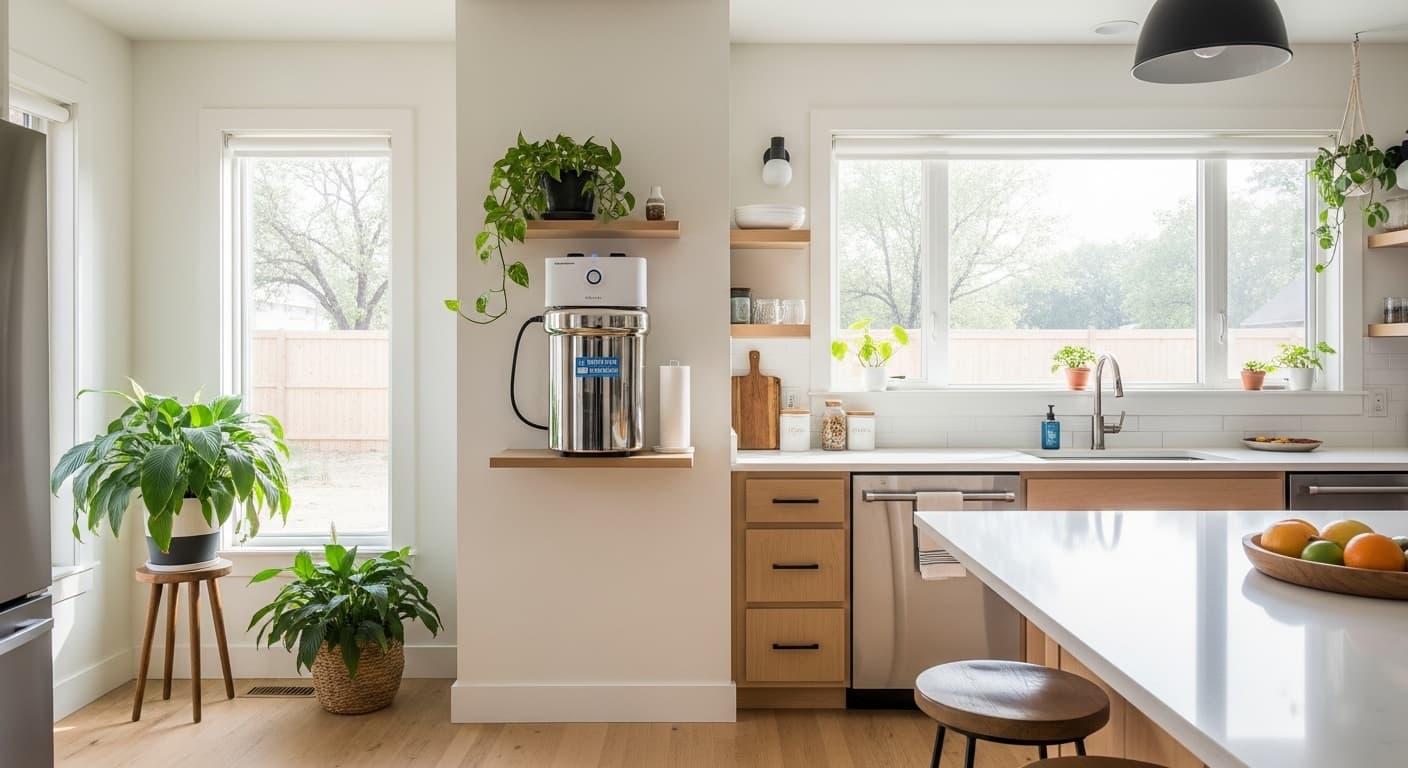
- City water, most homes: sediment and catalytic carbon at the main line, a salt-based softener sized for the high end of the hardness range, and an under-sink RO feeding the kitchen faucet and refrigerator. Budget $2,500 to $8,000 installed.
- City water, on a budget: start with the softener and a kitchen RO certified for chloramine reduction, and add whole-house carbon later.
- Private well: test first. A typical build is sediment filtration, a softener, UV if bacteria shows up, and RO for drinking water if arsenic, nitrate, or fluoride come back high.
- Whole-house RO: worth it when you want low-mineral water at every fixture or a well tests high across the board, and you accept the cost, $300 to $600 a year, and the reject water.
- Planning a kitchen remodel? It is the cheapest time to add the RO faucet, drain connection, and a filtered refrigerator line.
How to Get an Accurate Quote
Water treatment quotes are hard to compare because two companies can propose completely different equipment for the same house. To line quotes up side by side:
- Bring your numbers: the hardness and TDS range from the city report, or a lab report for a well, and ask each company to size for the high end.
- Ask what each stage removes and its certification: NSF/ANSI 42 for chlorine and chloramine, 44 for softeners, 53 for health claims such as lead, 55 for UV, and 58 for reverse osmosis.
- Get an itemized written quote that separates equipment, labor, bypass valves, drain and electrical work, and the permit.
- For whole-house RO, get the tank size, pump, pretreatment, post-treatment, and expected reject ratio in writing.
- Ask for the yearly maintenance cost and whether the filters are standard sizes you can buy anywhere.
- Use our free instant estimate for a ballpark range in under a minute, then book a visit for a written quote.
A Note from Nextgen Blueprint
This guide was researched and published by Nextgen Blueprint, a Lubbock design-build contractor that installs whole-house filtration, softeners, and reverse osmosis as part of our healthy living systems work, with the connections handled by our own plumbing team. Water-quality figures come from the City of Lubbock's 2025 Water Quality Report; prices are 2026 Lubbock-market budgeting ranges, not a quote, since your number depends on your water, household, and plumbing. Everything here was accurate as of September 2026. For the air side of the same house, see our guide to whole-house air purification.
Frequently asked questions
How much does a whole-house water filter cost in Lubbock?
What is in Lubbock tap water?
Does Lubbock use chlorine or chloramine?
Is Lubbock water hard?
How much does whole-house reverse osmosis cost in Lubbock?
How much water does a reverse osmosis system waste?
Should I test my well water near Lubbock?
Sources and further reading
- [1]City of Lubbock: 2025 Water Quality Report (Consumer Confidence Report)
- [2]USGS: Groundwater Quality in the High Plains Aquifer (Fact Sheet 2019-3055)
- [3]U.S. EPA WaterSense: Point-of-Use Reverse Osmosis Systems
- [4]NSF: Contaminant Reduction Claims Guide
- [5]HomeGuide: How Much Does a Reverse Osmosis System Cost? (2026)
Written by
John Paul, Founder, Nextgen Blueprint
John Paul founded Nextgen Blueprint with his father-in-law, a Lubbock-area general contractor with 30+ years of experience. They build healthy, natural homes for Lubbock families, and approach every project with the kind of care and attention to detail most contractors save for their own home.
More from JohnRelated services
Filed under Healthy & Smart Home. Cleaner water, cleaner air, better light, smarter systems.