Healthy & Smart Home10 min read
Smart Home Upgrades That Pay Off in a Lubbock Home (2026)
Which smart home upgrades are worth it in Lubbock in 2026: installed costs, how each handles West Texas heat, freezes, and dust, and an honest look at resale value.
The smart home upgrades that pay off in a Lubbock home are the ones that cut cooling costs, stop water damage, and get used every day: a smart thermostat ($200 to $500 installed), leak sensors with an automatic main-line shutoff ($700 to $1,500), a smart lock and video doorbell, and lighting and shade controls on the west side of the house. A starter package for most homes runs $2,000 to $5,000. ENERGY STAR puts average smart thermostat savings at about 8 percent of heating and cooling bills. What none of these come with is a guaranteed resale bump, so buy for how you live, not for ROI.
On this page
- 01What Smart Home Upgrades Cost in Lubbock (2026)
- 02Smart Thermostats and Zoning for a Long Cooling Season
- 03The Lubbock Factor: Freezes, Slab Leaks, and Hard Water
- 04Smart Locks, Doorbells, and Cameras for Heat and Dust
- 05Lighting Controls, Scenes, and Motorized Shades for West Sun
- 06Wi-Fi, Structured Wiring, and Matter
- 07EV Readiness and Energy Monitoring
- 08Do Smart Home Upgrades Add Resale Value in Lubbock?
- 09How to Plan a Smart Home Upgrade
- 10A Note from Nextgen Blueprint
- 11Frequently asked questions
What Smart Home Upgrades Cost in Lubbock (2026)
Smart home pricing depends more on installation than on the gadget: existing wiring, any HVAC or plumbing changes, and how many rooms you cover. These are 2026 installed prices in the Lubbock market, hardware plus professional setup. Local labor runs below Dallas and Austin, but hardware costs the same everywhere. As packages, a starter setup typically runs $2,000 to $5,000, a mid-range system covering lighting, climate, and security runs $5,000 to $15,000, and fully integrated whole-home systems start around $25,000.
- Starter package
- $2,000 to $5,000
- Thermostat savings (ENERGY STAR)
- About 8 percent
- Leak shutoff, installed
- $700 to $1,500
| Upgrade | Installed cost (2026) | What it is good for |
|---|---|---|
| Smart thermostat | $200 to $500 | Schedules, remote pre-cooling, runtime reports |
| HVAC zoning, 2 to 3 zones | $2,500 to $6,000 | Two-story homes and rooms that run hot |
| Leak sensors and main shutoff | $700 to $1,500 | Stopping a burst pipe or failed water heater |
| Smart lock or video doorbell | $200 to $600 each | Keyless entry, visitor and package alerts |
| Smart switches and scenes | $150 to $300 per switch | Scenes, schedules, away-mode lighting |
| Motorized shades | $350 to $1,000 per window | West-facing glass and hard-to-reach windows |
| Mesh Wi-Fi, wired access points | $500 to $1,500 | Coverage for every device, garage and patio |
| Level 2 EV charger | $800 to $2,500 | Overnight charging when the panel has capacity |
| Energy monitor | $300 to $800 | Seeing which loads drive the bill |
Smart Thermostats and Zoning for a Long Cooling Season
Cooling drives the biggest electric bills in most Lubbock homes, and the season runs from late spring well into fall. A smart thermostat pays off by making the efficient schedule automatic: it raises the setpoint when the house is empty and pre-cools before you get home. ENERGY STAR puts average savings from its certified models at about 8 percent of heating and cooling bills, roughly $50 a year for a typical household, with homes left empty during the day saving more. That is the realistic number, not the 20 to 30 percent some marketing claims.
Older systems may need a C-wire run ($100 to $200), and heat pump owners should pick a model that avoids triggering backup heat after setbacks. Scheduling the HVAC fan also keeps air moving through the filter, which pairs well with whole-house air purification.
Zoning suits two-story homes and long ranch plans where one end bakes. Motorized dampers and a control board run $2,500 to $6,000 for two or three zones. Battery smart vents cost less, but closing too many registers raises duct pressure and leakage, so treat them as fine-tuning, not zoning.
The Lubbock Factor: Freezes, Slab Leaks, and Hard Water
If we could put one smart upgrade in every Lubbock house, it would be leak detection with an automatic shutoff. Insurance Information Institute data puts water damage and freezing claims at about 1 in 60 insured homes a year, averaging about $15,400 per claim. Those national figures leave Texas out of the sample, and conditions here add risks of their own.
Hard freezes can split a pipe in an exterior wall overnight; our guide to frozen pipes in Lubbock shows where they freeze and what to do. Expansive clay soils move slabs and stress the supply lines beneath them, so a slab leak can run for weeks unnoticed. And hard water scales water heaters and valves, shortening their life; a water softener treats that cause.
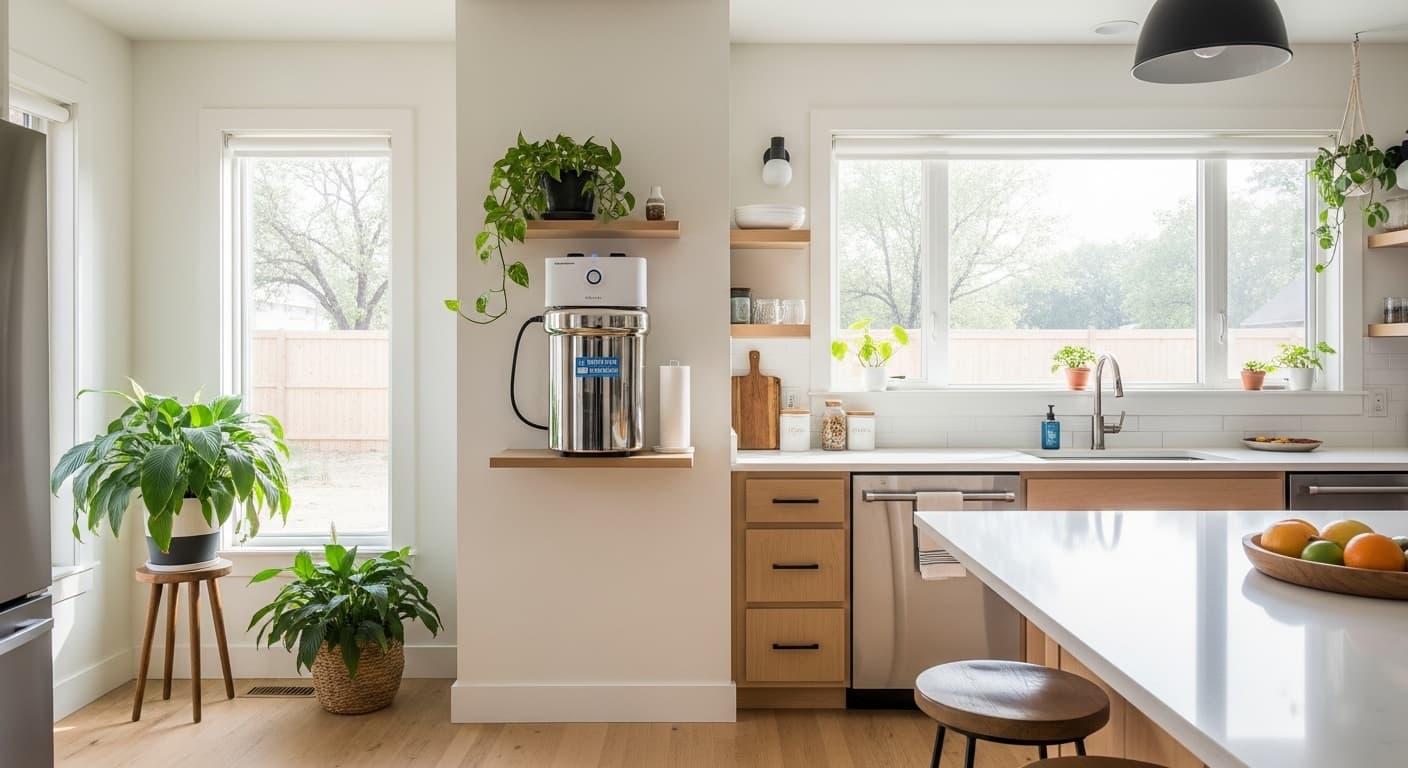
The system has two parts. Battery leak sensors ($20 to $60 each) sit under sinks and beside the washer and water heater. A main-line smart valve, $700 to $1,500 installed by a plumber, tracks flow, pressure, and temperature, runs daily small-leak tests, sends freeze alerts, and closes the main when it detects a burst. It needs an accessible section of main line and a nearby outlet, often in the garage near the water heater. Our smart water shutoff valve guide covers installation, Wi-Fi needs, and sensor placement.
- Water and freeze claims (national)
- About 1 in 60 homes a year
- Average claim, 2019 to 2023
- About $15,400
Smart Locks, Doorbells, and Cameras for Heat and Dust
Security tech is where cheap hardware fails fastest here. A west-facing door takes direct afternoon sun, so a dark keypad or doorbell runs far hotter than the air, and spring wind packs dust into every seam. Check the rated operating temperatures, favor hardwired doorbells and cameras over battery units on hot walls, and mount cameras under an eave.
Smart locks with a keypad and key backup run $200 to $600 installed, video doorbells land in the same range, and cameras run about $125 to $450 each installed. Decide between local video storage and a monthly cloud plan up front. Cameras joined the Matter standard with version 1.5 in November 2025, so Matter-certified locks and cameras now work across the major apps.
Lighting Controls, Scenes, and Motorized Shades for West Sun
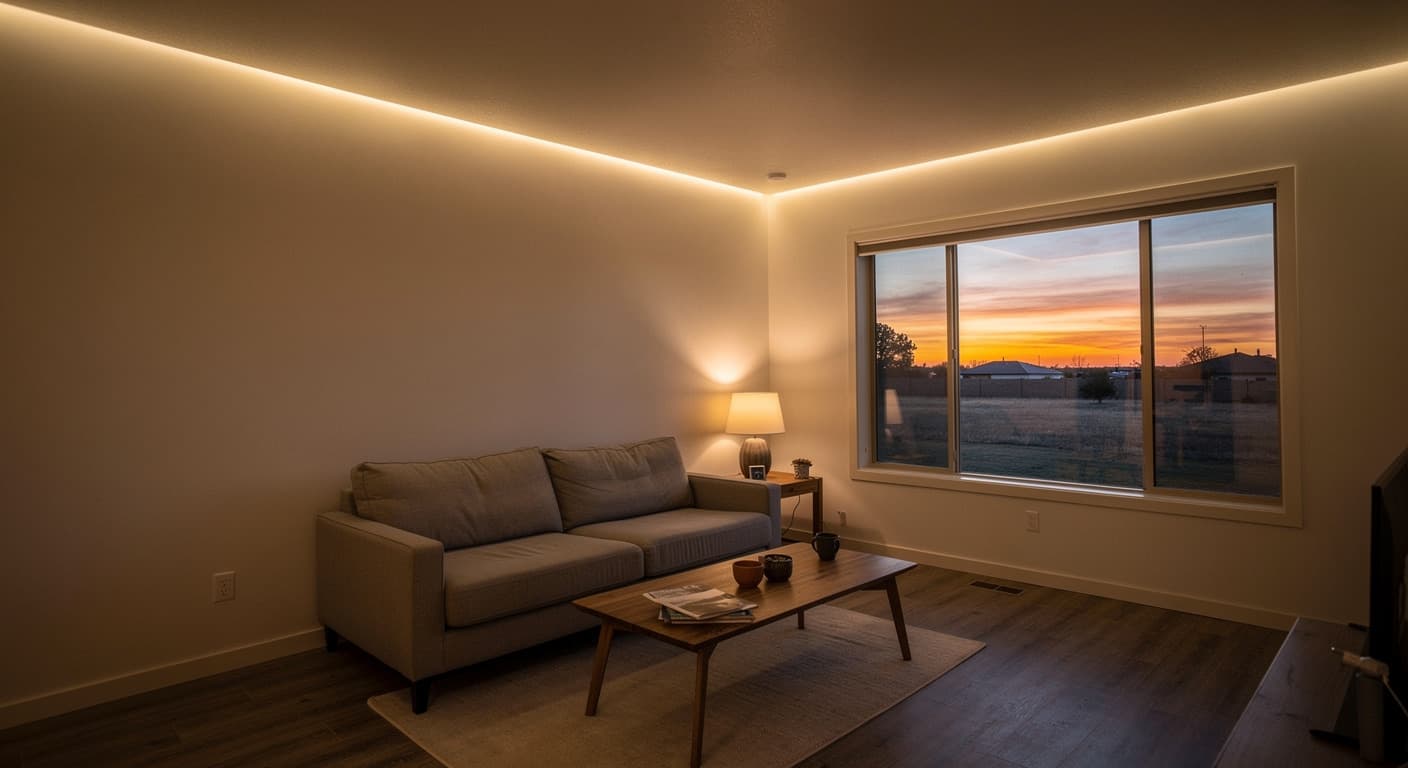
Smart lighting pays off in daily use rather than dollars, since LEDs already use little power. Smart switches beat smart bulbs because they work for everyone in the house and the light never goes dead at the wall. Expect $150 to $300 per switch installed. In older homes in Tech Terrace or Overton, it is common to find switch boxes without a neutral wire, which many smart switches need; neutral-free models exist, and a remodel is the time to add neutrals. Scenes and away schedules are the features people keep using, and tunable fixtures that shift color temperature through the day are covered in our circadian lighting guide.
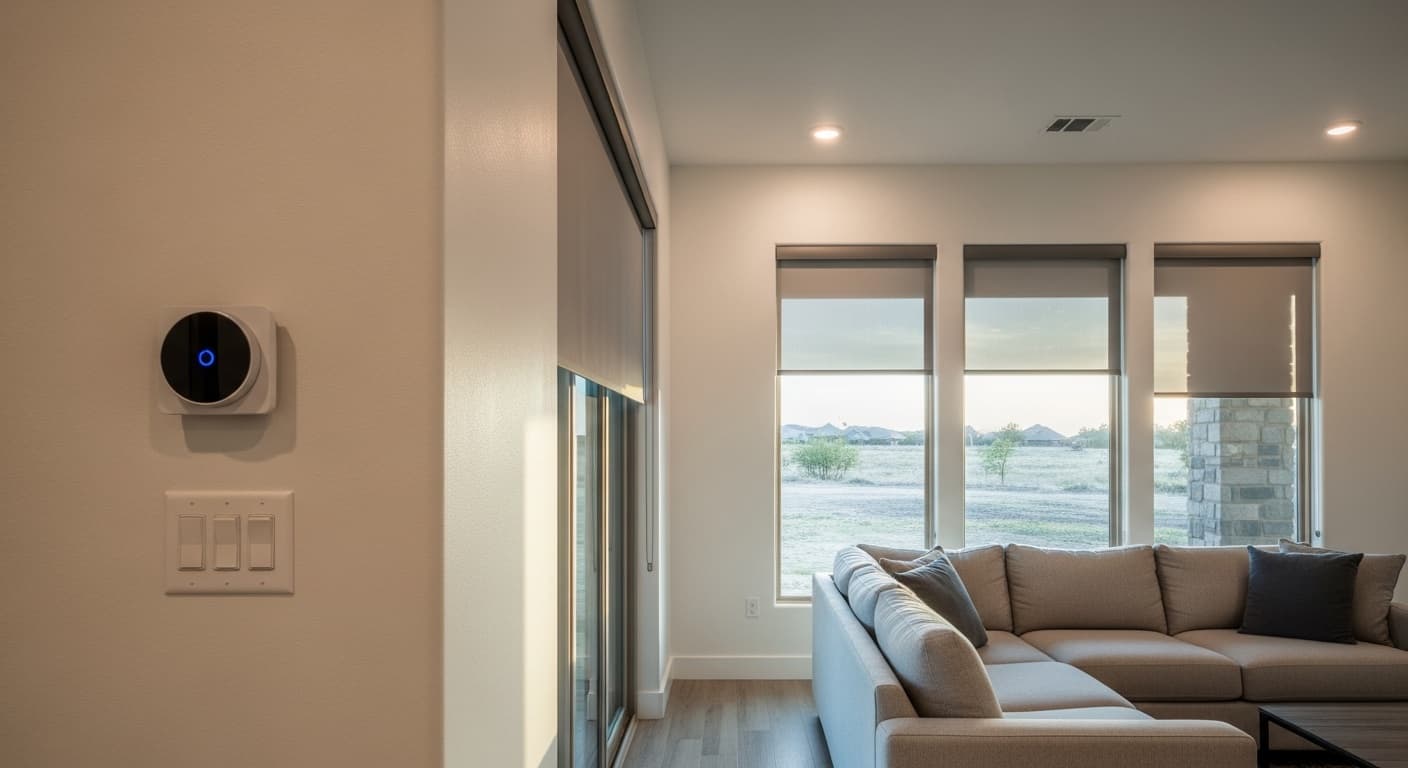
Motorized shades earn their keep on west and south glass, since west rooms are usually the hardest to keep cool. Shades that lower on a schedule or a sun-position trigger block that heat whether or not anyone is home, at $350 to $1,000 per window installed. For the worst exposures, exterior solar screens stop more heat because they catch the sun before it reaches the glass.
Wi-Fi, Structured Wiring, and Matter
Most smart home frustration traces back to the network. Brick veneer and metal buildings weaken or block Wi-Fi, and one router in a front closet rarely covers a 2,500 square foot ranch home plus the garage and patio. A mesh system with access points linked by Ethernet fixes most coverage problems for $500 to $1,500 installed. During a remodel, a Cat6 network drop costs roughly $50 to $100, versus $150 to $300 later through finished walls.
Matter is the interoperability standard, backed by Apple, Google, Amazon, and Samsung, that lets certified devices work across those ecosystems over Wi-Fi, Thread, or Ethernet. Version 1.5 added cameras and broader support for shades, gates, and garage doors. Because Matter devices can run locally, they also lower the risk of a device going dark when a company retires its cloud service.
EV Readiness and Energy Monitoring
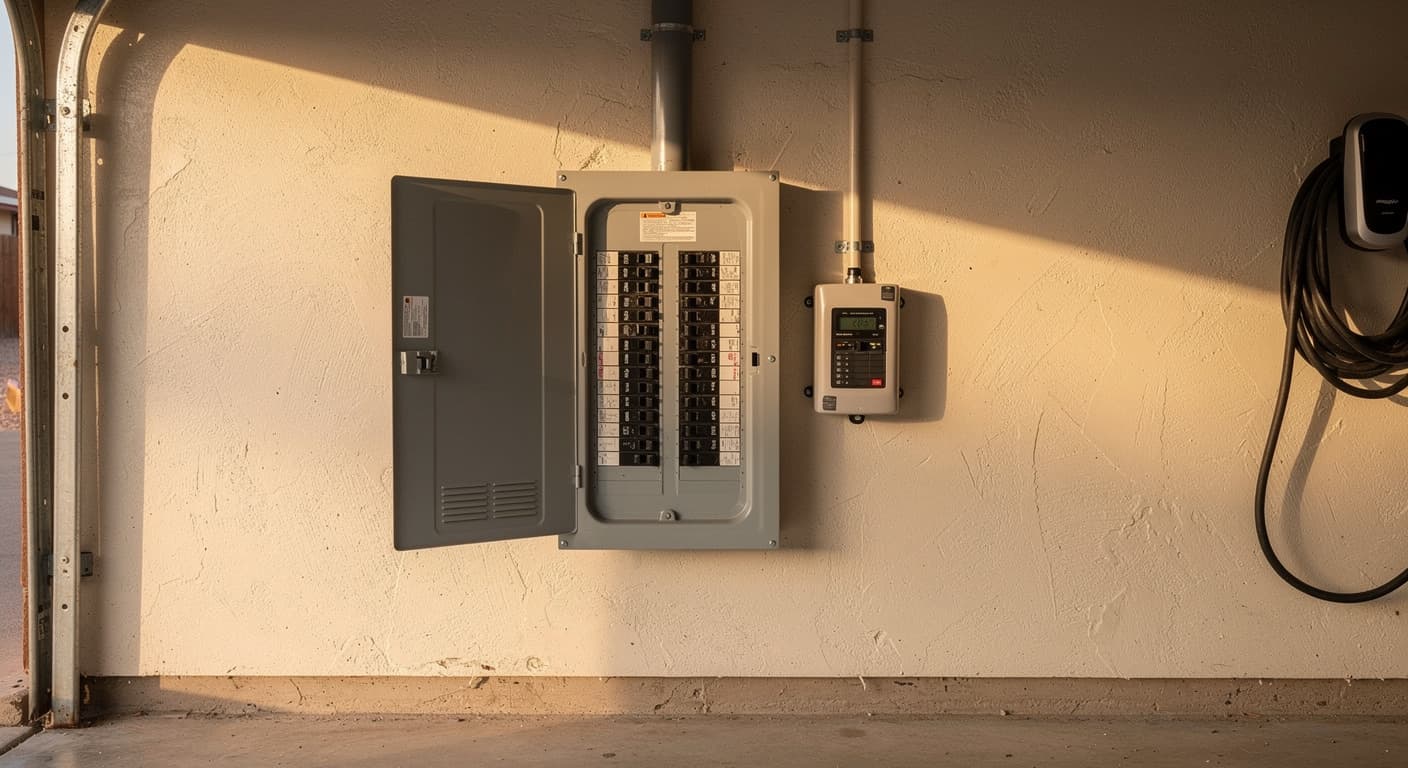
A Level 2 charger needs a dedicated 240-volt circuit, typically 50 amps, and refills most EVs overnight. Installed cost in Lubbock usually runs $800 to $2,500, depending on the distance from the panel and whether it has room. Our EV charger installation cost guide breaks down those numbers. Under the 2020 National Electrical Code that Lubbock enforces, a 240-volt garage receptacle generally needs GFCI protection, one reason we often hardwire chargers.
Homes on 100-amp service may need an electrical panel upgrade or a load-management device, which a load calculation will settle. Not ready for an EV? Conduit or a capped circuit run during a remodel costs far less than doing it later. The federal 30C home charger credit ended for equipment placed in service after June 30, 2026.
A clamp-on energy monitor ($300 to $800 installed) shows real-time use by circuit. Since Lubbock moved to retail electric choice in 2024, you buy power from a provider you pick while LP&L delivers it, and some plans price power by time of day, so a monitor, thermostat, and scheduled charger help shift load to cheaper hours. Smart panels that monitor and switch every circuit run $5,000 to $10,000.
Do Smart Home Upgrades Add Resale Value in Lubbock?
Not in a way anyone can promise. We have not found credible sales data behind claims that smart features add a set percentage to value, and a device that unplugs is hard for an appraiser to count. What the data shows is buyer appeal. In the National Association of Home Builders' 2024 What Home Buyers Really Want survey of more than 3,000 buyers, 78 percent rated a programmable thermostat essential or desirable, 76 percent said so of security cameras, 74 percent of a video doorbell, and 70 percent of a wireless security system.
Built-in upgrades such as leak protection, structured wiring, and a 240-volt garage circuit read as a current, well-kept house, especially next to new construction. When you sell, reset the devices, transfer the accounts, and leave the hubs.
How to Plan a Smart Home Upgrade
Plan from problems backward, not from a shopping list:
- List the problems first, such as the hot west bedroom or the pipe that froze last winter, and buy for those.
- Fix the Wi-Fi before adding devices.
- Pick one control ecosystem and favor Matter-certified devices within it.
- Check for a thermostat C-wire, neutral wires at switches, an accessible main water line with an outlet, and spare panel capacity.
- Confirm permits, since a new 240-volt circuit or a valve on the main water line typically needs one in Lubbock.
- Get a written, itemized quote that separates hardware, labor, programming, and subscriptions.
A Note from Nextgen Blueprint
This guide was researched and published by Nextgen Blueprint, a Lubbock design-build contractor that installs smart home systems in remodels and new construction, with the electrical, low-voltage, and plumbing work under one roof. Treat these numbers as 2026 Lubbock-market ranges to budget with, not a quote. The pricing and program details were accurate as of September 2026. Our free instant estimate returns a ballpark range in under a minute, and our smart home integration page covers the systems we install.
Frequently asked questions
What smart home upgrades are worth it in Lubbock?
How much does a smart home cost in Lubbock, TX?
How much does a smart thermostat save in West Texas?
Do smart home features increase home value?
Is an automatic water shutoff valve worth it?
Do I need a panel upgrade for an EV charger in Lubbock?
What is Matter and should I buy Matter devices?
Sources and further reading
Written by
John Paul, Founder, Nextgen Blueprint
John Paul founded Nextgen Blueprint with his father-in-law, a Lubbock-area general contractor with 30+ years of experience. They build healthy, natural homes for Lubbock families, and approach every project with the kind of care and attention to detail most contractors save for their own home.
More from JohnRelated services
Filed under Healthy & Smart Home. Cleaner water, cleaner air, better light, smarter systems.