Cost Guides14 min read
Xeriscaping Cost in Lubbock, TX: Price per Sq Ft, Plants & Water Savings (2026)
What a lawn-to-xeriscape conversion costs in Lubbock in 2026, line by line: turf removal, drip, rock, mulch, and plants, plus proven South Plains plants, City watering rules, realistic water savings, and Texas HOA law.
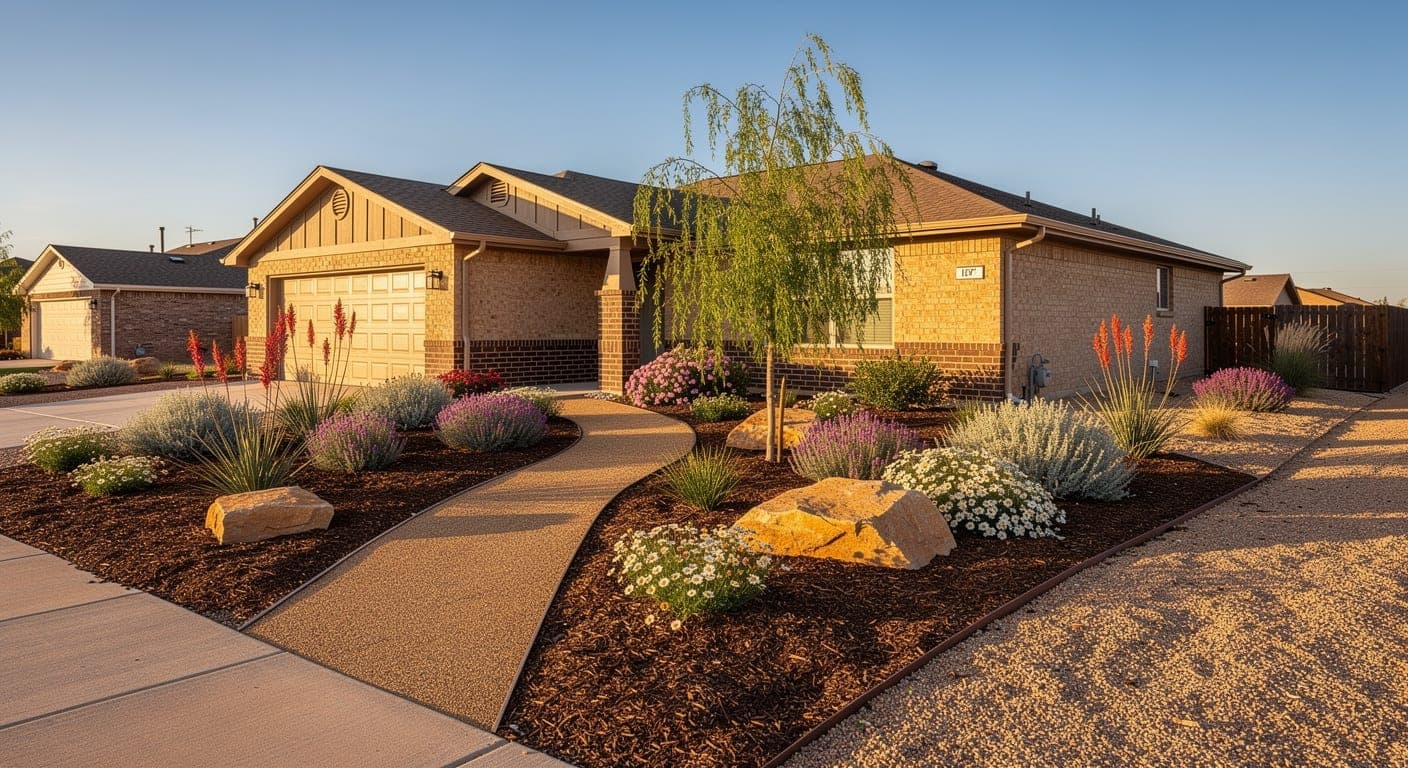
A professional xeriscape conversion in Lubbock typically costs $5 to $20 per sq ft in 2026, so replacing a 1,200 square foot front lawn runs about $6,000 to $24,000. The low end is turf removal, edging, mulch or rock, small plants, and a sprinkler zone converted to drip. The high end adds a design plan, regrading, decomposed granite paths, larger plants, boulders, and lighting. A good xeriscape is not a rock yard: in a city that averages 18.33 inches of rain a year and 93 degree July highs, it is mostly plants, grouped by water need and watered at the roots.
On this page
- 01What Xeriscaping Costs in Lubbock (2026)
- 02Where the Money Goes in a Lawn-to-Xeriscape Conversion
- 03Rock, Decomposed Granite, Mulch, or Plants: Avoiding the Rock-Yard Heat Island
- 04The Lubbock Factor: Rain, Wind, Clay, and Watering Rules
- 05Plants Proven for Lubbock Xeriscapes
- 06How Much Water and Money Xeriscaping Saves in Lubbock
- 07Worked Example: A 1,200 Square Foot Front Lawn on a 1970s Brick Ranch
- 08DIY or Hire a Pro, and HOA Rules in Texas
- 09Rebates, Timeline, and Maintenance
- 10How to Get an Accurate Xeriscape Quote
- 11A Note from Nextgen Blueprint
- 12Frequently asked questions
What Xeriscaping Costs in Lubbock (2026)
Xeriscaping means landscaping that needs little water beyond rainfall once established. For a homeowner it usually means replacing some or all of a lawn with native and adapted plants, mulch or rock, and drip irrigation. Installed, that runs $5 to $20 per square foot in Lubbock. National cost guides from Fixr and Lawn Love quote the same per-square-foot range, and Lubbock labor runs a little below Dallas and Austin while rock, plants, and drip parts cost about what they do elsewhere.
The spread is wide because the same square foot can hold a 1-gallon plant and shredded mulch, or a 15-gallon tree, a boulder, and a lighted decomposed granite path. Size matters too: small yards cost more per square foot because removal, mobilization, and the irrigation connection are fixed costs.
- Xeriscape conversion
- $5 to $20 per sq ft
- 1,200 sq ft front lawn
- $6,000 to $24,000
- Lubbock annual rainfall
- 18.33 inches
| Scope | Installed cost | What it includes |
|---|---|---|
| Basic conversion | $5 to $8 per sq ft | Turf removal, bed prep, edging, mulch or rock, 1-gallon plants, spray zone converted to drip |
| Mid-range conversion | $9 to $14 per sq ft | Adds a decomposed granite path, 5-gallon shrubs, a tree or two, boulders, a new drip zone |
| Designed conversion | $15 to $20 per sq ft | Adds a design plan, regrading, larger plants, dry creek or drainage work, lighting |
| Front yard, 1,200 sq ft | $6,000 to $24,000 | The full range for a typical Lubbock front lawn |
| Landscape design plan | $1,500 to $5,000 | Scaled plan with plant zones, hardscape, and drip layout |
| Irrigation and drip conversion | $2,000 to $7,000 | New or converted zones with a smart controller |
Where the Money Goes in a Lawn-to-Xeriscape Conversion
A complete quote should price each of these as its own line, so you can see what you are paying for and phase the work if you need to:
- Turf removal: Bermudagrass spreads aggressively, so it has to be killed and removed, not just covered with rock or mulch. Texas Tech researchers converting Bermuda to buffalograss sprayed it twice before seeding.
- Grading and soil prep: shaping beds so water drains away from the slab, plus compost in planting holes. National guides put grading at about $770 to $3,000 for a yard.
- Drip irrigation: roughly $1.50 to $4.50 per square foot of bed, with tubing and emitters at each plant and a pressure regulator and filter at the valve.
- Edging: steel or concrete edging that keeps rock out of the lawn and mulch off the sidewalk.
- Mulch and rock: shredded hardwood or cedar mulch runs about $30 to $110 per cubic yard and gravel about $20 to $80 before delivery and labor. A 3-inch layer over 1,000 square feet takes about 9 cubic yards.
- Plants: national guides list shrubs at $12 to $90 each and trees at $30 to $185, depending on size. Smaller plants cost less and often establish faster in wind.
- Extras: decomposed granite paths, boulders, dry creek beds, and landscape lighting.
Rock, Decomposed Granite, Mulch, or Plants: Avoiding the Rock-Yard Heat Island
Wall-to-wall gravel over landscape fabric looks like the easy, low-budget xeriscape, and it is usually the worst one. A San Antonio Water System conservation coordinator, writing for the City of Round Rock, notes that river rock and decomposed granite absorb the sun's radiation and hold it far into the night, and that rock can reach 140 to 170 degrees in summer while wood chips or pine bark stay around 80 to 85. Rock also adds no organic matter, so the soil under it loses the life plants depend on.
The U.S. EPA describes trees and plants as a simple and effective way to cool a site, through shade and the water they release from their leaves. In Lubbock, where July highs average 93.4 degrees, the practical rule is to cover most of the ground with plants at maturity, use organic mulch in planting beds, and keep rock for paths, drainage swales, and narrow strips where mulch would blow or wash away.
| Groundcover | Cost to install | Heat | Best use in Lubbock |
|---|---|---|---|
| Shredded hardwood or cedar mulch | Lowest | Stays cool | Planting beds; replenish every year or two |
| Gravel or river rock | Low to moderate | Gets very hot | Drainage swales, dry creeks, windy strips |
| Decomposed granite | Moderate | Gets hot | Paths and sitting areas, compacted and edged |
| Native plants at full cover | Plants plus establishment water | Coolest | Most of the yard |
| Artificial turf | $5 to $15 per sq ft | Much hotter than grass in sun | Dog runs and play areas, not whole yards |
The Lubbock Factor: Rain, Wind, Clay, and Watering Rules
Lubbock's 1991 to 2020 normal rainfall is 18.33 inches a year, down from 19.12 inches in the previous 30-year normal, according to the National Weather Service. About 12.85 inches of it falls from April through September, but it often comes in a few heavy storms, so a landscape has to bank deep water and ride out long dry stretches. Spring wind strips light mulch and dries new plants, which is why heavier rock in exposed strips and a thick layer of shredded mulch in sheltered beds earn their keep.
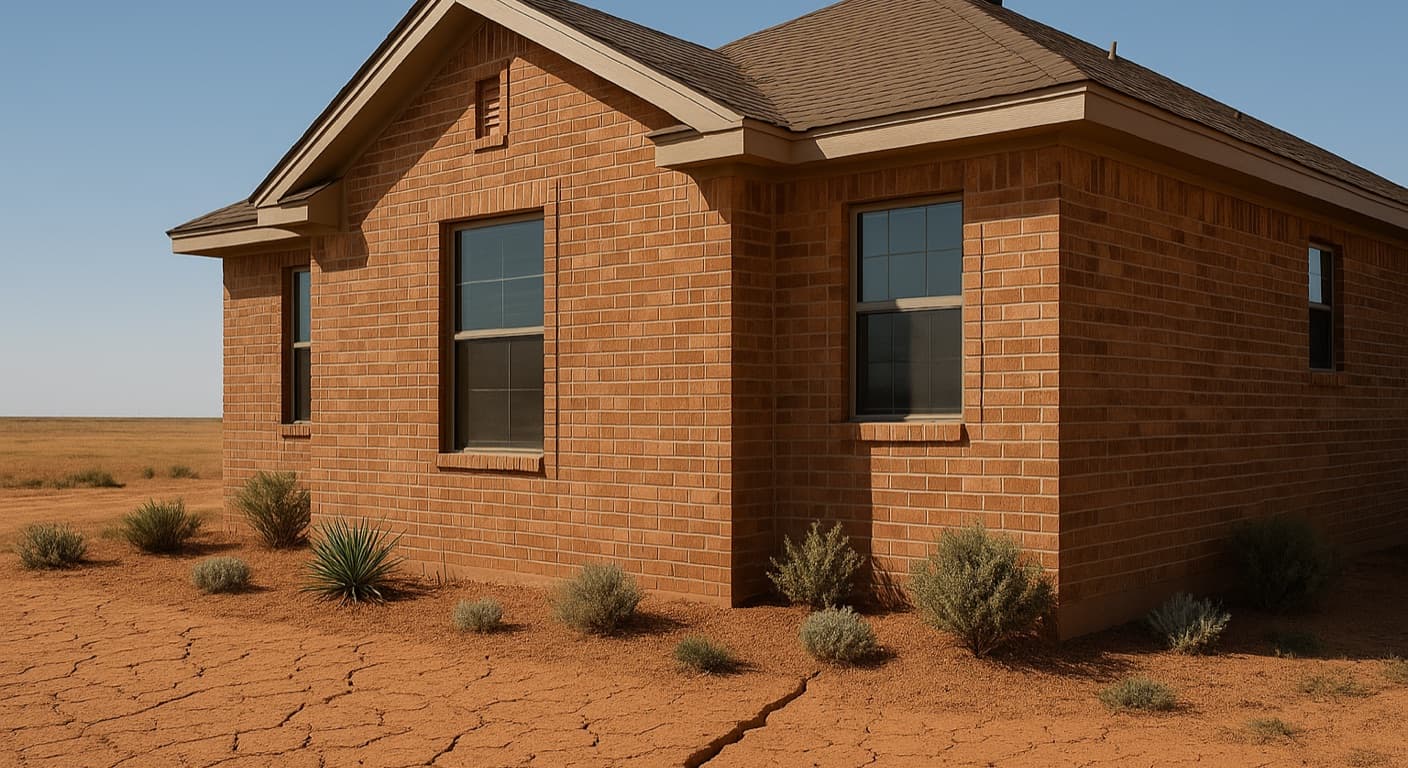
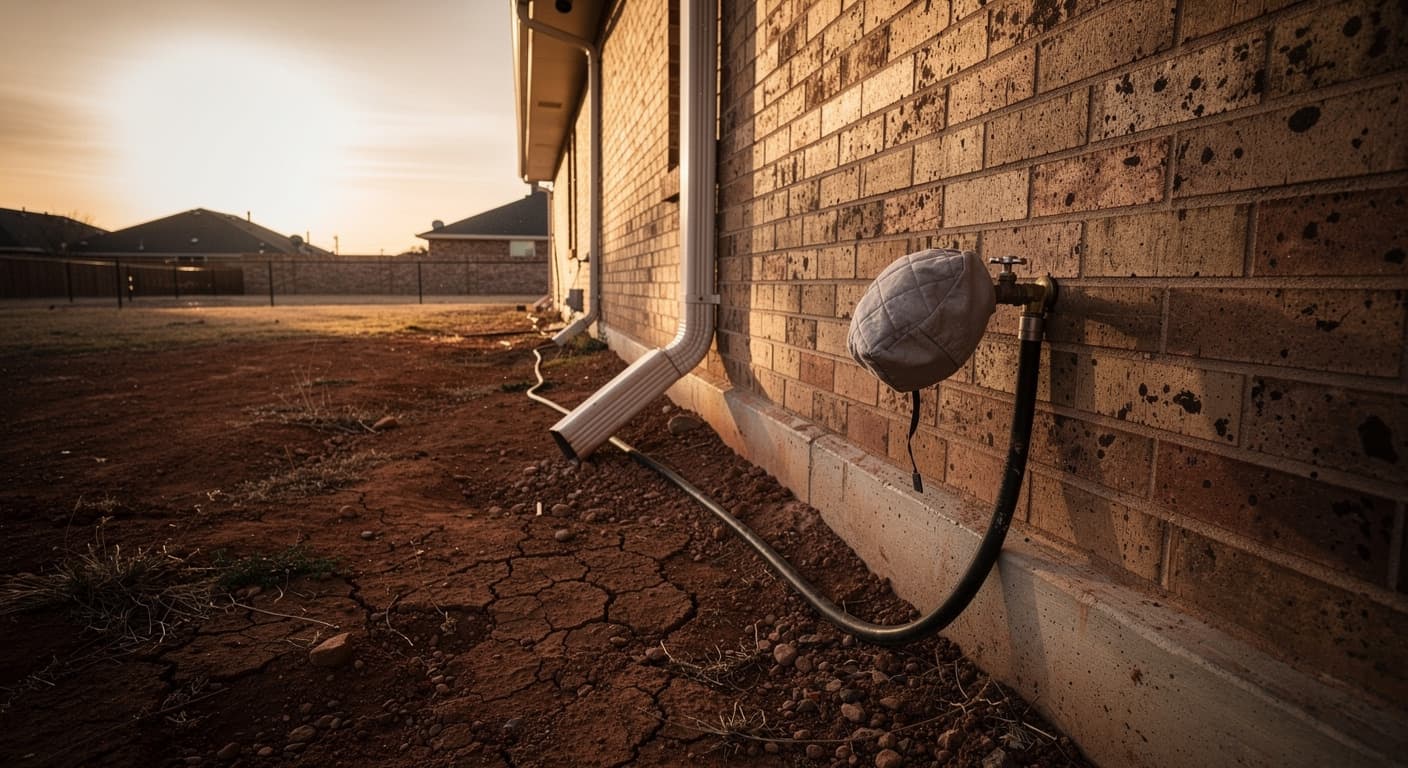
Clay soil changes the plan too. Beds that trap water against the house swell the clay under the slab, and dry soil shrinks away from it. A conversion is the right time to regrade so the ground falls away from the foundation and to keep drip lines a consistent distance from the slab. If you already see cracks or sticking doors, read our foundation repair cost guide before you plant.
The City of Lubbock assigns two landscape watering days a week year-round by the last digit of your address, and no irrigation is allowed on Sunday. As reported in the City's April 2026 notice, from April 1 through September 30 the City recommends watering between midnight and 10 a.m. or 6 p.m. and midnight, in short cycles so water soaks in. Hand watering is allowed any day, at any time.
| Address ends in | Watering days |
|---|---|
| 0, 3, 4, or 9 | Monday and Thursday |
| 1, 5, or 6 | Tuesday and Friday |
| 2, 7, or 8 | Wednesday and Saturday |
| Any address | No irrigation on Sunday; hand watering any time |
Plants Proven for Lubbock Xeriscapes
The Lubbock Master Gardener Association, a Texas A&M AgriLife Extension program, publishes water-wise plant lists for Lubbock County. They call the lists a starting point, not a complete catalog, but every plant below appears on them or, for turf, in Texas Tech and High Plains water district material. Choose plants for full sun, alkaline soil, wind, and hard freezes, and group them by water need, as the EPA's WaterSense program recommends, with turf and shrub beds always on separate zones.
- Perennials: blackfoot daisy, autumn sage (cherry sage), mealy blue sage, Mexican bush sage, prairie verbena, winecup, zexmenia, prairie zinnia, gaura, blanket flower, yarrow, and lavender.
- Small shrubs: Texas sage, red yucca, flame acanthus, blue mist spirea, Turk's cap, canyon senna, and upright rosemary.
- Large shrubs and small trees: desert willow, Texas redbud, Mexican buckeye, chaste tree, possumhaw holly, yaupon holly, and pomegranate.
- Shade trees: cedar elm, lacebark elm, bur oak, chinquapin oak, live oak, Chinese pistache, and western soapberry.
- Low-water turf: buffalograss, the native lawn grass, which grows slowly, wants full sun, and goes dormant much of the year.
How Much Water and Money Xeriscaping Saves in Lubbock
Start with what the lawn uses. The High Plains Underground Water Conservation District puts summer Bermuda grass at about 1 inch of water a week and buffalo grass at about half that, and the City's own guidance assumes about 1.5 inches per zone per week. One inch of water over 1,000 square feet is about 623 gallons. So a 1,200 square foot Bermuda front lawn watered 1 inch a week from April through September uses roughly 19,400 gallons a season, and closer to 29,000 at the City's 1.5 inches.
Once established, the plants on the Lubbock lists need a fraction of that. Even if the new beds still take a quarter of the lawn's water through drip, the conversion saves around 14,500 gallons a season. Converting the same lawn to buffalograss instead saves roughly 9,700. To turn gallons into dollars, multiply by the per-1,000-gallon volume charge on your water bill; rates change, and the first year saves less because new plants need extra water.
Be realistic about payback. A writer for West Texas A&M University's Water Working Group reported that his own $2,000 conversion took about nine years to pay for itself in water. A professionally installed xeriscape costing several times that rarely pays back on water alone. The stronger reasons are no mowing, a yard that holds up on two watering days a week, and less water pooling against the foundation.
- Bermuda lawn, 1,200 sq ft
- About 19,400 gal per season
- Likely savings after establishment
- About 14,500 gal per season
Worked Example: A 1,200 Square Foot Front Lawn on a 1970s Brick Ranch
Picture a 1,800 square foot brick ranch in central Lubbock with a 1,200 square foot Bermuda front lawn, two spray zones, and a cracked sidewalk edge. Here is how three budgets play out:
- Basic, about $6,000 to $9,600: Bermuda killed and removed, beds shaped to drain away from the house, steel edging, 3 inches of shredded mulch, about sixty 1-gallon perennials and small shrubs, and one spray zone converted to drip.
- Mid-range, about $10,800 to $16,800: the basic scope plus a decomposed granite path to the door, 5-gallon Texas sage and red yucca, a desert willow, a few boulders, and both zones converted to drip with a smart controller.
- Designed, about $18,000 to $24,000: a scaled plan, regrading the whole yard, a rock dry creek to carry downspout water away from the slab, larger trees, and low-voltage path lighting.
DIY or Hire a Pro, and HOA Rules in Texas
Much of a xeriscape is DIY-friendly: killing turf, spreading mulch, and planting 1-gallon perennials. The pieces worth hiring are grading near the foundation, heavy rock and decomposed granite work, and irrigation. The Texas Commission on Environmental Quality generally requires a license to design, install, alter, or repair an irrigation system, and anyone exempt from licensing still has to meet the state's irrigation standards in 30 TAC Chapter 344. Ask for the irrigator's TCEQ license number on any bid that touches your sprinkler system.
If you live in an HOA, Texas Property Code Section 202.007 says a property owners association may not prohibit or restrict drought-resistant landscaping or water-conserving natural turf. The association can require you to submit a plan, can regulate gravel, rocks, and cacti, and can regulate how visible the irrigation is, but it may not unreasonably deny approval or unreasonably call your plan incompatible with the neighborhood. A narrow exception covers very large developments in counties dominated by a city of more than one million people, which does not describe Lubbock County. This is general information, not legal advice; read your deed restrictions and submit the plan before work starts.
Rebates, Timeline, and Maintenance
As of November 2026, we could not find a City of Lubbock rebate for replacing a lawn or installing drip. Programs come and go, so check with City of Lubbock water utilities before you count on one, and do not let a contractor promise one they cannot document.
Most conversions take one to three weeks of work once the turf is dead and the plan is set. Fall is the best planting season, and designing over the winter lets you build in early spring or fall when crews are less booked. Killing Bermuda usually takes more than one treatment, so allow time for it before installation starts.
Maintenance drops but does not disappear. Expect to pull weeds the first two seasons, top up mulch every year or two, cut back perennials in late winter, flush drip lines and check emitters each spring, and winterize the system before the first freeze. Our Lubbock home maintenance calendar puts those tasks on the right months.
How to Get an Accurate Xeriscape Quote
For a ballpark first, our free instant estimate returns a range in under a minute. To compare real quotes, make sure each one answers the same questions:
- How will the Bermuda be killed and removed, and is haul-off included?
- What is the square footage of beds, rock, and paths, and what depth of mulch or rock?
- How many plants, at what container size, and which species?
- Is the irrigation converted or new, with a pressure regulator, filter, and smart controller, and who holds the TCEQ license?
- Does the grading slope away from the foundation, and where do downspouts discharge?
- What is the plant establishment period, and is any plant replacement policy in writing?
- Check references and read our guide to choosing a reliable contractor before you sign.
A Note from Nextgen Blueprint
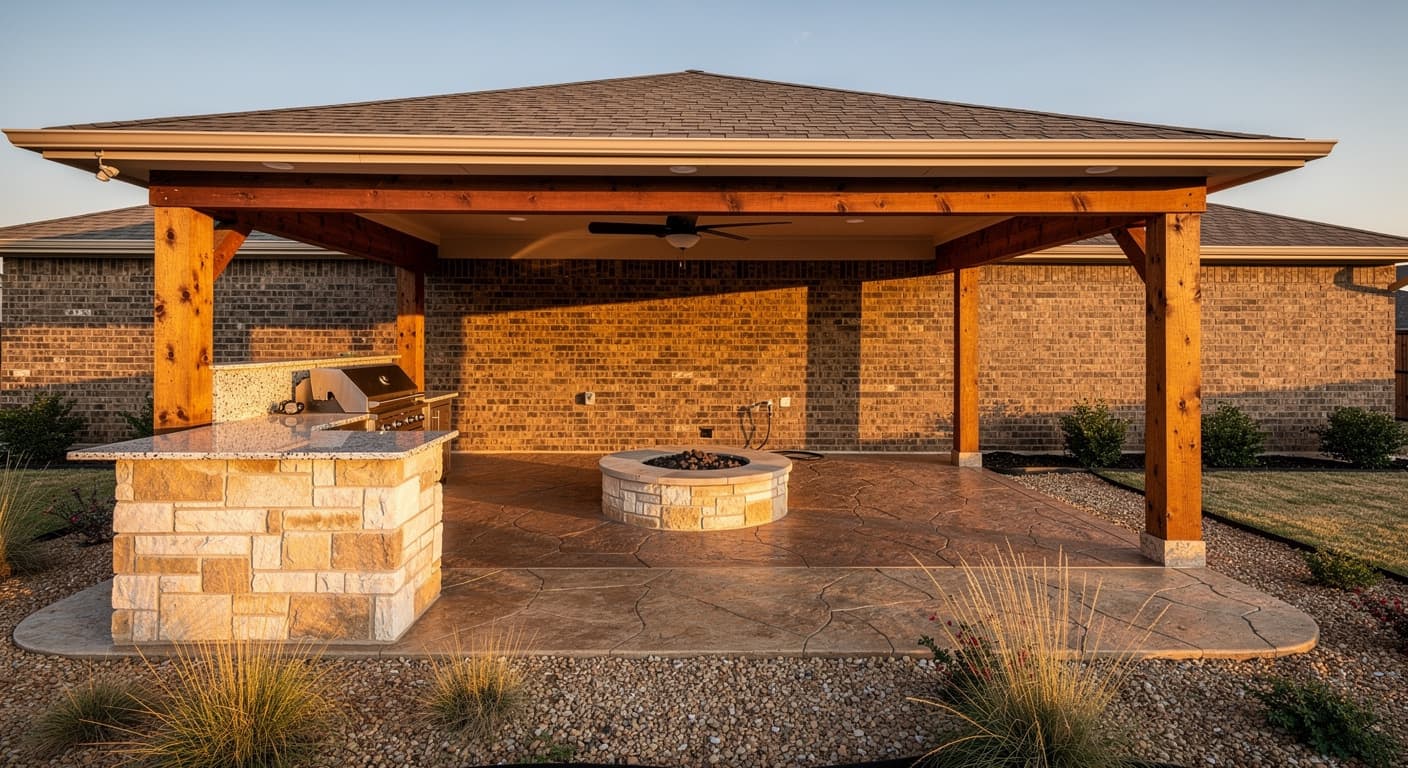
This guide was researched and published by Nextgen Blueprint, a Lubbock design-build contractor whose landscaping team designs and builds xeriscapes, drip irrigation, and the patios that often go with them; our patio and outdoor living cost guide covers that side of the yard. Treat these numbers as November 2026 Lubbock-market budgeting ranges, not a quote, since the real figure depends on your yard's size, drainage, existing irrigation, and plant choices. Watering rules and rebate availability can change, so confirm them with the City of Lubbock before you build.
Frequently asked questions
How much does xeriscaping cost in Lubbock, TX?
Is xeriscaping cheaper than grass?
How much water does xeriscaping save?
Does the City of Lubbock offer a rebate for xeriscaping?
What are the best xeriscape plants for Lubbock?
Can my HOA stop me from xeriscaping in Texas?
Is a rock yard a good idea in Lubbock?
When can I water a new xeriscape in Lubbock?
Sources and further reading
- [1]National Weather Service Lubbock: Comparison of 30-year climate normals for Lubbock
- [2]KCBD: Spring and summer irrigation recommendations and restrictions (City of Lubbock, April 2026)
- [3]Lubbock Master Gardener Association: Waterwise perennial recommendations for Lubbock County
- [4]Lubbock Master Gardener Association: Waterwise small shrubs for Lubbock County
- [5]Texas Tech University: Cultural and chemical practices to convert bermudagrass to buffalograss
- [6]High Plains Underground Water Conservation District: The Cross Section, May 2024
- [7]West Texas A&M University Water Working Group: Xeriscaping is more than rocks and cacti
- [8]City of Round Rock: Don't rock your landscape
- [9]Texas Property Code Section 202.007: Drought-resistant landscaping
- [10]TCEQ: Landscape irrigator, irrigation technician, and irrigation inspector licenses
- [11]U.S. EPA WaterSense: Landscaping tips
- [12]Lawn Love: Xeriscaping cost
Written by
John Paul, Founder, Nextgen Blueprint
John Paul founded Nextgen Blueprint with his father-in-law, a Lubbock-area general contractor with 30+ years of experience. They build healthy, natural homes for Lubbock families, and approach every project with the kind of care and attention to detail most contractors save for their own home.
More from JohnRelated services
Filed under Cost Guides. What home projects actually cost in Lubbock, line by line.